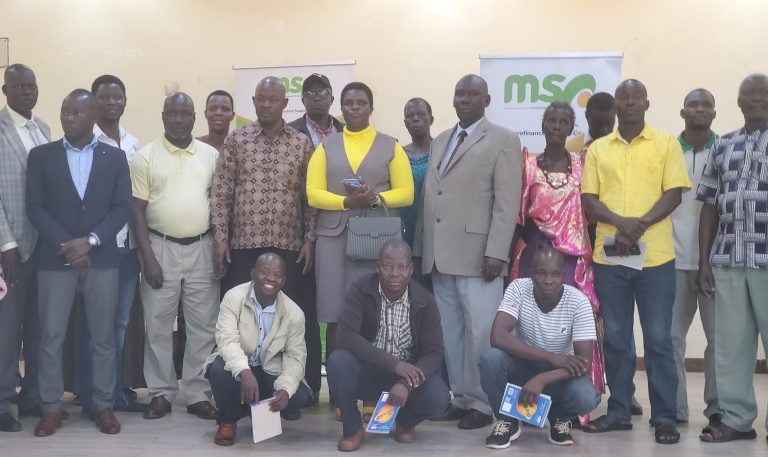
Those who have been affected by the ruling have since made an appeal against the ruling at the Court of Appeal in Kampala.
By Ojok Tony
Gulu District—More than 400 households in Karac-cirac Village, Apem Parish in Omel Sub-county, Gulu District, are living each day in fear, surviving only on an interim injunction issued by the High Court as they await the ruling of the Court of Appeal over a disputed piece of land estimated at more than 1,000 acres.
The families, many of them returnees from internally displaced persons’ camps, say they have nowhere else to go if the court finally rules against them. The case, which has dragged on since 2010, pits the community against William Omony, son of the late Solomon G.F. Amone Watmon.
In December 2024, the High Court in Gulu ruled in favour of Omony, declaring him the rightful owner of the land. The ruling was delivered by Resident Judge His Worship Philip Odoki via email through Omony’s lawyers at M/S Oyet Silver & Co. Advocates. The community has since appealed the decision, but they say the fear of eviction has not left them.
At 82, Santonino Olanya Gaya has become one of the most recognizable voices in the community’s struggle. Sitting under a mango tree, he recalls with startling clarity how the dispute began nearly five decades ago.
“The land dispute started around 1976 when the late Amone came with soldiers and told people the land now belonged to him,” he says. “Many people signed papers out of fear. Then the war came, and we all went to the camps. When we returned, his son came back to claim the land again.”
Olanya remembers the day vividly. “I was still a young boy herding cattle. I saw soldiers from the treetops. People were scared. Some signed papers just to survive,” he says slowly.
His story is echoed by 52-year-old Lamola Francis, who grew up in the same village.
“The late Amone was brought here by the late Sub-county Chief, Sibirino Opak. He stayed a few years, then the war began, and he left. After the war, he never returned until recently, when the children came back to reclaim the land,” Lamola says.
For women like Rose Atuku, aged 61, the uncertainty has become a daily burden.
“We don’t sleep,” she says, tears filling her eyes. “We cannot farm freely. Sometimes strange people come, even men in police uniforms, threatening us. We are scared for our children. We believe they were sent by the people claiming the land. Because they are rich and connected, nobody listens to us.”
Another resident, Angeyo Margaret, who married into the village in 1970, says the community feels abandoned.
“To me, corruption seems to be at play. We feel the government is not protecting us. My son was arrested and forced to pay money over false claims of encroachment. How can we feed our children when the land we depend on is being taken?” she asks.
What the plaintiff says
Efforts to reach William Omony for comment were unsuccessful, as his known contacts could not be reached. However, his position was reflected in court documents cited in the High Court ruling.
According to the judgment, Omony stated that in 1976, his late father, Solomon Amone, applied for and was granted a lease over the land by the Uganda Land Commission. His lawyers argued that the land was surveyed and inspected, and neighbours reportedly acknowledged the lease.
He further told court that during the insurgency, the family fled like many others. When they returned in 2008 to resettle, they allegedly found huts and families already living there, people he claims were once workers on his father’s farm. Attempts to remove them, he said, failed.
The High Court accepted this evidence, ruling that the application for a lease and related documents demonstrated ownership.
Judgment sparks outcry
The ruling has triggered a strong reaction within the community and among some legal practitioners.
One lawyer, who requested anonymity, said he believed the ruling had “serious grounds for appeal.”
“To me, this has been one of the worst judgments I have seen,” he claimed. “There are over 20 possible grounds for appeal. The leasing process appears incomplete, and there were inconsistencies about the size of land. But court still ruled in favour of the plaintiff.”
These allegations are now part of what the Court of Appeal will scrutinize. The judiciary has not issued a formal response to the criticisms.
The case highlights a growing national concern: the vulnerability of Ugandans living on customary land.
In Uganda, about 75% of land is held under customary tenure, where land is communally owned and passed from generation to generation. Section 4(1) of the Land Act allows families or communities to obtain a Certificate of Customary Ownership (CCO), but many rural families do not have one.
Under Section 8(1), a CCO is considered proof of land rights. However, unlike a land title, it does not grant full statutory ownership, meaning customary landholders can still face legal challenges if others obtain lease approvals.
Rights activists warn that powerful individuals sometimes exploit gaps in the system to acquire land traditionally occupied by communities.
For the residents of Karac-cirac, this legal uncertainty has now become their daily reality.
Waiting for a decision—and living in fear
Those who have been affected by the ruling have since made an appeal against the ruling at the Court of Appeal in Kampala. The appeal was lodged on 11th April, 2025, with no specific date yet for when the appeal will be completed.
Until the Court of Appeal hears their case, the villagers are protected by an interim injunction stopping any eviction. But residents say fear still lingers.
“We don’t know what tomorrow brings,” says Lamola quietly.
Olanya, at 82, worries that the land he has lived on his entire life could soon belong to someone else.
“This is the land of our fathers and grandfathers,” he says. “If court chases us, we will become beggars.”
For now, the households of Karac-cirac wait, their fate tied to a court ruling that could either uphold their eviction or recognize their ancestral rights.
Either way, the case has once again placed Uganda’s unresolved land question under the spotlight and raised concerns about what the future holds for millions living on customary land across the country.