The UGX 1.2 billion Omot–Baralegi road project is part of a broader 1,327-kilometre rehabilitation plan under the National Oil Seed Project, launched in 2021.
By Tony Ojok
Agago-The Shs 1.2 billion Omot–Baralegi road and bridge project in Agago District has ground to a halt, sparking anger and frustration among residents of the Omot and Okwang sub-counties. Despite receiving over 70% of the project funds, the contractor, Kinkizi Traders, has made little progress, leaving the community in limbo nine months after the work was launched.
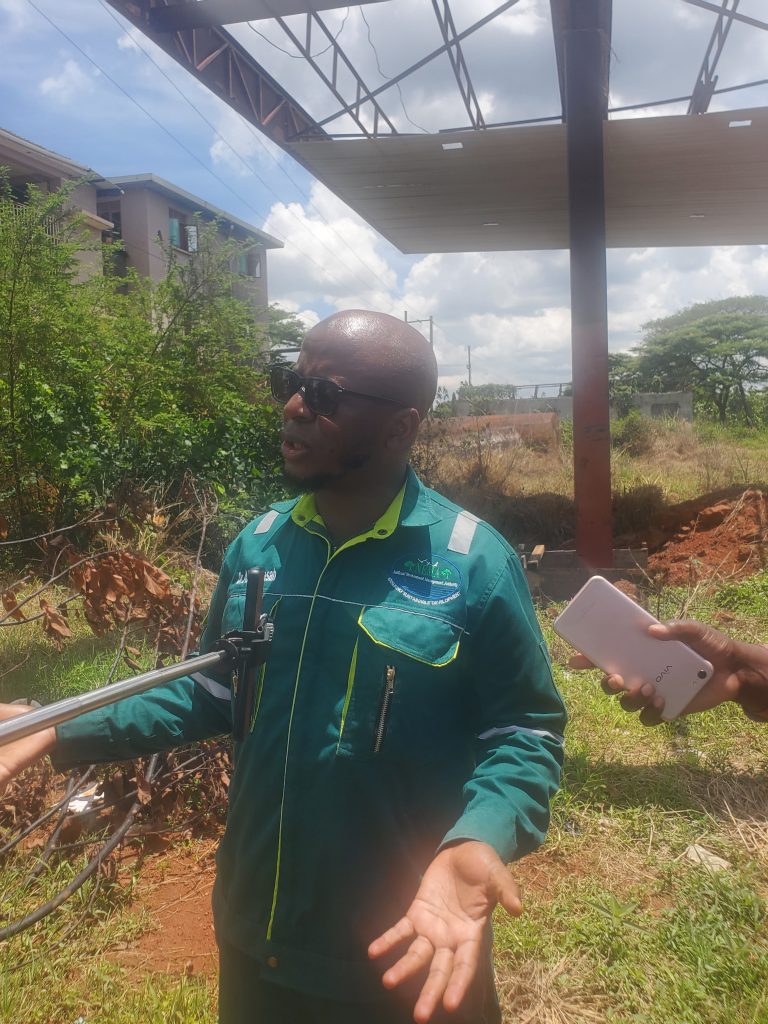
Site Engineer Sam Ssekatawa admitted that the team had been operating under severe constraints despite receiving sh840 million, which is a 70% initial advance.
“We have resorted to using local materials due to limited capital,” he says, blaming inadequate payments, heavy rains, and machine breakdowns.
The project, launched in February 2025 under the supervision of the Ministry of Local Government and funded by IFAD, was intended to rehabilitate 5.5 km of road and construct a bridge across the River Okee to improve market access for over 120,000 oilseed-producing households in the region. Instead, the work remains far from completion, with the bridge estimated at only 40% complete.
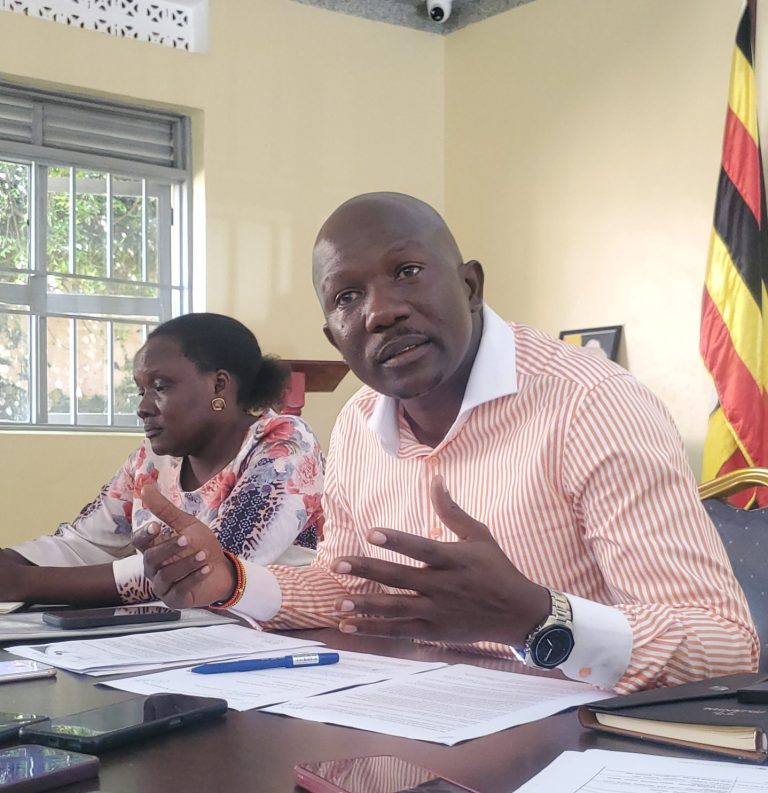
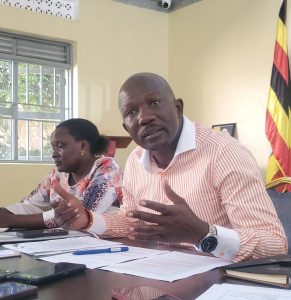
Voice-1: Engineer Sam Ssekatawa explaining the delay
Local Leaders Raise Red Flags
The local leadership district has expressed frustration over the delay in completing the work on time, as fears of shoddy work grow.
Ogwang Jolly Joe, Agago District Councillor representing Omot Sub-county, warns that the prolonged delays could lead to substandard work:
“The contractor disappears for months and blames faulty machines. With the project deadline already expired, I fear they may rush and produce poor-quality work.”
Rather than the delay in completing the project, the district leader said there was an early sign of corruption in the project, and there was a variation in the Bill of Quantities.
Odong Richard Stanley, Secretary for Works and Technical Services, says he directed the district engineer to document variations in the Bill of Quantities (BOQ) after discovering discrepancies between the approved design and the actual scope of work:
“The BOQ talks about culverts, yet the terrain requires a box bridge. We requested a joint evaluation with the Ministry of Local Government and NOSP, but no one has come.”
District Engineer Abali Charles Obote declined to comment, while CAO Kalyesubula Fred referred all inquiries back to the engineering department, raising public suspicion about accountability and supervision issues.
However, the contractor defended the delay and the variations in the BOQ, saying that the contract was for rehabilitation, but they found themselves fully constructing the bridge.
Engineer Ssekatawa says the approved BOQ does not match the site realities, forcing them into unexpected expenses:
“What was planned was rehabilitation, yet on the ground we found full road construction and a bridge over a river deeper than the 1.5 meters in the BOQ, said one engineer. Machine hire from Kampala was costly, and frequent rains worsened breakdowns.”
The contractor has since received a contract extension to February 8, 2026, and insists that they will complete the project.
Voice-2: Engineer Sam Ssekatawa, highlighting the variation in BOQ
The Permanent Secretary of the Ministry of Local Government, Ben Kumumanya, noted that, beyond the familiar challenges of heavy rains and repeated equipment failures, the contractor also faced difficulties in handling the diversion of River Lukee
“The box culvert foundation is currently fully submerged, making it impossible to proceed with the works. We instructed him to pause and wait for the rains to subside before continuing,” he notes.

Delays in Works Disrupt Community Livelihoods
Residents say that the stalled works have disrupted trade, destroyed livelihoods, and increased travel distances from 6 km to over 30 km.
Micirii businessman Otua Sam recounts huge losses after abandoning a rice farm he had prepared on the opposite side of the River Okee:
“We were stopped from crossing with our cows when construction started. I invested heavily, but everything collapsed, he said. It’s now over seven months, and nothing shows that the work will finish soon.”
Another resident, Morris Okoo, suffered a severe accident while attempting to cross a narrow temporary wooden bridge.
“I almost lost my life. My produce fell into the river, and I spent three weeks in the hospital. Those responsible must be investigated.”
At least 20 motorcycle accidents have been recorded since work began, as riders navigate the risky, makeshift crossing.
Social services gap.
The prolonged delay in completing the Omot–Baralegi Road and the Okee River Bridge has left thousands of residents in Agago and Okwang struggling with severe socioeconomic setbacks.
Business owners in both sub-counties now travel more than 30 km to access markets, a shift that has increased transport costs and reduced trade volumes. Several residents attempting to cross the river with their goods have suffered losses after falling into the water, particularly during heavy rains.
Local authorities have reported at least 20 motorcycle accidents since construction began. Riders have been forced onto a risky wooden temporary bridge erected by contractors, resulting in injuries and trauma among commuters. Farmers in Micrii Village, one of the major oilseed-producing areas in Okwang Subcounty, can no longer use the shortest route to Omot Market and must take longer, costlier journeys to sell their produce.
Children have also been affected by this problem. Pupils who previously crossed the area to reach the school can no longer do so, interrupting learning and attendance.
Community members say that stalled bridge construction is not only a loss to taxpayers but also a burden on everyday life. The delays, they argue, mean that the project’s investment is “sinking in broad daylight,” while the people it was meant to serve continue to suffer.
The UGX 1.2 billion Omot–Baralegi road project is part of a broader 1,327-kilometre rehabilitation plan under the National Oil Seed Project, launched in 2021. The initiative, implemented by the Ministry of Agriculture, Animal Industry, and Fisheries (MAAIF) and the Ministry of Local Government (MoLG), is funded by the International Fund for Agricultural Development (IFAD).
The program aims to boost trade and improve market access for more than 120,000 oilseed–producing households across Uganda. It is currently underway in over 80 districts across Northern Uganda, West Nile, Mid-Eastern, and Mid-Western regions, backed by USD 160 million (approximately UGX 600 billion) over seven years, ending in 2028.
What next?
Community members in the district and the neighboring districts want the government to urgently intervene, investigate delays, and ensure accountability so that the Shs 1.2 billion investment serves its intended purpose.
The Omot–Baralegi road is among the 1,327 km targeted for rehabilitation across Northern Uganda under the NOSP, part of a US$160 million (UGX 600B) national program running from 2021 to 2028 to strengthen market access for oilseed-producing communities.
As time runs out and the rainy season is coming to an end, residents fear that the project may never be completed unless the supervising authorities enforce strict action.
The Ministry of Local Government stated that it has maintained close contact with the contractor, believing that technical guidance and enhanced supervision are needed to resolve the ongoing challenges.
Permanent Secretary Ben Kumumanya noted that both the Ministry and district engineers would review and, where necessary, redo sections of the work. He emphasized that it was too early to discuss any supplementary budget as the project was still underway.
“We still have contingency funds available, and the final account must be technology done to identify potential savings in other sections of the road that are not as challenging as the river crossing,” he added. However, he said that the ministry did not intend to allocate additional funding for the same road.
The contractor remains confident that the project will be completed within the new timelines after receiving an extension until February 2026.
“We are optimistic about meeting this deadline. We have been faced with several challenges, one of them being the details in the bill of quantities provided by the Ministry of Local Government for the project,” said the engineer Ssekatawa.
The bridge status is represented in the gallery below.