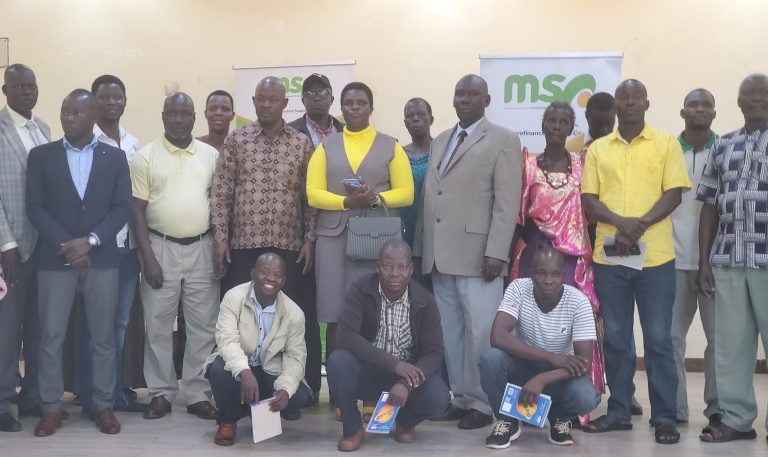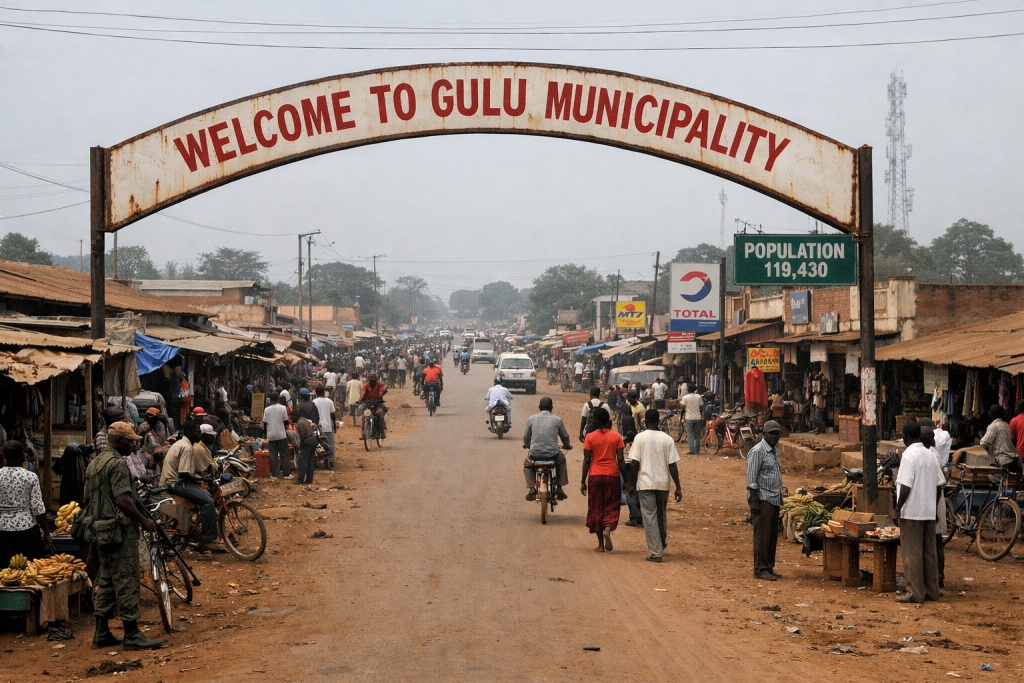
Government and donor documents show achievements: new classrooms, clinic upgrades, bridges and boreholes. But step outside the policy reports, and a more complex picture emerges.
By Our Reporter | Gulu City
When the guns finally fell silent in northern Uganda nearly two decades ago, hope returned to a region scarred by one of Africa’s longest-running insurgencies. The Lord’s Resistance Army (LRA) conflict had uprooted millions, emptied villages, and forced families into crowded camps. When peace arrived, the Ugandan government promised something more than relief; it promised recovery, dignity, and development.
The flagship initiative was the Peace, Recovery and Development Plan (PRDP), launched in 2007 with the stated aim of rebuilding communities, restoring livelihoods, and repairing trust between citizens and the state. Working alongside it were the three phases of the Northern Uganda Social Action Fund (NUSAF), initially hailed as a community-driven model that would finally allow ordinary people to shape their own recovery.
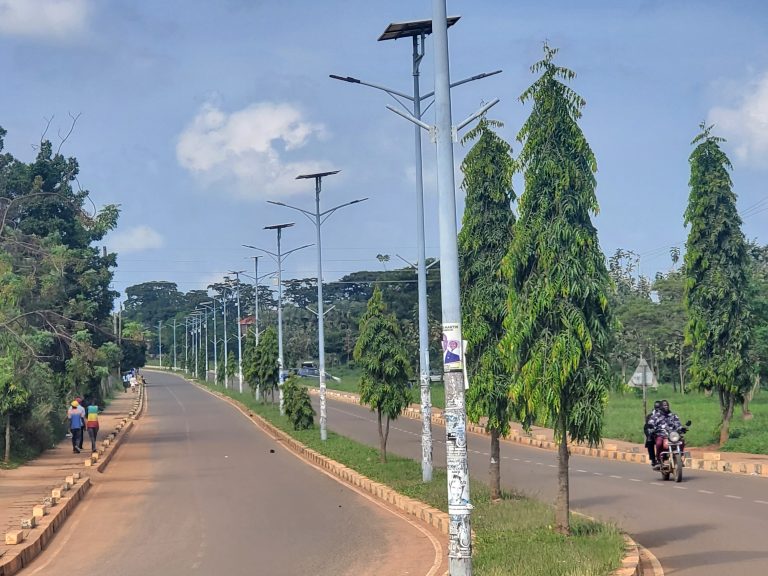
Combined, these and other programmes injected over Shs4.5 trillion into the region between 2003 and 2023. Roads were laid. Schools were built. Health centres reopened. Donors spoke proudly of “peace dividends.”
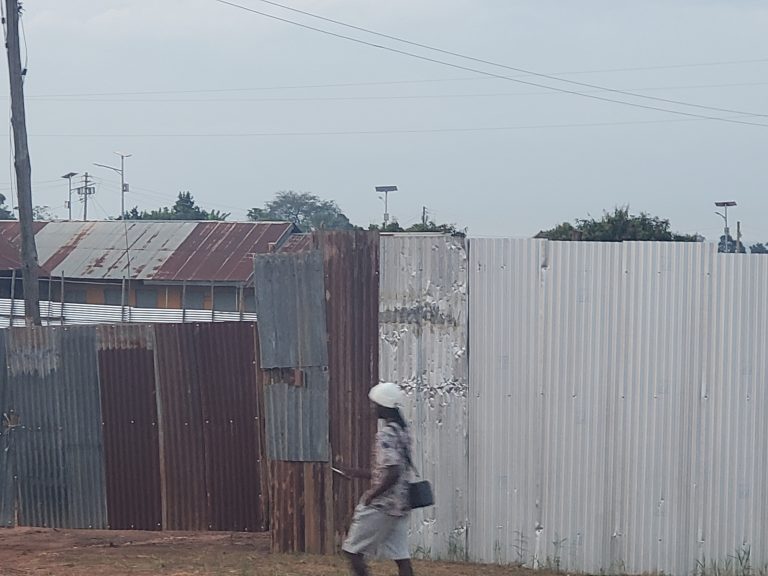
But nearly twenty years later, the promise of transformation rings hollow for many northerners. Poverty remains entrenched. Inequality has widened. And the voices from the communities meant to benefit reveal a painful truth: development has happened, but not for everyone.
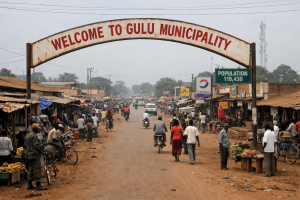
On the outskirts of Gulu, Alimocan Conslate sits outside her small home, watching her two children chase a worn-out football in the dusty compound. Her husband was killed during the conflict, leaving her a widow in a time when survival itself was uncertain.
Today, she survives on irregular casual labour: weeding gardens, washing clothes, fetching water for neighbours who can afford to pay.
She has heard, for years, about the money spent on post-war recovery—money that was meant to support people like her. But for Conslate, the billions spoken of in government reports feel distant and abstract.
“If the money reached people like us, our lives would be different,” she says quietly. “Sometimes I cannot buy food. Sometimes my children are sent home because I cannot pay their school fees. We wake up each day not knowing what we will eat.”
Her words capture the fragile reality of post-war survival. Development statistics cannot tell you what it means to skip dinner so your child can have porridge in the morning.
A recovery story told in billions—but lived in struggle
The PRDP alone carried a budget of US$600 million, while NUSAF I, II and III cost around US$330 million. Added to these were other externally funded projects, including the EU-supported Kalip-Alrep initiative €100million, DRDIP, PRELNOR US$71 million, NUDEIL US$30 million, DINU and NUTI US$48.8 million, each designed to build resilience and tackle the inequalities deepened by conflict.
Government and donor documents show achievements: new classrooms, clinic upgrades, bridges and boreholes. But step outside the policy reports, and a more complex picture emerges.
Many households now face eroding incomes, food insecurity, land conflicts, and a growing sense of exclusion. Young men drift toward gambling and alcohol. Broken families and untreated trauma quietly shape daily life. And unemployment, particularly among youth, remains widespread.
In Amuru District, Komakech Wilberforce offers a blunt assessment. “The money was meant to change lives. But it ended up changing the lives of a few at the top. The people who were supposed to benefit were left out.”
His frustration echoes across the region, where words like corruption, mismanagement, and elite capture are never far from conversations about post-war recovery.
For Christopher Ateker, the LC5 Chairperson of Gulu District, the central problem lies in how programmes are designed, from afar, and without a true grasp of community realities.
He reaches for a metaphor that many parents understand. “It is like having many children and buying them clothes without knowing their sizes. You simply hand out the clothes and walk away. Whether the shirt fits or not does not matter. That is what has been happening with NUSAF and PRDP.”
Ateker argues that policies have been constructed in Kampala conference rooms, not village compounds, leaving a mismatch between real needs and official responses.
He is also candid about the cost of weak accountability. “When NUSAF III was running, there was little monitoring. People feared speaking the truth. If you exposed wrongdoing, you became the problem.”
The result, he says, is a paper trail of “successful projects” that rarely mirrors the reality on the ground.
Ateker’s concern goes beyond bureaucratic inefficiency. It cuts to the heart of survival. “Our people are living on credit. They spend Shs25,000 a day on food, but many earn only Shs5,000. Where are we heading as a society?”
Left behind—even by poverty-reduction programmes
In Nwoya District, the Speaker, Tony Okello, points to communities that have been excluded entirely—even from programmes like the Parish Development Model (PDM), which the government touts as the most direct poverty-reduction model yet.
He cites one village in Koch Goma Sub-county:
“I registered 1,001 people there. But PDM has never reached that village. People there do not even know what PDM is. They have never seen a borehole. They exist—but they are invisible.”
His testimony highlights a troubling contradiction: billions spent on inclusion, but communities still left unseen and unheard.
For Aol Betty Ocan, Woman MP for Gulu City, northern Uganda’s recovery challenges also stem from political compromises.
She explains how regional bargaining in Parliament leads to national programmes expanding beyond their original focus areas—weakening their impact on the communities most in need.
“To get numbers in Parliament, other regions must support you. In exchange, they also want to benefit. That is how NUSAF III spread too widely and became too thin on the ground.”
Ocan warns that the expansion of NUSAF IV risks repeating this pattern. The programme is now labelled “political north,” stretching beyond Acholi, Lango and Teso into regions like Busoga.
“If we are serious about recovery, impact matters more than geographical coverage,” she insists.
She also raises deep concerns about the rollout of the PDM. “It is a good idea in theory. But you cannot release money without first preparing communities. In a ward of 7,000 households, you bring Shs100 million. Yes, it is something, but how long before it reaches the people?”
“War within a war”: Healing that money cannot buy
The LRA conflict did not simply destroy buildings; it shattered social fabrics.
Families returned from camps only to discover their land had been occupied. Children born in the bush faced stigma and rejection. Men and women traumatised by years of violence were left to rebuild without counselling or social support.
Development programmes focused heavily on physical infrastructure, often overlooking the emotional and psychological rebuilding necessary for sustainable recovery.
This “invisible war” continues quietly, in households, in relationships, in the minds of survivors who never received help.
Corruption and political interference: the slow poison
A 2019 study by Advocates for Research in Development (ARiD) revealed significant manipulation in the selection of NUSAF III beneficiaries in Agago and Pader Districts. Local leaders allegedly influenced beneficiary selection, prioritising those willing to offer kickbacks.
When anti-poverty funds become political currency, the poor lose twice: first to conflict, then to corruption.
This is not an academic problem. It is a daily reality for residents who watch the powerful benefit from programmes never meant for them.
Meanwhile, the Permanent Secretary in the Office of the President, Hajji Yunus Kakande, castigated technocrats and political leaders for fueling corruption.
He noted that, despite the government injecting 7 trillion shillings into Northern Uganda’s social-economic recovery, the region remains poor as funds ended up in private pockets.
Both the government officials and political leaders, according to him, exploited the situation of confusion of the war to divert money to their personal gains.
“Our officers and political leaders used the confusion of the war to not do what they were supposed to do; most of the money was diverted to their personal use”, Hajji stated.
He adds, “money used to come, but because of that confusion, you couldn’t know who had accounted and who hadn’t, and you couldn’t know which project had taken place”
He, however, tasked the technocrats to upscale monitoring of the projects with keen interest in the money sent to the parishes under the parish development model
“You have the money in the villages, but you also have 60 billion shillings which the government has given you for coffee production, guard them from corrupt officials, He warned.
Hajii noted that even when their earlier government interventions did not lift people out of poverty, through farming, the region will be able to stand on its own for recovery.
“You have a task to monitor the government projects, but your biggest task is to mobilize your people to participate in farming so that they can create their own wealth, He added.
A new promise—or another cycle?
Now, NUSAF IV is on the horizon, arriving alongside the Parish Development Model and other initiatives. There is renewed rhetoric about transformation.
But can a region heal without confronting the failures of the past?
In Amuru, the Resident District Commissioner, Osborn Ochieng, is frank. NUSAF IV cannot—and will not—solve poverty alone.
“The programme is designed for several vulnerable regions, not Acholi alone. If we want to deal with poverty in Acholi, we need deliberate affirmative action based on evidence and measurable outcomes.”
He stresses that poverty in Acholi is layered, historical, and distinct, and therefore requires targeted responses, not broad, one-size-fits-all plans.
The war ended—but the struggle remains. Nearly two decades after the last LRA gunshot echoed out of northern Uganda, the region continues to live in the shadow of unfinished recovery.
The spending figures may fill reports. The donor logos may adorn billboards. But development is not measured in billions allocated—it is measured in lives changed.
As Uganda prepares for yet another round of anti-poverty programming, one truth remains inescapable:
If lessons are not learned, history will repeat itself—quietly, expensively, and at the expense of the very people development is meant to serve.
This story was produced with funding support from the Northern Uganda Media Club for reporting on Public Accountability.