The translocation forms the opening phase of a national programme that will see 20 rhinos relocated to Ajai Wildlife Reserve, a protected area once known as one of Uganda’s strongholds for rhinos before their extinction in the wild.
By Chowoo Willy
Gulu City -For the first time in more than 40 years, rhinos are once again roaming northern Uganda.
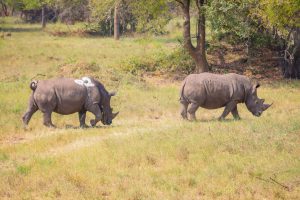
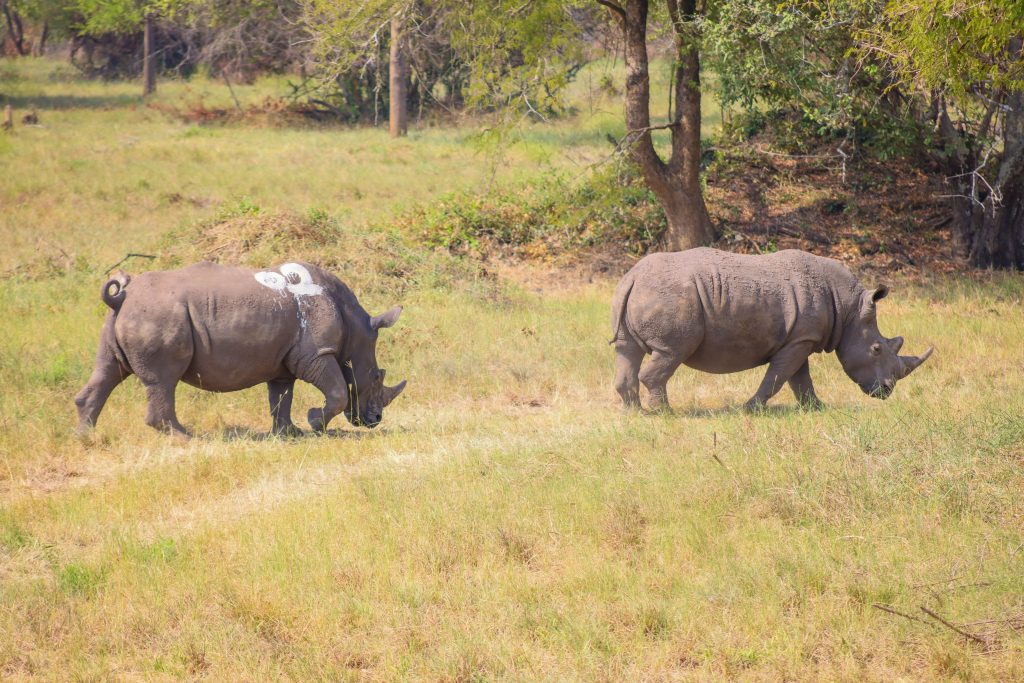
In a landmark conservation move, the Uganda Wildlife Authority (UWA) has successfully translocated four southern white rhinos from Ziwa Rhino Sanctuary in Nakasongola District to Ajai Wildlife Reserve in West Nile, marking the first-ever relocation of rhinos between protected areas within Uganda.
The historic operation signals a major milestone in Uganda’s long-running effort to restore species that were wiped out during decades of political instability, poaching, and habitat destruction.
“This is not just a movement of animals; it is the return of a lost symbol of our natural heritage,” UWA Executive Director Dr. James Musinguzi said, describing the relocation as a new chapter in Uganda’s conservation journey.
A Carefully Planned Return
The translocation forms the opening phase of a national programme that will see 20 rhinos relocated to Ajai Wildlife Reserve, a protected area once known as one of Uganda’s strongholds for rhinos before their extinction in the wild
The four rhinos, now under round-the-clock monitoring, are being closely observed as they adapt to their new environment. According to UWA, a second phase involving the remaining 16 rhinos will only proceed after the successful stabilization of the first group.
Ajai Wildlife Reserve, located west of the Albert Nile, was historically home to the northern white rhinoceros, a subspecies now considered functionally extinct in the wild. While the southern white rhino is not indigenous to the region, conservation experts say its reintroduction is guided by the principle of conservation equivalence, recognizing that both subspecies belonged to the same species before their evolutionary separation.
“This approach provides an ecologically credible pathway for restoring rhinos to Uganda’s landscapes,” UWA said in a statement.
From Extinction to Recovery
Uganda once hosted two rhino species: the northern white rhino and the eastern black rhino. The northern white rhinos ranged across West Nile, including Ajai, while the eastern black rhinos occupied areas east of the Albert Nile, stretching through Acholi, Lango, and Karamoja.
That legacy came to a brutal end during the years of insecurity in the 1970s and early 1980s. Rampant poaching and habitat loss decimated rhino populations, with the last known wild rhino in Uganda killed in Narus Valley, Kidepo, in 1983.
The road to recovery began in 1997 with the establishment of Rhino Fund Uganda, followed by awareness campaigns in the early 2000s. In 2001, two rhinos were imported from Kenya and temporarily housed at the former Uganda Wildlife Education Centre (UWEC). A major breakthrough came in 2005–2006, when breeding commenced at Ziwa Rhino Sanctuary with the introduction of six rhinos—four from Kenya and two from Disney’s Animal Kingdom in the United States.
From that modest beginning, Ziwa’s rhino population steadily grew, becoming one of Uganda’s most successful conservation stories. In December 2025, eight additional southern white rhinos were imported from South Africa to further strengthen the breeding programme in line with the National Rhino Conservation Strategy.
Why Ajai Matters
The return of rhinos to Ajai Wildlife Reserve is expected to transform the reserve’s ecological and economic prospects. Conservationists say the presence of rhinos will enhance biodiversity, strengthen ecosystem balance, and boost tourism potential in West Nile—one of Uganda’s less-explored conservation regions.
For communities living around Ajai, the development carries both opportunity and responsibility. UWA has appealed to neighbouring communities and the wider public to support the conservation effort by reporting illegal activities and safeguarding the animals from threats.
“The success of this programme depends not only on UWA but on the people who live alongside these protected areas,” the authority noted.
A Symbol of National Resilience
Beyond conservation, the rhino translocation carries deep symbolic meaning for a country still rebuilding scars left by conflict and environmental loss.
“The return of rhinos to Ajai is a proud and emotional moment for Uganda,” Dr. Musinguzi said. “It reflects years of dedicated conservation work and restores an important part of our natural heritage for future generations.”
As the four rhinos settle into their new home, Uganda takes a bold step toward reclaiming a piece of its lost wildlife history—one hoofprint at a time.