

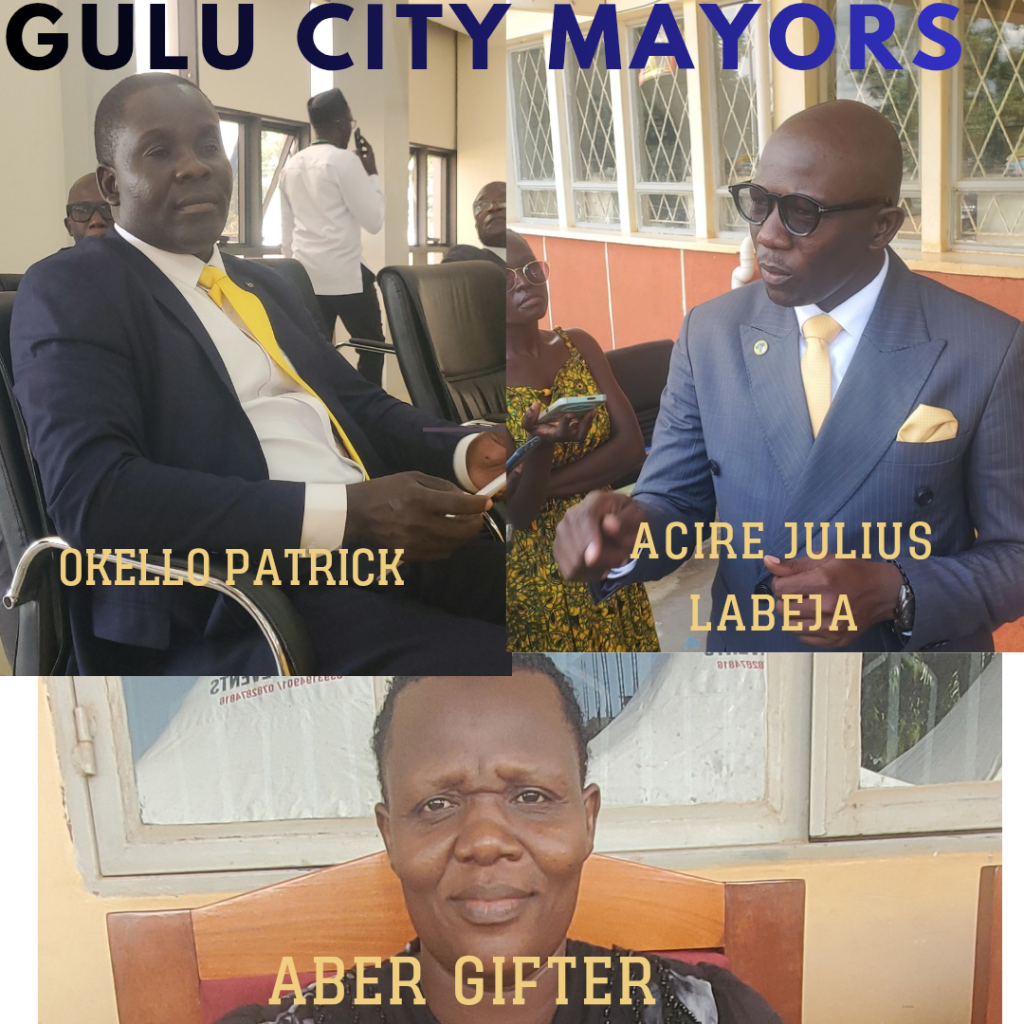
The new leadership now faces the task of translating its commitments into tangible development outcomes for the people of Gulu City
By Willy Chowoo
Gulu City—On May 21, 2026, the celebrations, ululations, and oath-taking ceremonies that marked the inauguration of Gulu City’s new leadership came to an end, ushering in a demanding five-year term for 85 elected officials.
The newly sworn-in leaders include 39 representatives from Laroo-Pece City Division, 30 from Bardege-Layibi City Division, and 16 from Gulu City Council. Also taking the oath were the three mayors—two representing the divisions and one for the city—signaling the official start of a new administrative cycle.
During the swearing-in ceremony, the mayors collectively pledged to prioritise community-centered leadership, emphasising improved service delivery and responsiveness to the needs of residents.
With the formalities now concluded, attention shifts from ceremony to governance, as the leaders take on the challenge of translating their commitments into tangible development outcomes for the people of Gulu.
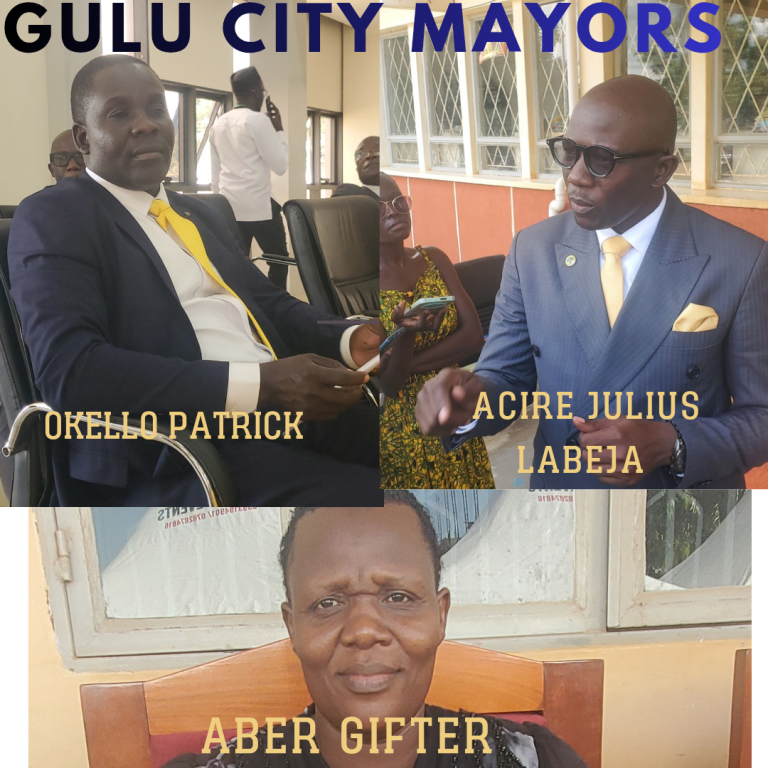
Acire Julius Labeja, the mayor of Gulu City, outlines key service delivery priorities that his government will provide over the next five years and encourages the city’s new leaders to fully grasp the weight of the responsibility they carry.
The priority areas include, among others, providing clean streets, safe water, security, functional health facilities, good schools, accessible markets, and decent housing.
The mayor also cautioned against complacency and mediocrity, urging all leaders and civil servants, from councillors to street cleaners, to give their best in service.
“I believe so much in teamwork, in the contribution of every one of us to build the city that we want,” he appeals.
There has been growing concern that collaboration between politicians and technocrats has, in many instances, undermined service delivery. However, Gulu City Town Clerk Innocent Ahimbisimbwe acknowledges that effective teamwork remains essential if the city is to achieve its goals.
“We shall make sure your promise is a reality from today; help open the door to your office so that we share with you openly; and give us the listening ears so that we shall deliver beyond expectation,” Ahimbisimbwe adds.
Both division mayors also pledged to promote people-centered and corruption-free leadership.
“This power doesn’t belong to Aber Gifter; it belongs to the people of Laroo-Pece. I pledge to work with you to meet the expectations of our people,” Aber, Laroo-Pece Division Mayor, noted.
Aber further committed to fulfilling the aspirations of the electorate: “I will do what you people elected me to do. As Gifter, I don’t like corruption; this is the time to work; let us make service delivery available to our people.”
The transition from municipality to city was marked by tensions between division mayors and the city leadership, a situation that has negatively affected council performance and service delivery. However, the newly elected mayor of Bardege-Layibi, Okello Patrick, emphasised that “unity will be our priority in the execution of the council duties.”
Meanwhile, Resident City Commissioner Onoria Ambrose called on leaders to demonstrate integrity and mutual respect in managing the city.
“For a city to progress, we must have people with ideas, people who work with others, and those who can add value,” Onoria adds.
Despite the renewed commitment to improving service delivery, a critical question remains: how will these ambitions be financed, given that local revenue accounts for less than 10% of the city’s budget?
In the last five financial years, the council collected only sh15.6 billion, only 47.4% of the total expected revenue collection, which was sh32.9 billion.
The most straightforward answer lies in strengthening local revenue collection. Below is a closer look at some of the key tasks ahead.
Strengthening Local Revenue Mobilisation
Gulu City’s budget remains largely reliant on central government funding, particularly through conditional and discretionary transfers, which account for more than 70% of the total budget.
In the 2020/2021 financial year, the city registered its highest budget estimate of Sh63.8 billion, largely driven by external financing under USMID amounting to Sh44.6 billion. However, locally generated revenue stood at only Sh4.8 billion, representing a very small fraction of the total budget. Of this, only Sh1.8 billion was actually collected—just 35% of the projected local revenue for that year.
A similar trend persists in recent financial years. In FY 2025/2026, central government transfers contributed 78.5% (Sh30.7 billion) of the Sh39.1 billion budget, while in FY 2026/2027, the contribution rose to 82.1% (Sh33.4 billion) of the Sh40.7 billion approved budget. This underscores the city’s continued dependence on external funding to sustain its operations.
According to the Gulu City Local Revenue Enhancement Plan (2021–2026), the council had projected generating Sh10.2 billion annually in local revenue by FY 2026. However, actual collections remain far below target, standing at about Sh1.98 billion—leaving a shortfall of more than Sh8.22 billion. This has derailed plans to increase the share of locally generated revenue from 3.8% in FY 2019/2020 to 20% by FY 2025/2026.
Over the past five financial years, the city has collected Sh15.6 billion against a projected Sh32.9 billion, achieving only 43.5% of its target. The highest annual collection was recorded in FY 2024/2025 at 4.8 billion shillings. Gulu City Council Finance Officer Okot Denis attributes this performance to negative taxpayer attitudes and widespread tax avoidance.
The city also inherited weak revenue collection systems from the former Gulu Municipality, which generated Sh12.7 billion between 2015 and 2020 against a projection of Sh22.5 billion—just 56.4% of the expected amount.
The revenue enhancement plan identified 20 potential revenue streams, with key sources including business licenses, ground rent, market and gate charges, property-related fees, and rental income from privately managed assets.
Laroo-Pece Division remains the largest contributor to local revenue due to its concentration of taxable economic activities such as markets, the bus park, and hotels, followed by Bardege-Layibi Division.
In FY 2019/2020—the final year before Gulu attained city status—the four divisions of Layibi, Laroo, Pece, and Bardege collectively generated Sh1.5 billion against a budget of Sh4.3 billion, with Pece Division alone contributing Sh1 billion.
Since attaining city status, revenue performance has improved. Laroo-Pece Division increased its collections from Sh900 million in FY 2020/2021 to about Sh3 billion in FY 2024/2025, while Bardege-Layibi grew from Sh500 million to Sh1.3 billion over the same period.
Laroo-Pece’s revenue is largely driven by Gulu Main Market, which generates approximately Sh960 million annually, making it the single largest revenue source in the city. Former Mayor Otim Geoffrey credits earlier improvements to efforts aimed at sealing revenue leakages. However, in FY 2025/2026, the division’s revenue declined from Sh3 billion to Sh2.5 billion.
Otim attributes the drop to disruptions caused by the election period, enforcement operations targeting traders, and competing government programs that diverted field staff from revenue collection.
“There is a need to intensify revenue collection through sensitisation of taxpayers, teamwork, facilitation of the revenue teams, and enforcement,” he adds.
Similarly, former Bardege-Layibi Mayor Oola Patrick Lumumba commended efforts to expand the division’s revenue base and encouraged continuity.
“We made sure that we put in all the efforts to increase our revenue base, and I urge the new leaders to keep this stride,” Oola notes.
Former Gulu City Mayor Okwonga Alfred links earlier improvements in revenue performance to the introduction of a digital revenue collection system in July 2021, which helped reduce leakages.
With new leadership now in office across the city divisions, experts warn that without deliberate reforms, revenue challenges will persist. Low local revenue collection has already limited the city’s ability to meet its service delivery commitments, largely due to leakages, political interference, negative taxpayer attitudes, and tax evasion.
From now on, strengthening local revenue mobilisation will be critical. The city mayor has emphasised the need to attract investments across the city to expand the revenue base and reduce dependence on central funding.
Support for small businesses and stronger collaboration with the private sector are also seen as key strategies.
“We need to strengthen the partnership and make sure that we activate public-private partnerships for those things we are not able to accomplish,” he adds.
Town Clerk Ahimbisimbwe says the city is open to partnerships with both local and diaspora investors as part of efforts to boost its revenue base and finance development priorities.
Strengthening Urban Security
Gulu City has recently experienced a surge in violent urban crime, with several residents reportedly shot or attacked by yet-to-be-identified assailants. The attacks have largely targeted boda boda riders and security guards. Previously, the city had also struggled with an organised criminal group commonly known as the Aguu.
In response, the new city leadership has pledged to work closely with security agencies to restore safety as they begin their five-year term.
“We shall work hard to provide security to our people during our tenure.” An inaugural statement by Okello, the new mayor of Bardege-Layibi city division.
Okello expressed concern that some of these attacks occur in broad daylight, questioning the effectiveness and responsiveness of security personnel.
His counterpart from Laroo-Pece Division, Aber, described the situation as even more alarming, noting that two people lost their lives shortly after she assumed office.
“My office will do the operation so that security is managed properly,” she noted.
The Deputy Resident City Commissioner for Laroo-Pece, who also chairs the area security committee, Peter Banya, recently emphasised that addressing urban crime in a post-conflict setting like Gulu requires more than routine patrols.
Banya pointed out that simply arresting and imprisoning young offenders is not a sustainable solution, as many return to crime after release. He instead advocates for a more holistic approach, including rehabilitation and skills development.
“As a government, we need to get a piece of land where we can build an institution that ranges from detention to mindset change to rehabilitation, up to skilling, then jobs, because this is a new normal that is coming up, the world is moving on, and these kids are moving with modernity,” he maintains.
Struggles in Sustaining Solar Street Lighting.
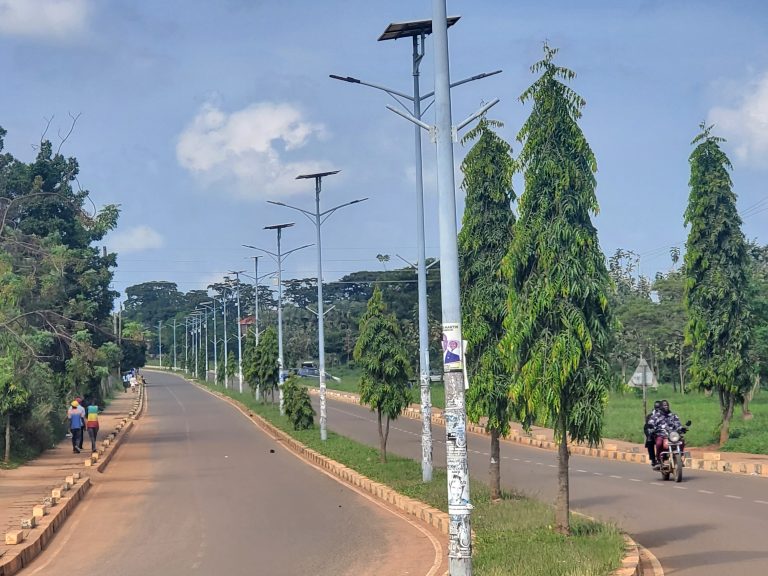
Since 2018, Gulu City has installed about 3,000 solar street lights to enhance urban security and support a 24-hour night-time economy. However, maintaining this infrastructure has emerged as a major challenge, with nearly 1,000 of the lights currently non-functional.
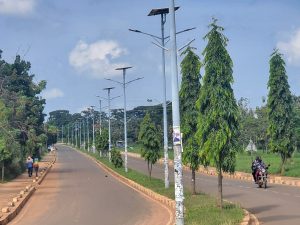
The city estimates that it requires Sh2.2 billion to repair 920 faulty street lights. Yet, only Sh120 million is available, enough to fix just 91 lights—representing only 5.5% of the required funding.
Gulu City Engineer Omara Christopher Balmoi attributes the frequent breakdowns to outdated battery technology used in earlier installations. He explains that the batteries, which were buried underground, had a short lifespan of about three years.
However, Eng. Omara is optimistic that newer lithium battery technology will ease maintenance challenges due to its durability and longer lifespan.
“This battery has a lifespan of 7 years minimum, with an expectation of 15 years,” he adds.
In addition to technical limitations, the city is also facing persistent vandalism, which has further reduced access to street lighting and compromised safety at night.
At the same time, budget constraints continue to limit intervention efforts. In FY 2026/2027, the city expects to raise Sh6.7 billion from local revenue to support a Sh40.7 billion budget—just a small fraction of the total.
Of this, the roads and engineering sector has been allocated Sh3.9 billion, accounting for only 9.6% of the budget.
Addressing Gulu City’s Road Network Challenges
Gulu City spans approximately 242.5 square kilometers, covering both the original municipality and newly annexed areas. Despite this expansion, road infrastructure remains underdeveloped, particularly in the outskirts.
Laroo-Pece City Division alone has about 250 kilometers of road network, of which 220 kilometers are unpaved and only 30 kilometers are paved—highlighting the scale of the infrastructure gap.
For Laroo-Pece Mayor Aber Gifter, this presents an opportunity to deliver on her campaign promises, with a focus on improving roads in underserved areas.
“I will work for three days in the office; the rest will be fieldwork. I will start my work from the annexed areas; I will make sure our roads are opened, and the routine maintenance is done,” she maintains.
However, limited financing remains the biggest obstacle to road expansion and mechanised maintenance. Over 70% of the city’s revenue still comes from central government transfers, while locally generated revenue contributes less than 10%, constraining infrastructure development.
“Certain areas cannot connect to other roads; we have limited funding, so we may not be able to do everything at once. Rest assured that the city is aware of all these issues, and we plan for it every year,” Eng Balmoi notes.
Budget allocations to the roads and engineering sector have also declined. In the last financial year, the sector received Sh3.9 billion, but in FY 2026/2027, the allocation dropped to Sh2.3 billion—a reduction of Sh1.6 billion. Compounding the challenge, funds are not always released as planned.
Former Bardege-Layibi Mayor Oola Patrick Lumumba, speaking during the inauguration of new leaders, emphasised the progress already made and the need for continuity.
“We have laid a solid foundation for the division; we have improved our revenue as well as opening new roads, and you need to begin from there.”
Over the past five years, the division increased its local revenue collections from Sh556 million to Sh1.3 billion. However, road connectivity challenges persist across all divisions, with many annexed areas still lacking access to the main city network.
The city engineer acknowledges that some roads remain unopened. “We pray that the lower local governments open it so that we can start maintaining it.”
Even where roads have been opened, maintenance poses another hurdle. To address this, the city has introduced a community-based approach, empowering local leaders to take part in road upkeep.
Eng Balmoi explains that government funding is now channelled through LC1 leaders to support community-led maintenance efforts.
“I want to encourage you to trust your LCIs and plan with your LCI to ensure that the money is put to better use, and the city also works with you to ensure that.” He adds.
Despite the challenges, former Mayor Okwonga Alfred commended the quality of roads constructed during his tenure, noting that standards were not compromised.
“There is no road whose size was reduced, and the quality of the roads was standard,” Okwonga celebrates.
Fixing Drainage and Waste Management Challenges
Drainage coverage in Gulu City remains inadequate, particularly in newly annexed areas where many cells lack proper systems to connect to the older sections of the city.
In his handover report, former Laroo-Pece Mayor Otim highlighted that poor drainage infrastructure has resulted in frequent blockages across the division.
Through the USMID project, the city constructed modern drainage channels within the central business area to control flooding and improve sanitation. However, over time, many of these drains have become clogged with plastic bottles and other solid waste, while some sections have deteriorated. As a result, heavy rainfall often leads to overflow and flooding in parts of the city.
To address waste accumulation, the city has engaged private firms such as TAKATAKA to collect plastic waste. Despite these efforts, the problem persists, prompting the development of a comprehensive drainage master plan aimed at improving maintenance and ensuring proper waste management.
The city has once again secured funding under the USMID program to support the development of a modern drainage system. An estimated Sh4 billion has been earmarked to implement the master plan.
City Engineer Balmoi is optimistic that these interventions will significantly improve drainage in the city, noting that additional concerns around drainage redesign are also being addressed. He adds that a major downstream project is underway to ensure proper water flow.
“You saw last year we distilled a lot of roads in the city; we are going to continue with that to ensure that within the city center, all the drainage is clear and the water flows downstream,” he adds.
However, broader challenges in waste management remain unresolved. The city currently lacks reliable data on the volume of waste generated annually and does not have a fully functional solid waste management facility.
The National Environment Management Authority has already cautioned against continued use of the existing disposal site due to associated environmental and health risks.
Until a proper waste management facility is established, Gulu City is likely to continue grappling with persistent urban waste and drainage challenges.
Tackling Corruption in Key City Functions
Corruption remains one of the underlying challenges affecting service delivery and public trust in Gulu City. As the new leadership settles in, attention is increasingly turning to critical areas where transparency and accountability must be strengthened.
During the swearing-in speech, the city mayor warned leaders against using public office for personal enrichment.
“The unpleasant truth is that there is no money in this job. If you came to enrich yourself, you will be utterly disappointed,” Labeja said.
He emphasised integrity, transparency, and accountability, promising zero tolerance for corruption and “under-the-table deals.”
Some of the councillors who are now back in the council were accused of allegedly receiving bribes from an investor to set up a controversial petrol station in a wetland in Gulu City.
The area of interest is land registration and documentation in the city.
Irregularities in land registration processes have often led to disputes, double allocation, and loss of public confidence. Strengthening documentation systems, digitising land records, and enforcing clear procedures will be essential to curb fraud and ensure fairness in land ownership and transactions.
Former Mayor of Bardege-Layibi, Oola, acknowledges that corruption in the land registration process has denied many residents the opportunity to register their land within the city.
“There is so much corruption, which is very disgusting; someone has to pay money at every stage just to move their files,” he notes.
There have been cases of missing files, delays, underfunding, and bribery within the land department in Gulu City, as residents accuse the officials of asking for too much to enable them to register their land.
Due to low revenue collection, the Natural Resources Dept. (Physical Planning, Environment, Land, and Surveys) has complained of underfunding to help them speed up land documentation. It has received only Sh2.5 billion in the last four financial years.
City Principal Land Officer Mukonyozi Everyline says prioritising the department shall save the city from delayed land documentation, including physical planning, surveys, and environmental management.
The procurement process or award of contracts has been prone to manipulation, favouritism, and inflated contract costs. Ensuring open and competitive bidding, strict adherence to procurement guidelines, and regular audits can help restore integrity in the award of contracts and guarantee value for public funds.
Allegations of nepotism and political interference in recruitment have undermined efficiency within the city administration. Promoting merit-based hiring, transparent selection processes, and independent oversight will be key to building a competent and professional workforce.
Addressing corruption in these areas will not only improve governance but also enhance service delivery and rebuild public confidence in the city leadership.
With the leadership commitment, it is to have people-centered governance, with citizens guiding policy and decision-making.
“Before we make any resolution, let us ask ourselves how it impacts the lowest common man,” Mayor Labeja said.
The mayor has pledged an open-door policy to ensure public engagement and accountability while urging councillors to consult widely and provide feedback to citizens.
“We need to shift focus from politics to service delivery—mute all the noise that politics brings to divide us,” he warns
With a strong emphasis on unity, integrity, continuous learning, and public service, the new leadership now faces the task of translating its commitments into tangible development outcomes for the people of Gulu City.
Administrative Structure of Gulu City
Gulu City started as a town in 1910 during the colonial administration; in 1972, it was upgraded to municipality status, and in 2020, it was elevated to city status, which became operational in 2021.
The city comprises two city divisions—Laroo-Pece and Bardege-Layibi—and Laroo-Pece has 19 wards and 78 cells, while Bardege-Layibi has 13 wards and 50 cells.
Other than the city mayor and two division mayors in the city, the lower local government council is represented by the local councils, two and one at wards and cells, respectively.
Gulu City has 32 local council two chairpersons and 128 local council one chairpersons.
This means there are 215 leaders in the city for the next five years.





3 Responses
Hahahaha You are so good
Good a blog toper
Great post,Thanks for sharing