At the heart of the petition are claims that Mao and the Electoral Commission violated provisions of the Parliamentary Elections Act. The petitioner accuses Mao of the use of state resources, bribery, and voter inducement claims.
By Willy Chowoo
Gulu City
When Norbert Mao responded to an election petition challenging his victory in Gulu City with a cryptic message—”I don’t fight dogs. I fight their owners. Full Stop”—he did more than dismiss a legal challenge.
He reignited the simmering political tensions of Northern Uganda.
Behind the statement lies a deeper struggle: a region still negotiating power, memory, and political identity two decades after the war.
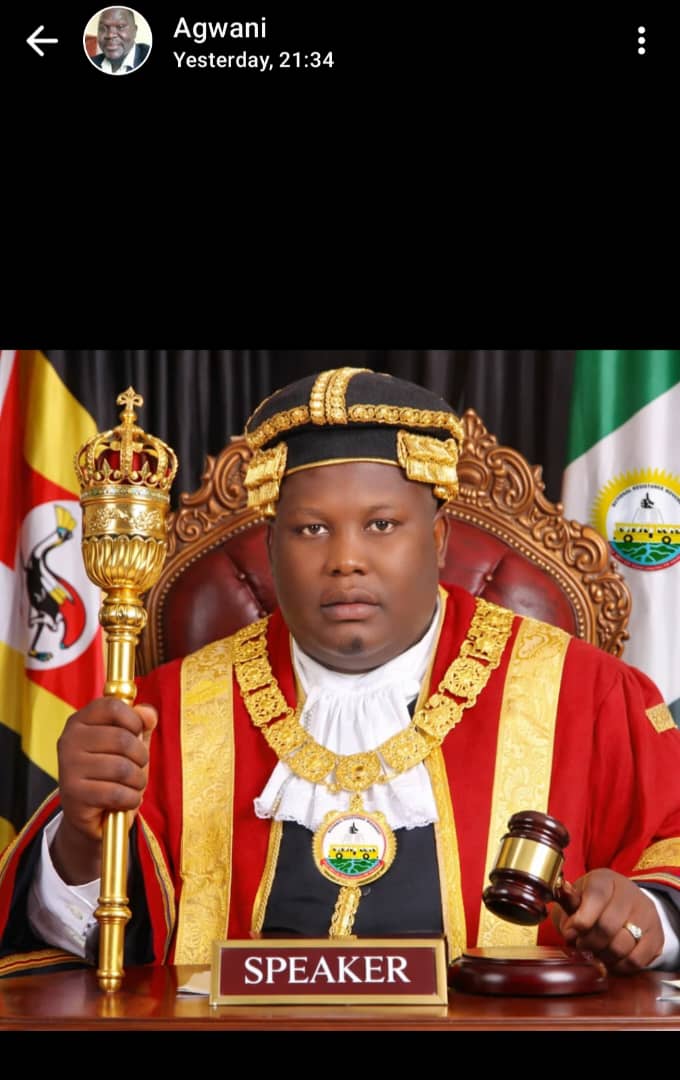
Kitara also responded with another cryptic message after the dog’s message went viral. “No card player starts his game with a joker or master spade.” This is the message on his official WhatsApp status.
The petition that refuses to be ignored
Minister Mao’s response followed a petition by a former parliamentary candidate for the Laroo-Pece Division in Gulu City, Tonny Kitara. He dragged Mao to the High Court, seeking to nullify his election over alleged widespread irregularities and illegal practices.
In an election petition filed before the High Court in Gulu, Kitara challenges Mao’s victory in the January 15, 2026, parliamentary race, arguing that the election was marred by “substantial non-compliance” with Uganda’s electoral laws.
According to the petition, Mao, who also serves as Uganda’s Minister for Justice and Constitutional Affairs, was declared the winner with 7,359 votes, defeating Kitara, who garnered 2,867 votes. Several other candidates trailed far behind.
According to the results released by the Electoral Commissioner, Mao beat his closest rival with 43.9%, while the petitioner only got 17.1% of the total valid votes of 16,754 counted. This result indicates Mao is the clear winner in terms of vote share, with a strong lead over the petitioner, with a vote difference of 4492.
The Laroo-Pece Division parliamentary race attracted five other candidates, with the petitioner finishing third, while incumbent Charles Onen emerged first runner-up with 5,562 votes
Kitara, who is contesting this victory now, wants court to overturn the results, claiming that the electoral process was fundamentally flawed and unfair.
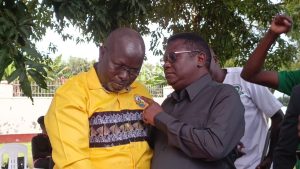
Tony Kitara, who is also a lawyer, is being represented by Kampala-based law firm Messrs Alaka & Co. Advocates.
Allegations of Electoral Misconduct
At the heart of the petition are claims that Mao and the Electoral Commission violated provisions of the Parliamentary Elections Act. The petitioner accuses Mao of the use of state resources, bribery, and voter inducement claims. He was further accused of making false statements and manipulation.
Kitara accuses Mao of campaigning outside the official schedule, allegedly disrupting his campaign activities in key wards and holding late-night radio campaigns, including broadcasts that reportedly ran past legally permitted hours on local stations.
In his petition, Kitara also accused Minister Mao of interfering with rival campaign events, including driving through Kitara’s campaign gatherings.
Use of State Resources
One of the most serious accusations is the alleged misuse of government resources.
Kitara claims Mao used an official government vehicle and police escorts attached to his ministerial office to campaign across the constituency, actions he argues gave Mao an unfair advantage over other candidates.
Bribery and Voter Inducement Claims
The petition further details multiple incidents of alleged voter bribery.
Kitara alleges that Mao and his agents:
Distributed cash to women’s savings groups to influence votes
Gave money to individual voters during campaign events
Allegedly facilitated payments to political mobilisers, including ward-level leaders
In one instance, the petition claims UGX 150,000 was given to a women’s group leader to influence over 40 voters.
False Statements and Manipulation
Kitara also accuses Mao of spreading false information during campaigns, including claims that rival candidates had stepped down in his favour—an allegation he says misled voters and distorted the electoral outcome.
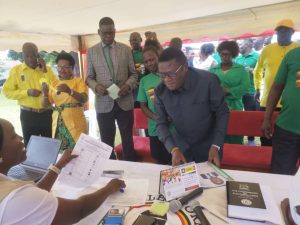
Electoral Commission under Fire
The Electoral Commission is also accused of collusion and negligence, including allowing unlawful campaign practices, failing to enforce electoral laws and allegedly permitting its officials to engage in partisan activities
However, the electoral commission is yet to make an official statement over this allegation
A political comeback laden with history
For Norbert Mao, the Laroo-Pece contest is not just another election; it is a return to familiar political ground.
Mao is a veteran of Gulu’s parliamentary politics, having represented Gulu Municipality in Parliament from 1996 to 2006. His decade-long tenure positioned him as one of the most prominent political voices from Northern Uganda during the height of the region’s conflict.
After leaving Parliament, Mao transitioned into national politics, twice contesting for the presidency of Uganda. Though unsuccessful, those bids elevated his profile beyond Acholi, recasting him as a national political figure.
His latest victory in Gulu City, therefore, marks more than an electoral win; it signals a strategic political homecoming.
Mao’s earlier tenure (1996–2006) coincided with one of the most turbulent periods in Northern Uganda’s history, during the height of the insurgency by the Lord’s Resistance Army.
Mao’s re-entry into local elective politics comes at a time when Northern Uganda is undergoing a generational political shift.
For Norbert Mao, the Laroo-Pece parliamentary seat is not just about representation—it is a launchpad for national influence.
Mao is currently contesting for the position of Speaker of Uganda’s 12th Parliament, expected to commence in mid-May 2026. This places his disputed electoral victory at the centre of a much larger political equation.
A new class of younger politicians, like Tonny Kitara, is emerging, challenging established figures and questioning long-standing power structures.
Legal test ahead
The petitioner argues that the alleged irregularities and illegal practices “substantially affected the results” of the election—one of the key legal thresholds required for nullification.
The High Court is expected to determine whether the election was conducted in accordance with the law and whether any violations significantly impacted the outcome.
The Tweet That Shifted the Narrative.
Instead of a legal rebuttal, he took to social media with a statement that has since dominated political conversation:
“I don’t fight dogs. I fight their owners. Full Stop.”
The remark has triggered widespread speculation.
Who are the “owners”?
Political rivals?
National power brokers?
Fellas in the speakership race?
Or unseen interests shaping Gulu’s political landscape?
The ambiguity has only deepened intrigue and tension.
What’s at Stake
The case could have far-reaching implications for electoral accountability in Uganda, especially given Mao’s dual role as both a cabinet minister and elected legislator.
If the court finds merit in the petition, it could nullify the election and order a fresh vote in the Laroo-Pece Division
Minister Mao has just returned to local politics after running for the presidency twice. Mao represented Gulu Municipality in the parliament from 1996 to 2006 after serving for 10 years.