By our reporter
The Ministry of ICT and National Guidance, in collaboration with the National Information Technology Authority-Uganda (NITA-U), has intensified stakeholder consultations to inform the development of Uganda’s National Emerging Technologies Strategy, a framework that will guide the adoption, governance, and responsible use of emerging digital technologies across the economy.
The strategy comes at a time when emerging technologies such as artificial intelligence, blockchain, the Internet of Things, advanced data analytics, and other innovations are transforming economies, industries, and public service delivery worldwide.
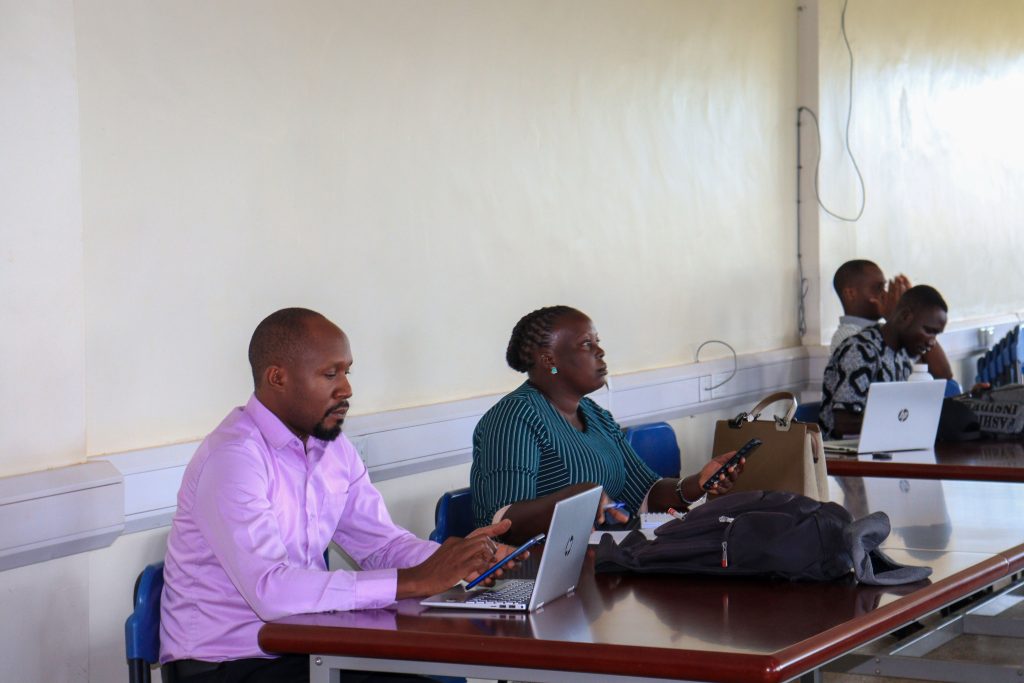
As part of the development process, the Ministry and NITA-U are conducting structured stakeholder engagements, including regional group discussions that bring together actors from government, the private sector, academia, and the innovation ecosystem. Following earlier engagements, the consultations have now progressed to Gulu, continuing the nationwide effort to gather inclusive and region-specific insights.
These engagements are designed to capture sector-specific insights, identify opportunities and challenges, and generate policy recommendations that will shape the national strategy.
Irene Karungi, a senior ICT infrastructure engineer and a member of the Artificial Intelligence National Taskforce at the Ministry of Information and Communication Technology, said they are in Northern Uganda to do consultation towards the development of Uganda’s National Emerging Technology Strategy, which is going to have a major focus on artificial intelligence among other emerging technologies.
According to Karungi, the engagement is not happening in isolation but is part of a broader national journey that Uganda has already embarked on to use AI as one of the emerging technologies to solve real problems to improve service delivery, like businesses, creating jobs, and enhancing livelihoods, especially in regions like Northern Uganda.
She encouraged the participants to think boldly but also practically and consider how AI can be used to solve real problems in the country.
Toolit Ivan, a journalist in Gulu, said the consultation by the ministry is timely and helpful to journalists and media practitioners since emerging technologies like AI are beneficial for research and providing timely information as well as supporting quick detection and verification of fake news.
Associate Professor Oyo Benedict from the Faculty of Science at Gulu University said the future of ICT is embedded in AI, and emerging technologies are unstoppable since all sectors require them for productivity.
“Look, we need them in agricultural mechanisation and most industry jobs, like packaging, which used to take a lot of time but is now automated; hence, this consultation is timely,” he said.
He challenged that the Ministry of ICT should also think about investing heavily in emerging technologies like supporting AI servers in all institutions of higher learning as a long-term strategy in galvanising the gains of the consultations.
The Permanent Secretary of the Ministry of ICT and National Guidance, Dr. Aminah Zawedde, emphasised the importance of a deliberate, forward-looking approach to emerging technologies. “Across the world, emerging technologies such as artificial intelligence, blockchain, the Internet of Things, robotics, and big data analytics are transforming economies and public services,” she said. “Uganda must take deliberate steps to ensure that these technologies support our national priorities and create opportunities for our people.”
Dr. Zawedde noted that the country has already laid critical foundations through its digital transformation agenda, including the development of a national data strategy to support data-driven technologies. She further emphasised the need for inclusive digital transformation, including ensuring that citizens can access and use digital technologies in languages they understand, and highlighted the importance of ensuring that regions like Northern Uganda are fully integrated into the digital economy.
Ambrose Ruyooka, Head of ICT Research and Development at the Ministry, explained that the strategy will provide a coordinated national framework to guide the development and use of emerging technologies, including addressing key areas including ethical and trustworthy use, standards and regulation, infrastructure development, investment, and innovation, while aligning Uganda’s approach with international and regional frameworks.
Ends