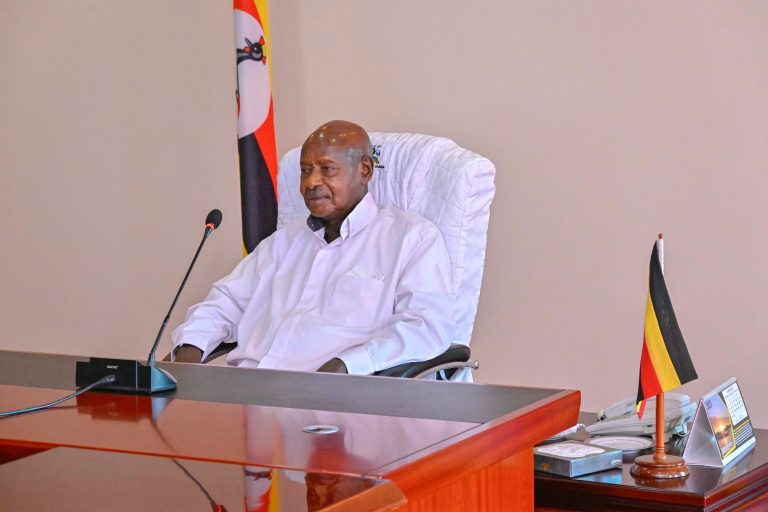
“Government has invested in irrigation in order to boost agricultural production,” President Museveni said. “The provision of water for irrigation reduces the likelihood of crop failure due to water scarcity.”
By Willy Chowoo
Kampala, Uganda June 5, 2025— President Yoweri Kaguta Museveni has unveiled an ambitious irrigation and agricultural development strategy aimed at transforming Uganda’s agriculture into a robust, modern, and climate-resilient sector.
In his State of the Nation Address delivered at Kololo Ceremonial Grounds on June 5, 2025, President Museveni emphasized that investing in irrigation and agro-industrialization is key to lifting farmers out of poverty, ensuring food security, and accelerating the country’s economic growth.
Scaling Up Irrigation to Combat Climate Risks
“Government has invested in irrigation in order to boost agricultural production,” President Museveni said. “The provision of water for irrigation reduces the likelihood of crop failure due to water scarcity.”
While Uganda currently has only 23,141 hectares under irrigation, registering an increase from 22,976 hectares , however, its potential stands at a massive 3.03 million hectares. To close this gap, the government is rolling out various initiatives, including the construction of solar-powered, medium-scale, and large-scale irrigation systems.
“In order to achieve this goal, government is accelerating the construction of solar powered irrigation schemes, medium scale irrigation schemes, earth dams, communal and individual valley tanks and large-scale irrigation schemes, across the country”, President notes.
According to the president, 92 solar-powered irrigation schemes have been completed, covering 900 acres in districts such as Apac, Buhweju, Buliisa, Bushenyi, Hoima, and Kakumiro. These schemes have directly benefited 111,600 farmers, resulting in increased production yields of up to 3,600 tons per season. Crops being grown under these schemes include tomatoes, onions, cabbages, green pepper, Irish potatoes, watermelons, coffee, and pineapples.
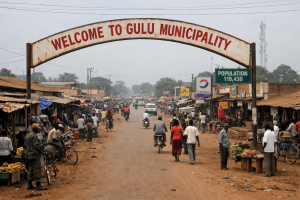
In addition, 22 solar-powered irrigation demonstration sites are under construction in districts like Kabarole, Kole, Gulu, Napak, and Abim. These demonstration sites are expected to promote adoption of climate-smart agriculture practices among smallholder farmers.
Medium-scale schemes like Kirema Phase I in Nakaseke, covering 124 hectares and supporting 50 farmers, have also been completed. Construction works for Wadelai Irrigation Scheme (1,000 hectares) in Pakwach are 93.5% complete, while the Namaitsu scheme in Bududa stands at 70%, and Kawumu is nearing completion at 90%.
Among the mega projects is the Nyimur Irrigation Scheme in Lamwo District, covering 3,300 hectares. Others include the Acomai scheme in Bukedea (1,480 hectares), Atari in Kween and Bulambuli (680 hectares), and Namatala in Budaka, Mbale, and Butaleja (3,450 hectares), which together are expected to benefit more than 9,000 households.
Boosting Agricultural Production and Exports
The president reported significant growth across several agricultural sub-sectors. Milk production, for instance, rose from 2.5 billion litres in 2017/18 to 5.4 billion litres in 2024, backed by increased market access in countries like Algeria and Nigeria. This has pushed the value of milk exports to USD 285.4 million, up from just USD 28.7 million in 2015.
Coffee remains Uganda’s top agricultural export. The volume increased from 7.8 million (60kg) bags in FY2022/23 to 8.2 million in FY2023/24. Export earnings rose from USD 845 million to USD 1.144 billion over the same period. This growth is credited to the government’s support for irrigation, distribution of improved seedlings, and fertilizer usage.
Maize production has also surged, from 3.4 million metric tons in 2018 to 5 million in 2024. Export earnings for maize rose to USD 195.3 million, a significant jump from USD 63.5 million five years ago. The success has been attributed to increased use of improved varieties, pest and disease control, and value addition.
Fish production has reached 658,000 metric tons annually. Enhanced enforcement of fisheries laws, deployment of the army to protect breeding zones, and the promotion of aquaculture have helped revive the sector. Fish export earnings increased from USD 148.7 million in 2020/21 to USD 152.8 million in 2023/24.
Agro-Industrialization and Access to Credit
To ensure sustainability and value addition, President Museveni highlighted the ongoing investment in agro-processing technologies, fertilizer production, improved inputs, and post-harvest infrastructure.
A key initiative is the Large-Scale Commercial Farmer Credit Facility, a Shs. 175 billion interest-free loan scheme accessed through Post Bank, Housing Finance Bank, and Pride Bank. This facility enables commercial farmers to acquire mechanization equipment and increase exports.
Government is also strengthening agricultural research, with UGX 30 billion earmarked for NACCRI to develop climate-resilient and pest-resistant coffee varieties.
According to the president, next year’s agricultural budget will prioritize, Construction of key water storage and irrigation infrastructure, Enforcement of quality standards for exports, and Establishment of storage and post-harvest facilities
Other areas that will be put for consideration is the Control of pests, diseases, and vectors, Expansion of extension services, and Certification of inputs and improved access to agricultural finance.
Parish Development Model Accelerating Rural Transformation
The Parish Development Model (PDM), now in its third year, has received Shs. 3.3 trillion in total investment. President Museveni noted that each parish receives Shs. 100 million annually, and the program is already showing impact.
In Kisoro District, beneficiaries of PDM funds were able to earn between Shs. 16 to 20 million from onion farming, having started with just Shs. 1 million in capital. Enterprises under PDM include beekeeping, goat and piggery farming, and high-value crop production.
The Bigger Picture
President Museveni stressed that these agricultural investments are part of a broader economic transformation agenda, aiming to lift the remaining 33% of Ugandan households still engaged in subsistence farming into the money economy.
“With irrigation, agro-industrialization, and wealth creation programs like the PDM, Uganda is on an irreversible path toward middle-income status,” the president said. “Our focus is on inclusive growth that benefits every household.”
As Uganda gears up for the 2025/26 financial year, the agriculture sector is set to remain a cornerstone of economic resilience, job creation, and national food security.