An AI-generated image
Before the regional laboratory was established in 2022, businesses in Northern Uganda had to send product samples to Kampala for testing, where it operates its 4 laboratories at the headquarters.
By Chowoo Willy
In the aisles of a supermarket in Gulu City, Gladys Oroma carefully scans product labels before placing items in her basket. For her, certification is no longer optional; it is a matter of safety.
“I ensure that every product I buy is certified,” she says. Some products in the market are not certified, and their quality is very low. Certification helps us know what should be on the market and protects us from harm.”
Oroma’s vigilance reflects a growing awareness among consumers about the risks posed by substandard products. Across Northern Uganda, regulators, producers, and consumers are increasingly turning to the Uganda National Bureau of Standards (UNBS) to ensure products meet acceptable quality standards.
Voice-1: Oroma Gladys is sharing her experience about buying from supermarkets
At the center of this effort is the Uganda National Bureau of Standards (UNBS) Gulu Regional Science Laboratory, helping Micro, Small and Medium Enterprises (MSMEs) test and certify their products before they reach consumers or international markets. It is among the three regional laboratories set up by UNBS in the country; the others are in Mbale and Mbarara. The Laboratory is helping to bring standards clloser to businesses
Before the regional laboratory was established in 2022, businesses in Northern Uganda had to send product samples to Kampala for testing, where it operates its 4 laboratories at the headquarters. The process was expensive and slow, often discouraging small producers from seeking certification.
Tropical Honey Limited, a honey processing and packaging company based in Gulu City, is among the businesses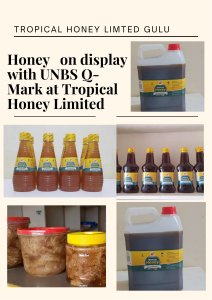 that have directly benefited from the regional laboratory. After operating for years without certification, the company has since expanded its customer base.
Wilfred Acire, a manager at the facility, says the decision to pursue certification was driven by the need to access wider markets. At the time, the company’s products were only reaching a limited share of the Ugandan market.
“Our goal was to expand our market,” Acire explains. “There are many supermarkets here in Gulu, but if your product is not certified, they will not accept it.”
Voice-2: Acire Wilfred is explaining what motivated them to certify their products with UNBS
The Uganda National Bureau of Standards (UNBS) Gulu regional laboratory was established to decentralise testing services and make them more accessible to producers in Northern Uganda.
Enoch Kalabika, a standards officer at the facility, says the laboratory was brought closer to businesses to shorten the time required for testing and feedback.
“The laboratory was established nearer to producers so that we can reduce the turnaround time for customers to receive results and know the status of their samples,” Kalabika explains.
The facility operates chemistry and microbiology laboratories where products are tested to ensure they meet required safety and quality parameters. Each month, the laboratory receives dozens of samples from producers seeking certification.
According to Kalabika, on average, they receive between 50 samples in three weeks or 60 in a month, and he adds that those that have been able to certify their products are now able to trade across the border to South Sudan.
“I just encourage all our small-scale business owners to use this as an opportunity to ensure that they certify their products so that they really access bigger markets,” Kalabika notes.
Voice-3: Enoch Kalabika sheds more light on the Laboratory
Among the products commonly tested are maize flour, honey, bread, beverages such as kombucha, and locally distilled gin. If products fail the required parameters, producers are advised on how to improve them before resubmitting samples.
The Uganda National Bureau of Standards (UNBS) is a government agency in Uganda responsible for ensuring the quality, safety, and standards of products and services in the country.
Certification Opens Market Opportunities
The Uganda National Bureau of Standards (UNBS) report highlights a growing challenge where many products on the market are not certified despite the increasing number of certification applications.
During the 2024/2025 financial year, UNBS received 8,270 applications for products certification, but only 5,703 products were granted certification, meaning about 31% of the products failed to obtain certification.
However, this shows that Certification demand is rising , but approval rates are declining. UNBS attributes this to a lack of funding to handle the increasing demands expeditiously. The chart shows an increase of 1,356 new applicants in FY 2024/2025, compared to 6,914 in FY 2023/2024.
According to Kalabika, some products fail certification because they do not meet all the required testing parameters.
Kalabika explains that each product sample is tested against several quality indicators, and failing even one of them can lead to rejection.
“A sample may be tested on about five parameters, and if it fails even one, it cannot pass,” he says. “Such a product is not allowed on the market until it meets all the required standards.”
Voice-4: Enoch Kalabika explains how the Lab has impacted on the business in the sub-region.
However, for many small businesses, certification has become a gateway to larger markets.
Acire, manager of Tropical Honey Limited, says the company decided to certify its products to access formal markets.
“Before certification, our market was limited,” he explains. “Supermarkets would not take your product if it were not certified. But after certification, we were able to supply supermarkets and grocery stores.”
The company sources honey from both its own apiary and from outgrower farmers. Each year, it purchases more than 1,200 kilograms of honey from farmers and harvests additional honey from its own production.
According to Acire, certification has helped increase consumer trust and expand the company’s customer base. “Now we have customers even from Kampala, and some buyers take our products abroad for their relatives,” he says.
Voice-5: Acire of Tropical Honey Limited shares on how they benefited from certifying their products
The increase in the number of certified products in the market today is helping to build trust for the consumers through Standards.
For consumers like Oroma, certification assures that products on store shelves are safe. “When I see a product that is certified, I feel confident buying it,” she says.
However, despite the efforts by the UNBS to clean the Uganda market of substandard and counterfeit products, a significant number of products may still enter or remain in the market without meeting the required quality standards, raising concerns about consumer safety and product competitiveness.
The 2024/2025 UNBS report also shows that market surveillance inspections continue to detect substandard products, with over 1.26 million kilograms of non-compliant goods were seized during inspections carried out across the country.
Semakalu Antonio, a Senior Metrologist at the Uganda National Bureau of Standards (UNBS), says the circulation of substandard and counterfeit goods remains a serious challenge in Uganda.
According to Antonio, such products pose significant health risks to consumers, particularly children who may unknowingly use unsafe items.
“Substandard goods are a big problem because they can pose risks to people’s health,” he says. “Some of these products contain toxic chemicals that can be harmful to consumers.”
He adds that the presence of low-quality products in the market also affects Uganda’s trade and the ability of local businesses to access regional and international markets.
“If our products do not meet the required standards, traders and entrepreneurs may fail to sell across borders because their goods are not recognised for quality or traceable origin,” Antonio explains.
A food safety expert has raised concerns over the continued circulation of uncertified and potentially harmful products on the Ugandan market, calling for urgent reforms to strengthen consumer protection and public health.
Bwambale Bernard, Head of Programs at CONSENT Uganda, says while the Uganda National Bureau of Standards (UNBS) has made progress in establishing laboratories across the country, critical gaps remain in ensuring food safety and compliance with standards.
“The bottom line is for people to understand the importance of quality,” Bernard said, noting that many Ugandans still consume products that do not meet safety standards, exposing themselves to serious health risks.
Bernard warned that uncertified food and consumer products continue to pose a danger to public health, as some contain toxic substances or fail to meet required standards.
He emphasised that when consumers buy uncertified products, they are “subjecting themselves to injurious products which can harm their health,” underscoring the need for stricter enforcement and awareness.
To address the problem, UNBS has intensified public awareness campaigns and is working with the media to educate consumers about standards and quality assurance.
“We are engaging the media because they are the mouthpiece of the country,” Antonio says. “They help break down the technical work we do so that consumers can understand it and make informed decisions.”
He encourages the public to pay attention to information about UNBS activities and standards enforcement to better protect themselves from substandard products.
The UNBS has issued 5,328 permits to Micro, Small and Medium Enterprises (MSMEs) over the last five years, with the highest number was in FY 2024/2025, which was 1,772. It shows that MSME certification has increased by 42%, indicating growing participation by small businesses.
Protecting consumers from unfair trade
In order to protect the consumers, the UNBS Regulatory Directorate has intensified market surveillance and enforcement to curb the circulation of substandard goods and ensure compliance with national standards.
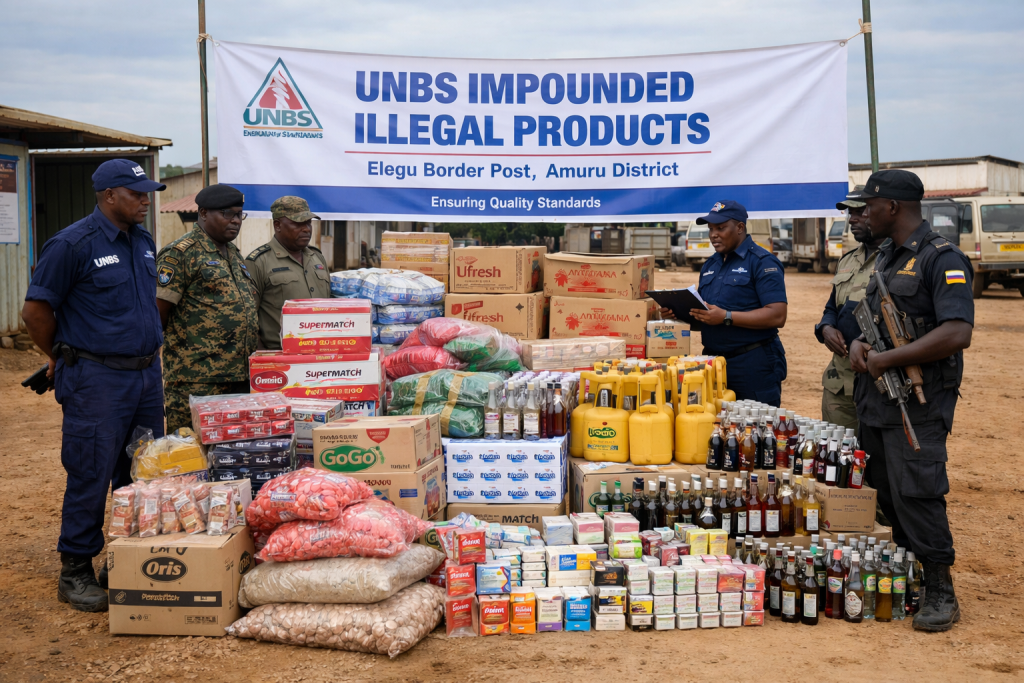
In the 2024/2025 financial year, the bureau conducted 4,028 market inspections, leading to the seizure of 1,264,897 kilograms of substandard goods and the sealing of 438 premises for non-compliance.
Beyond product certification, regulators are also addressing another challenge that affects consumers: fraudulent measurements in trade.
The Metrology department of Uganda National Bureau of Standards is responsible for verifying weighing scales, fuel pumps, and measuring equipment used by traders. Legal metrology ensures that when customers buy a kilogram of sugar or a litre of fuel, they actually receive the correct quantity.
The Bureau, over the past five financial years, it has been able to calibrate 30,049 pieces of equipment. In the financial year 2024/2025 alone, they have calibrated 6,392 pieces of equipment to enhance accuracy in measurements.
Semakalu Antonio, a Senior Metrologist at the UNBS, says the routine inspections and calibration of measuring equipment are essential in protecting consumers from dishonest traders.
“When measurements are inaccurate, consumers lose money and trust in the market,” Semakalu explains. “Our role is to ensure that measuring instruments used in trade are verified and accurate.”
These inspections are particularly important in busy trading centers where goods are bought and sold in large volumes.
Efforts to curb the influx of substandard and counterfeit products in the Acholi sub-region are beginning to yield results, due to the presence of a regional laboratory established by the Uganda National Bureau of Standards (UNBS) in Gulu City.
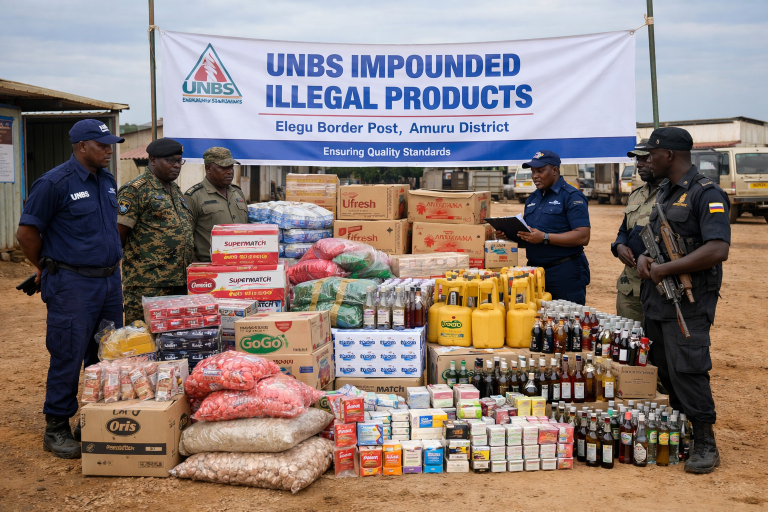
At Elegu Town Council in Amuru District, a key border point between Uganda and South Sudan, authorities say cases of substandard goods have significantly reduced following the operationalisation of the lab.
Kalabika, a standards officer with the UNBS Lab in Gulu City, recalls the challenges traders previously faced when testing services were only available in Kampala.
“Before the Gulu lab was established, it was as if we were not facilitating trade. Traders had to wait for results for up to three weeks,” Kalabika said.
He explained that transporting samples to Kampala was costly and time-consuming, often delaying cross-border trade. However, with the Gulu laboratory now operational, traders can access testing services within hours.
“From Elegu to Gulu is about two hours. A client can bring a sample and receive results much faster. The turnaround time has greatly reduced,” he added.
Kalabika noted that the faster testing process has strengthened enforcement efforts and helped curb the entry of substandard products, many of which originate from outside Uganda.
Leaders in Amuru District say the laboratory has enhanced the detection and prevention of unsafe goods, particularly agricultural products traded across the border.
Authorities have previously intercepted consignments that failed to meet safety standards, including food products posing risks to consumers.
John Idra Kovuki, Chairperson of Elegu Town Council, said there have been no major incidents recently, following the impounding of 10 trucks carrying substandard maize flour in 2023.
“Most agro-processors are now benefiting from the laboratory. Many milling operators here have certified their products, which has improved quality,” he noted.
Boost to trade and consumer protection
District officials emphasise that the lab is not only improving food safety but also boosting Uganda’s export potential by ensuring products meet required standards.
The Resident District Commissioner of Amuru, Geoffrey Osborn Oceng, confirmed that while a few isolated cases still occur, the situation is largely under control.
“There is no major problem with substandard products at the border. However, we have detected a few cases of aflatoxin in maize,” Oceng said.
The presence of the UNBS regional laboratory is now seen as a critical intervention in protecting consumers, supporting local businesses, and facilitating safer cross-border trade.
Bernard appealed to the Government of Uganda to increase funding and logistical support to UNBS to enhance its ability to protect consumers.
“It is not enough to have laboratories. Government must equip UNBS with adequate funding, personnel, and capacity to reach all regions and effectively safeguard the public,” he said.
Voice-6: Bernard on the need for the government to provide additional support to UNBS
He stressed that improved facilitation would enable the bureau to conduct more inspections, certify products efficiently, and support businesses to meet both local and international standards.
Tourism and trade connection
Quality standards are also increasingly linked to tourism and Uganda’s global reputation.
Officials from the Uganda Tourism Board note that certified local products can enhance the country’s tourism experience, especially when visitors purchase locally produced foods, beverages, and crafts.
Dr. Gessa Simplicious, the head of public relations at Uganda Tourism Board, says quality assurance helps position Uganda as a destination that offers safe and authentic local products.
Dr. Gessa noted that Uganda Tourism Board sustainably promotes Uganda as a competitive food destination for inclusive governments by looking at marketing, “we encourage investments, we encourage the development of products and diversify them, we ensure quality standards.”
When visitors trust the quality of local goods, they are more likely to purchase them and even carry them back to their home countries, creating new opportunities for local producers.
A visit to the Fort Patiko, a tourist destination site in Gulu District, where the locals sell crafts to the visitors, the issue of standard is still key here, where most of the local manufactures are have not yet certified their products
Gulu District Tourism Officer, Kitara Patrick, who also oversees standards of goods sold at the site, says they always ensure that tourists buy goods that are certified as a safety measure.
“We have to protect our visitors, you know, when somebody comes here and catches a disease, the impact will be huge, so always advise them what to do,” Kitara notes.
As Northern Uganda’s small businesses seek to expand beyond local markets, the UNBS Gulu Regional Science Laboratory is emerging as a crucial bridge, connecting producers to consumers, protecting buyers from unfair trade practices, and preparing local products to compete in regional and global markets