Kwepena, commonly played by girls, is being transformed into a structured competitive sport by CHEZA
Teddy Dokotho
Gulu City.
For generations, children across Africa have turned simple spaces, homemade balls and whatever was available around them into places of play. Traditional games were more than entertainment. They brought communities together, kept children physically active and passed culture from one generation to another.
Today, however, many of these games risk disappearing as modern sports take centre stage. In Uganda, one organization is trying to ensure that a traditional game known as Kwepena does not become a memory of the past.
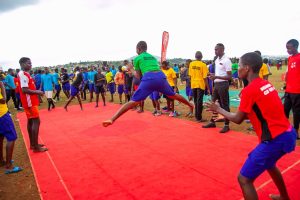
Kwepena, commonly played by girls, is being transformed into a structured competitive sport by CHEZA, an organization founded by Simon Peter Tumukunde. The organisation has given the game a unified identity, Cheza Dodge, while developing modern rules, equipment and playing courts that can allow it to grow beyond informal community play.
“What CHEZA is, we add value and innovation to traditional African sports.” Tumukunde explains He says the organization recognized that many traditional Ugandan games existed but had never been given the opportunity to evolve into professional and competitive sports.
The significance of Kwepena extends beyond Uganda. According to Tumukunde, variations of the game are played in several African countries under different names. In Kenya it is known as Kati, while in South Africa it is called Ushumpu and in Cameroon Ndochi.
For CHEZA, these similarities demonstrate how deeply connected African cultures are.
The organization is working across Uganda and other African countries, including Kenya, South Sudan, Rwanda, Burundi and Ethiopia, to create a network of people interested in preserving and developing traditional African games.
The challenge, however, is not simply getting people to play. It is making traditional games sustainable.
Many traditional African games require very little equipment. A seed, a small ball made from fibre or an open piece of ground could provide everything children needed to play. That accessibility made the games important entry points into physical activity, particularly for communities without access to expensive sporting facilities.
But their simplicity also contributed to their neglect. Tumukunde argues that traditional games need rules, equipment, organised competitions and infrastructure if they are to survive alongside established sports.
“If there is a stadium for football, this is the biggest sport by women. If our mothers played this game, it doesn’t have a stadium,” he says, highlighting the need to give games such as Kwepena the same institutional recognition afforded to modern sports.
CHEZA has begun developing rule books, specialised equipment and playing surfaces for Kwepena. The aim is to retain the essence of the traditional game while creating a framework through which children and adults can participate competitively.
The preservation effort is also closely connected to increasing girls’ participation in sport.
Ajok Gloria Brenda, a coach and player from Omoro, says training programmes are helping coaches understand the challenges faced by female athletes.
“We were undergoing a training that is aimed at building the capacity of coaches to be able to train the female athletes,” she says.
For Brenda, safeguarding is particularly important because female athletes may face challenges that male coaches do not always understand. She believes having appropriate policies and female leaders around girls’ teams can make sporting environments safer and more supportive.
That focus is central to CHEZA’s partnership with the Association for International Sport for All, or TAFISA. The organisation is implementing the Girls Positive and Safe Coaching Pathway in Uganda, a programme supported by Nike and designed to increase girls’ participation and retention in sport.
The programme addresses issues including body confidence, safeguarding, reporting concerns and coaching girls. CHEZA adds a traditional-sports component, using games such as Kwepena as an entry point for girls who might otherwise never participate in organised sport.
The approach is simple: reconnect young people with a game they already know.
“A girl may never play any other sport, but she may play this game, and she played it when she was a kid,” Tumukunde says.
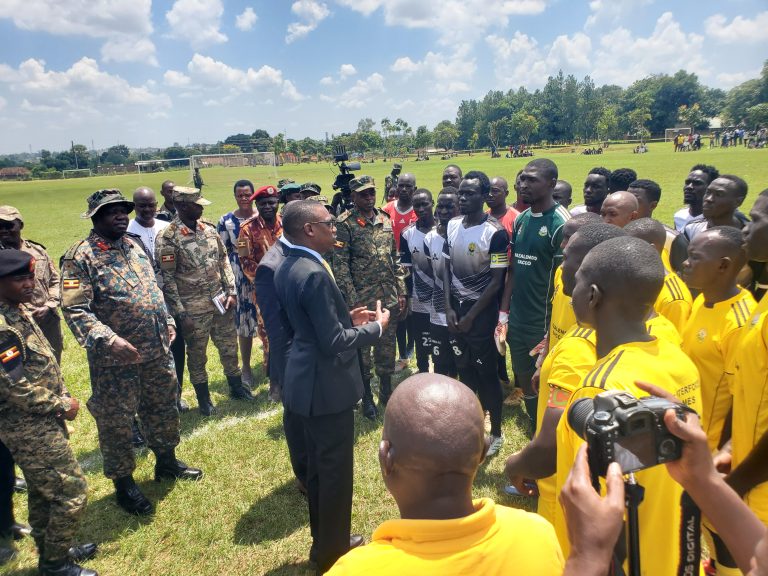
In Gulu, sports administrators are also strengthening safeguarding measures Ojara Sunday Braston, the Gulu District sports officer, says coaches and administrators are required to sign safeguarding policies and ethical compliance commitments before travelling with athletes. Female leaders are also required to accompany girls’ teams.
Such measures are intended to make sport safer while creating an environment where girls can remain active and develop their abilities.
The effort to preserve Kwepena therefore goes beyond saving a game. It is about protecting a piece of African cultural identity while adapting it for contemporary generations.
CHEZA’s work suggests that preserving tradition does not necessarily mean leaving it unchanged. A traditional game can retain its cultural roots while gaining modern rules, organised competitions and opportunities for professional development.
About the game
Cheza Dodge, commonly known as Kwepena (Okwepena), is a traditional African ball game originating in Uganda that has been developed into a more structured and competitive sport.
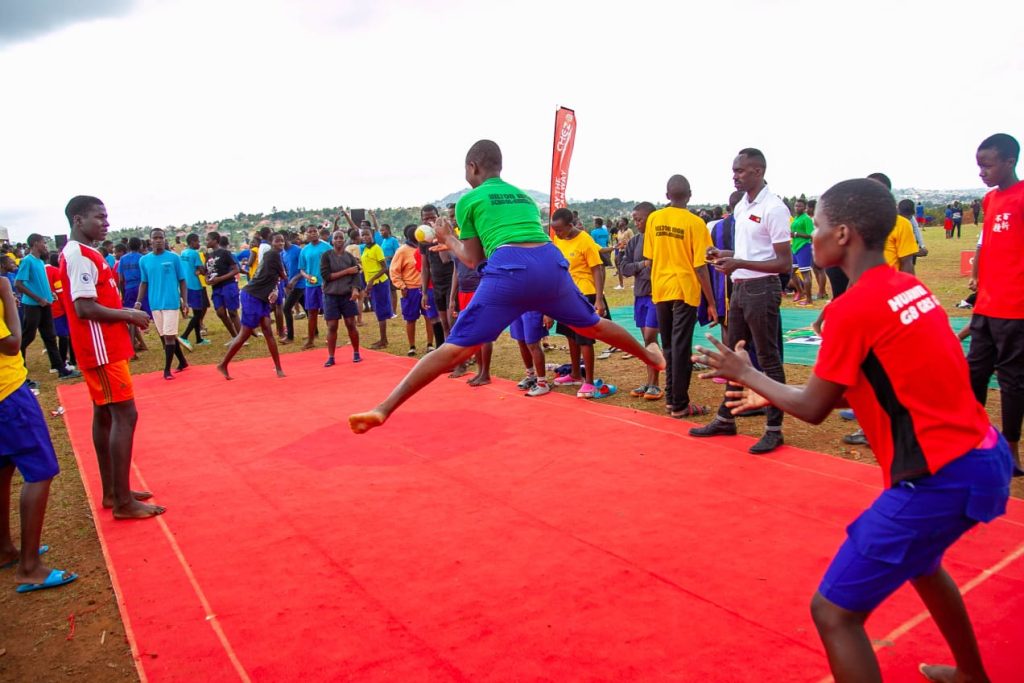
The traditional version of Kwepena involves players trying to dodge a soft ball thrown at them, while the modern ChezaDodge version introduces organized teams, a defined playing court, specific equipment, time limits, scoring systems and officials.
The name Kwepena refers to the traditional game, while ChezaDodge represents its modern sporting form. The aim of the modernization is to preserve a popular African children’s game while developing it into a sport that can be played competitively by young people and adults.
The main objective of ChezaDodge is to avoid being hit by the ball while scoring points through successful dodging. Players use speed, agility, balance, anticipation and quick reactions to avoid the ball.
At the same time, the opposing players attempt to throw the ball accurately and hit the dodging player. This creates a competition between the thrower’s accuracy and the dodger’s ability to move, anticipate and evade the ball.
How the Traditional Kwepena Game Is Played
In the traditional form of Kwepena, players are divided into throwers (shooters) and dodgers. The dodgers stay in the playing area while the throwers stand at opposite ends and throw a soft ball toward them.
The dodgers move around the area trying to avoid being hit. If a player is hit by the ball, that player is eliminated and normally becomes a thrower. The game therefore gradually changes as players are eliminated.
Players can also earn points for successfully avoiding the ball. One traditional dodging technique is known as okwawuza, where a player jumps so that the ball passes between their legs.
The Modern Cheza Dodge Version
ChezaDodge takes this basic idea and organizes it into a proper sporting competition.
The game is played between two teams, with each team consisting of players who can take on attacking and defensive roles. The modern version uses a marked court, standardized equipment and officials to control the game.
Earlier descriptions of the sport specified teams of five players, with only certain players occupying the court at a given time. The modern rules have continued to develop as ChezaDodge has been standardized.