The introduction of cocoa to Northern Uganda is increasingly appears attractive to farmers who see it as an opportunity to diversify their livelihoods.
By Johnisani Ocakacon
Gulu
The cocoa industry in Northern Uganda is still in its infant stage.
But the promise of growing cocoa extends beyond the farm, as partners work together to introduce the crop as a new enterprise in post-conflict Northern Uganda.
If properly developed, the emerging value chain could create opportunities in seedling production, farm services, harvesting, fermentation, drying, transportation, processing, and marketing at the global level.
The partners, including the Climate Smart Jobs Project, private sector players, and government, view cocoa and coffee as opportunities to generate employment and income within rural communities while encouraging farmers to invest in their farms and households.
Among the promoters of growing cocoa is Adeg-Anii Limited, an agribusiness firm based in the Lango sub-region that works with pioneer cocoa farmers in the Acholi sub-region as well.
Working with the Climate Smart Jobs Project, Adeg-Anii Limited provides guidance to farmers who are establishing cocoa plantations in the two subregions.
Once established, Adeg-Anii Limited believes that healthy cocoa trees provide regular harvests, creating an additional source of income alongside food crops and other agricultural activities.
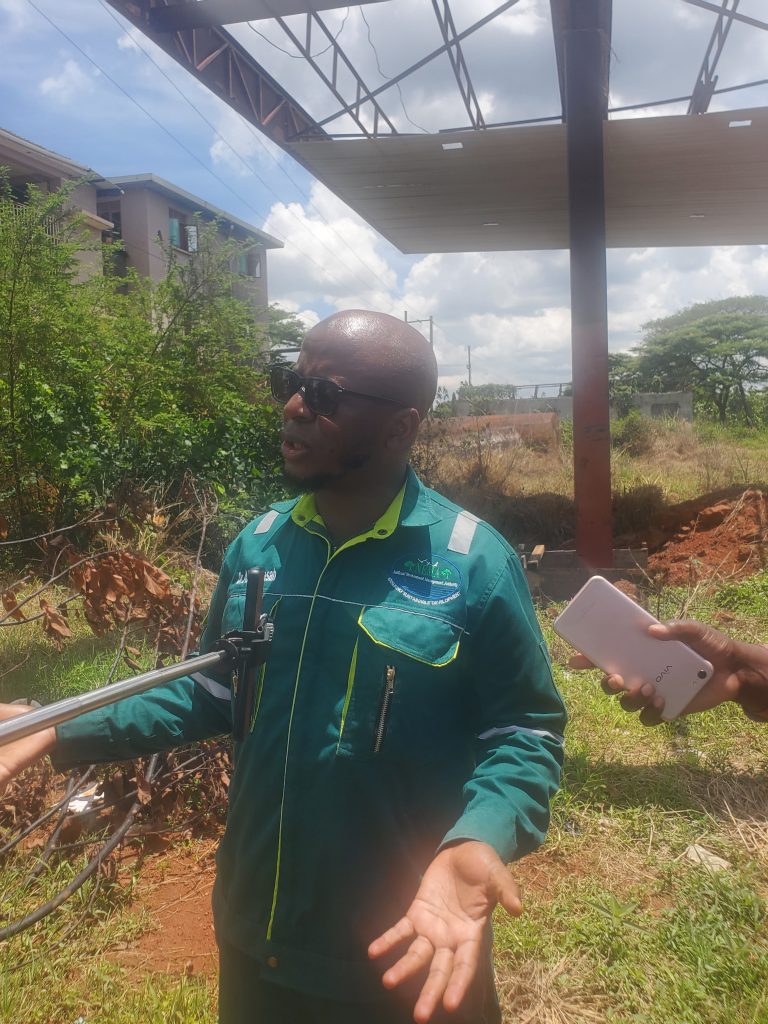
Peter Paul Okullu, the managing director of Adeg-Anii Limited in Lango, says the goal of the partnership is to scale up cocoa production in the Acholi and Lango sub-regions.
“More than 4,000 smallholder farmers have been trained in cocoa growing since the initiative began about four years ago, with more than 40,000 cocoa seedlings distributed to the farmers across the two sub-regions,” Okullu reports.
According to Okullu, the company’s work includes raising cocoa seedlings, training farmers, monitoring their plantations, and helping them access markets through cooperative unions.
“Some pioneer Cocoa farmers have started reaping big from the market because it is a high-value crop with a short maturity period. Last year, the price went up to shs35,000 per kilogram because of its high value, and it can do well in Acholi and Lango,” Okullu says.
Geographic Identifier
Adeg-Anii Limited is registering farmers who have planted cocoa in the various districts of Northern Uganda and plans to help enroll them in the United Nations’ carbon market.
Registration also provides the cocoa grown in Northern Uganda with a geographical identifier, thereby fulfilling the European Union’s anti-deforestation regulation.
Okullu explains that a farmer can plant about 450 cocoa seedlings on an acre of land, alongside shade trees such as bananas, cassava, and peas, allowing farmers to earn interim income as they wait for the cocoa to mature.
“Cocoa is also planted like coffee, with bananas. In one year, a farmer starts harvesting bananas, so a farmer gets double profits. That is why people are encouraged to plant cocoa as a response to climate change,” Okullu says.
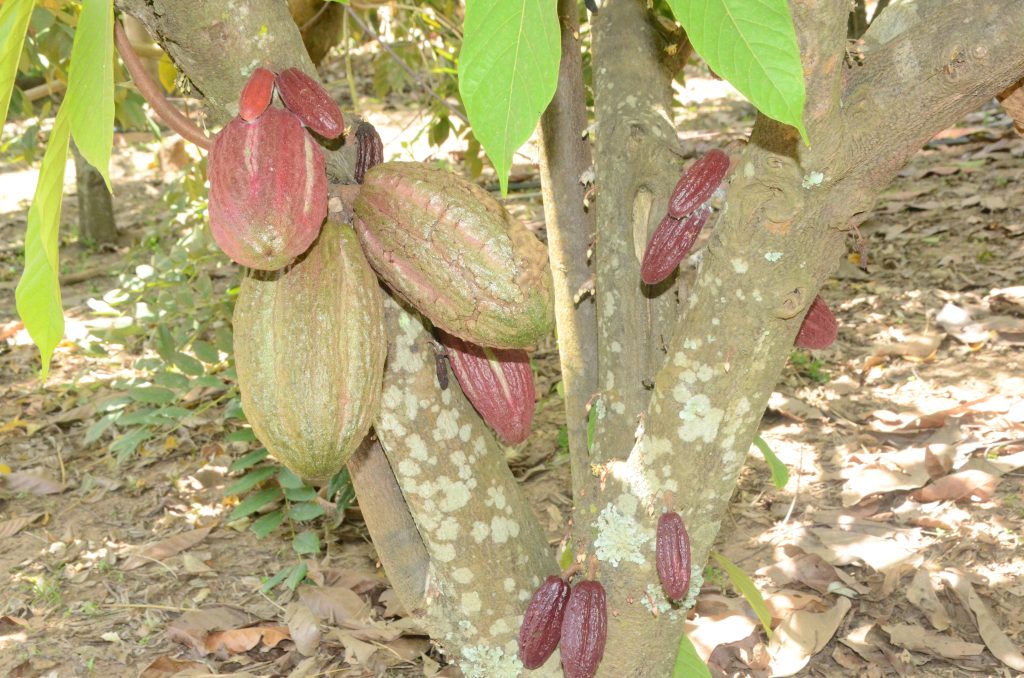
A single cocoa tree can become large and highly productive for several years, producing many pods and beans that contribute to the growing demand for chocolate on the international market.
Okullu, who owns 20 acres of cocoa plantations in Lango, buys around 80 tonnes of cocoa beans from farmers in the Acholi and Lango sub-regions a year.
While the potential high large, growing cocoa comes with its own set of risks. For example, in the Omoro district in the Acholi sub-region, young cocoa plantations face challenges of termites and damage by stray livestock during the peak of dry seasons.
“We have observed that the fungal diseases which affect cocoa plantations are limited and can be managed when farmers follow proper production guidelines,” Okullu reports.
Growing Farmer Interests
The introduction of cocoa to Northern Uganda is increasingly attractive to farmers who see it as an opportunity to diversify their livelihoods, increase household incomes, and build resilience to climate change.
According to Anthony Akera, the chief executive officer of Alum-Alum Investment Limited, another company promoting cocoa in the Acholi sub-region, unlike annual crops that require farmers to start fresh every season, cocoa is a perennial crop that can produce for many years when properly managed.
“More than 300 farmers have been trained and provided with cocoa seedlings over the last two years,” Akera, who owns a 16-acre cocoa plantation in Awach Sub-county, Gulu District states.
With more than 8,000 cocoa trees blossoming on his farm, Akera’s plantation has been producing beans for six years and has provided him with significant financial benefits.
“We provide quality cocoa seedlings to our farmers, and this has enabled them to plant and start producing fruits very quickly. The favorable climate has also supported cocoa growing, which many people previously thought was impossible in Acholi,” Akera says.
In Akera’s farm, each cocoa tree initially produced three to four kilograms of beans in the first two to three years of their existence, with production increasing as the trees matured.
Akera’s company jointly works with Adeg-Anii Limited in the Lango sub-region as Commercial agents of Climate Smart Jobs Project.
Akera said, “the company hopes to begin exporting cocoa to the United States, China and other parts of the world within the next decade if production increases significantly in the region.”
In the meantime, the companies raise and sell cocoa seedlings at affordable prices to farmers, helping to expand cocoa production in the Acholi sub-region.
“We believe this is our climate smart way of responding to climate impacts in the region,” Akera adds.
Agroforestry Goal
Contributing to building climate resilience in the region, the initiative has also encouraged farmers to plant trees as a response to environmental degradation.
“Indigenous trees in the Acholi sub-region have been cut massively for charcoal, leaving the region bare and raising concern about the impacts of climate change. Cocoa growing is therefore a very good response and solution to environmental conservation,” Akera argues.
Walter Martin Nyero, secretary of Nen Kwiri Farmers’ Group in Koch Goma subcounty in Nwoya District, and his group began growing cocoa in 2020 with about 20 farmers after Adeg-Anii trained them during the COVID-19 period.
Nyero reports that the group now has “more than 400 cocoa farmers who have planted the crop and are beginning to benefit as the trees start producing.”
“We get cocoa seedlings from Adeg-Anii Limited at shs1,000 per seedling to encourage farmers to grow more cocoa,” Nyero adds.
The group plans to establish its own nursery to raise quality cocoa seedlings and ensure farmers have timely access to planting materials.
Wilfred Jwee Obali, a cocoa farmer in Labworomor, Lela-Obaro, Omoro District, owns four acres of cocoa plants. He similarly obtained his seedlings from Adeg-Anii after receiving training in cocoa production.
“I get seedlings from Adeg-Anii Limited and plant them in Omoro. Cocoa can do well in Acholi. No one should discourage farmers who want to plant cocoa because there is money in it due to its high value in the market,” Obali says.
Obali believes that communities seeking to reduce household poverty should embrace cocoa because it matures relatively quickly and can be grown alongside bananas, just like coffee.
“With the unpredictable climate, people should turn to cocoa growing instead of wasting time planting crops that may not do well. I have seen the benefits of cocoa after selling a few kilograms and getting good money. The market price is also very attractive,” he says.
Gloria Lanyero, a smallholder farmer in Patiko Sub-county, Gulu District, has planted cocoa on one acre. She reports the crop performing well and has already started producing fruits.
Lanyero plans to increase her cocoa acreage in response to the crop’s performance and attractive market prices.
She adds, “our land is very good for crops, and communities need to embrace cocoa growing to change their lives as the trees help in fighting climate change.”
Ecological Zone
Introducing cocoa to a new production area is not without challenges. Cocoa requires appropriate varieties, suitable soil and climate conditions, good planting materials, and careful management.
As such, farmers must also learn new skills in nursery establishment, planting, pruning, shade management, disease control, harvesting, and post-harvest handling.
For smallholder farmers in Northern Uganda, cocoa offers the prospect of joining a growing national value chain.
Cocoa can also fit into Uganda’s agroforestry systems, where cocoa is grown together with shade trees, fruit trees, and other useful plants. This approach can help protect soil, conserve moisture ,and provide additional products for households.
According to the Ministry of Agriculture, Animal Industry and Fisheries (MAAIF), cocoa is a relatively new but expanding crop in Northern Uganda, including the Acholi sub-region.
The ministry says Uganda’s cocoa production increased from 38,570 tonnes in 2019/20 to approximately 51,678 tonnes in 2023/24.
Traditional cocoa-producing districts include Bundibugyo, Mukono, Buikwe, Hoima, Jinja, and Kamuli, while cocoa production has expanded to additional districts such as West Nile, Acholi, Lango, Teso, Bugisu, and Busoga.
Solomon Etany, the regional manager of Climate Smart Jobs Project in the Acholi sub-region believes the project has laid the foundation of the sector by ensuring that farmers are linked to reliable sources of quality planting seedlings and extension services.
“Right from the first year when a farmer plants cocoa with bananas, he or she starts harvesting bananas in one year and cocoa in the second year. This is to scale up the production of climate-resilient crops and promote the value chain,” Etany stated.
Access to markets will equally be important for farmers in Northern Uganda. Cocoa is a commercial crop, and farmers need dependable buyers, transparent pricing, and proper post-harvest practices to ensure that quality beans reach the market.
For Acholi farmers, demonstration gardens, farmer field schools, and practical training can help communities understand both the opportunities and risks associated with cocoa production as it offers an opportunity to diversify livelihoods, restore tree cover, and build resilience against increasingly unpredictable weather.
Adeg-Anii Limited says the introduction of cocoa therefore represents more than the arrival of another cash crop on Ugandan soil. It is an opportunity to build a diversified, climate-resilient agricultural economy in Northern Uganda.
For the opportunity to translate this opportunity into lasting prosperity, however, pioneer farmers will need quality planting materials, technical knowledge, affordable finance, strong farmer organizations, and reliable markets over the upcoming ten-year period.
If these foundations are put in place, the small cocoa tree planted today could grow into something much bigger – a new source of livelihoods and economic opportunity for farming communities across Northern Uganda.
This story was produced with support from InfoNile and edited by Maddison Erdall, Carbon Carbon Science Team Lead at Centigrade
Ends.