Citizens want the executive to develop and enforce clear policies, Parliament to pass enabling legislation, and local governments to ensure community participation, monitoring, and equitable distribution of revenues.
By Willy Chowoo
Gulu City-As Uganda heads toward the 2026 general elections, citizens in the Acholi sub-region have issued a bold and collective statement of intent: A Citizens’ Charter that lays out the region’s identity, pain points, and concrete demands to government at all levels.
The Acholi Citizens’ Charter 2026–2031, developed through extensive consultations with farmers, traders, cultural and religious leaders, civil society actors, women, youth, and elders, presents both a diagnosis of the region’s deep-seated challenges and a roadmap for recovery, justice, and inclusive development.
Covering nine districts, Gulu, Gulu City, Omoro, Nwoya, Amuru, Kitgum, Pader, Lamwo, and Agago, the charter paints a sobering picture of a region still struggling to recover from decades of conflict, economic marginalization, and weak governance.
The Acholi Citizens’ Charter was developed based on findings from an assessment conducted by the Gulu NGO Forum under the Strengthening Citizens’ Engagement in Public Accountability (SCEPA) project, which identified persistent post-war recovery challenges that aspiring political leaders are urged to address in their campaign manifestos.
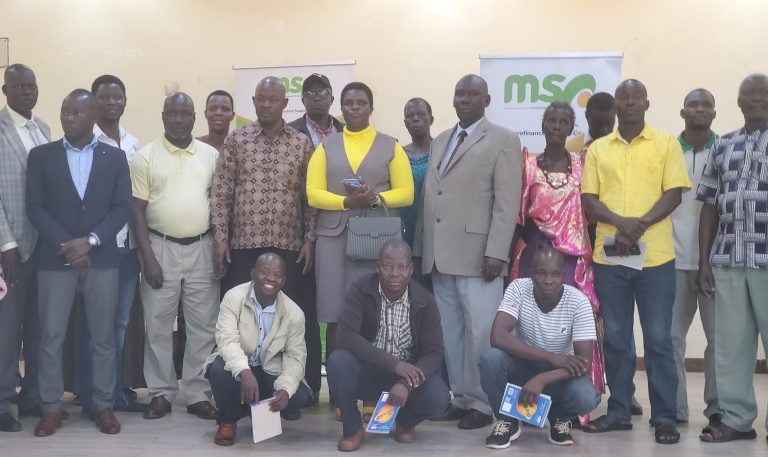
The study was done with support from the National NGO Forum and by the following development partners: Denmark, The Netherlands, Sweden, and Ireland, under the Partnerships on Accountability, Civic Engagement, and Rights (PACER) Program on Accountability, Civic Engagement, and Rights (PACER) Program. The Acholi Citizens’ Charter was released last week in Gulu City
Okello Franklin Boniface, the Executive Director of the Gulu NGO Forum, said the project focuses on communities that have become disillusioned and lost confidence in participating in the country’s governance processes.
“They see no need to participate in the development issue because life is so difficult, and it seems there is nobody to care for them, yet people pay a lot of taxes,” he notes.
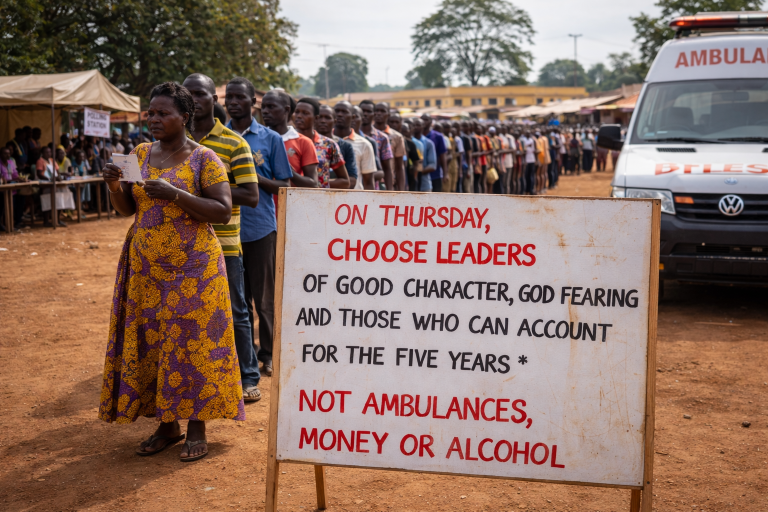
He explained that the project aims to mobilise communities to actively engage in development initiatives, including participation in electoral processes. Okello criticised the low level of citizen participation in Uganda’s elections, describing it as unhealthy for a democratic country like Uganda.
“They don’t want to participate in elections and other programs. And that is very bad, you know, elections where we get leaders who make policies and agendas for the country, and people are not willing to participate. What does it mean for us?” he wondered.
Voice-1: ED of Gulu NGO Forum explaining more about the project
Indeed, voter participation in the 2021 general elections was relatively low by historical standards. Of the more than 18.1 million registered voters, only about 10.7 million cast their ballots, representing roughly 59 percent participation nationally. This means 7.4 million people didn’t vote. This turnout reflects a decline from earlier elections and raises concerns about civic engagement and democratic legitimacy in the country
In Acholi sub-region, out of 710,376 total registered voters, only 340,576 people voted during the presidential and parliamentary elections in 2021, representing 47.9%, meaning 369,800 people did not vote in the last elections
The study carried out from October 2024 revealed several urgent challenges impacting the Acholi sub-region, including, but not limited to, the following: a youthful region trapped in poverty, Land at the centre of Acholi’s struggle, and Oil, minerals, and the fear of exclusion
Others are the Justice delayed for war victims, Insecurity, gangs, and a generation at risk and Women, health, and education left behind
A youthful region trapped in poverty
With a population of just over two million people, Acholi is one of the most youthful regions in Uganda. More than one million residents are under the age of 18, while over 513,000 are young people aged 15 to 30. Yet this demographic advantage has become a liability amid limited opportunities.
According to the charter, 72% of Acholi’s population lives below the poverty line, based on the 2024 Uganda Bureau of Statistics (UBOS) report. Nearly half of all households rely on subsistence farming, and 49% experience food insecurity.
The situation is especially dire for young people. Almost 48% of youth aged 15–24 are not in employment, education, or training (NEET), a statistic that signals both wasted potential and a looming social crisis.
“These figures are not just statistics,” the charter notes. “They reflect lived realities of hunger, frustration, and broken hopes.”
Oyet Alfred, a youth and entrepreneur, believes that unemployment in the post-conflict Acholi sub-region can be reduced if a deliberate program is designed to address the business skills gaps among young people.
“These are people who didn’t have time to go to school due to the war; some of them are now parents to children who can’t go to school, so they need skills to manage a business to transform their lives,” he suggested.
Land at the center of Acholi’s struggle
One of the most contentious issues raised in the charter is customary land ownership, which underpins livelihoods, identity, and cultural continuity in Acholi.
Despite customary tenure being the dominant form of land ownership, it remains weakly protected under statutory law. This has left communities vulnerable to land grabbing, proxy land acquisition, and displacement, particularly linked to the influx of Balalo cattle herders and commercial interests.
According to Okello Franklin, Executive Director of Gulu NGO Forum, and as highlighted in the report, the customary land tenure system in Acholi is being undermined by the economic power of certain actors. Some land is being purchased by foreigners in violation of Ugandan law, which prohibits non-citizens from owning land.
He explained that communities are increasingly losing their identities across the Acholi sub-region due to unregulated land sales.
To address this, citizens demand the establishment of a statutory Customary Land Tenure Registry, with equal legal standing to freehold, leasehold, and mailo systems. The charter calls on Parliament to amend laws to anchor customary tenure and urges local governments to record and manage customary land holdings while sensitizing communities.
“If only we can advocate and urge our members of parliament to push for the creation of a Customary Land Registry, this problem could be addressed once and for all,” Okello noted.
Voice-2: ED Gulu NGO Forum sheds more light on the land issue
Okello added that without such reforms, land conflicts will continue to fuel poverty, food insecurity, and social tension.
However, Stella Kijange Lajiri, a lawyer and land rights advocate, said Acholi communities need to be educated on how to productively use their land to boost output. She noted that addressing land sales in the region requires more than land registration alone, adding that registration by itself will not resolve the problem.
Voice -3: Counsel Stella Kijange shares here on the land questions in Acholi sub-region
During a regional parliamentary sitting held in Gulu City in August 2024, former Acholi Parliamentary Group chairperson Akol Anthony moved a motion urging Parliament to establish a statutory customary land tenure registry. However, the matter has since gone quiet, with no clear progress made, leaving the issue unresolved.
Oil, minerals, and the fear of exclusion
The discovery of oil and mineral resources in Nwoya District and other parts of Acholi has raised hopes—but also fears.
Past experiences in other regions suggest that without strong safeguards, local communities risk remaining poor while external actors reap the benefits. The charter, therefore, demands a transparent and legally binding resource benefit-sharing framework.
Citizens want the executive to develop and enforce clear policies, Parliament to pass enabling legislation, and local governments to ensure community participation, monitoring, and equitable distribution of revenues.
“Natural resources should be a blessing, not another source of conflict,” the charter emphasises.
Okello Franklin emphasized that the issue needs urgent attention. “Since when will the government come and say that the minerals in Acholi should benefit the community through a defined, clear system of royalties? How this will happen, yet we have many minerals across the Acholi sub-region.”
With the first official production of graphite in Orom, Kitgum District, expected to begin in the 2026/2027 financial year, skepticism is already growing over how the Acholi community will benefit in the absence of a clear royalty framework. Blencowe was granted a 21-year mining licence in 2019, with the project estimated to hold between two and three billion tonnes of graphite resources.
Onencan Richard, a youth leader in Gulu City, said they tried to petition about this matter, but they never got support from the elders, and they were looked at as job seekers, yet they wanted to protect the interests of the Acholi community
The Executive Director of the Gulu NGO Forum said concerns over mineral resources featured prominently in issues raised by communities during the study, noting that land and political leaders must urgently address them. He urged leaders seeking elective office to prioritise matters related to oil and gas in their agendas and campaign manifestos, stressing that these issues reflect the fears and expectations of local communities.
Justice delayed for war victims
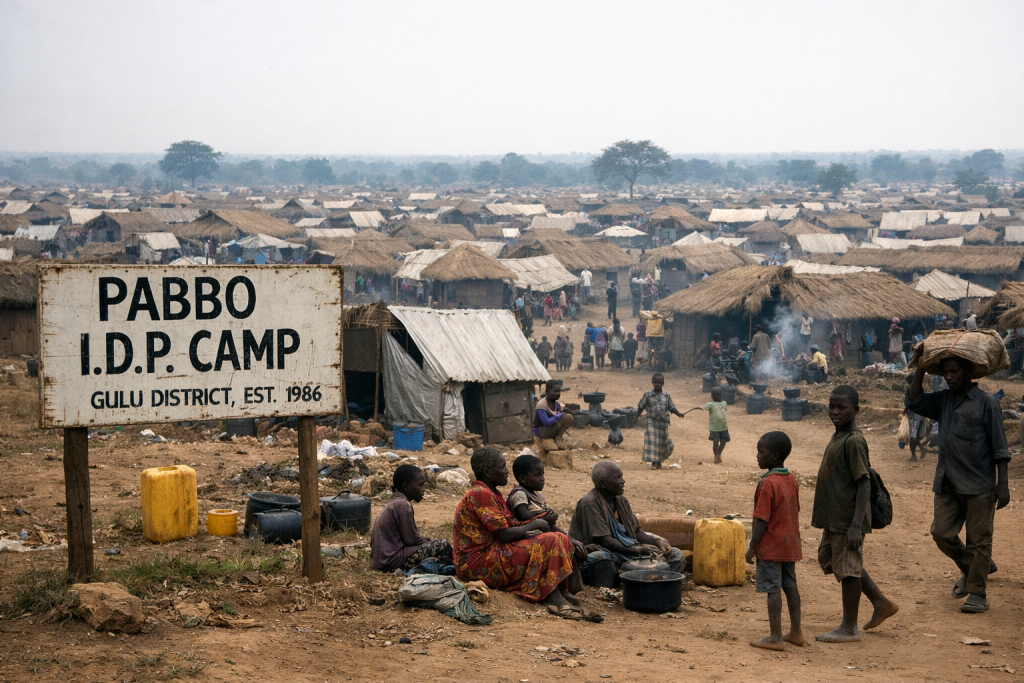
Nearly two decades after the guns fell silent, Acholi continue to carry the scars of the Lord’s Resistance Army (LRA) conflict. Thousands of war victims are still waiting for justice, reparations, and closure.
The charter strongly criticizes the absence of a comprehensive Transitional Justice Policy, noting that unresolved issues such as cattle compensation claims and victim reparations have deepened resentment and mistrust in state institutions.
Citizens are demanding that the government implement transitional justice mechanisms, strengthen accountability, and roll out sustained civic education programs to rebuild trust, especially ahead of the 2026 elections.
During the first regional parliamentary sitting held in Gulu City in August 2024, the Speaker of Parliament, Annet Anita Among, directed the Minister of Justice and Constitutional Affairs, Norbert Mao, to present a report to Parliament on the status of the National Transitional Justice Bill within three months. However, one year later, there has been no visible progress on the matter.
Minister Mao recently said he has requested the President to allow the proposed bill to be transferred from the Ministry of Internal Affairs to the Ministry of Justice and Constitutional Affairs to fast-track the process
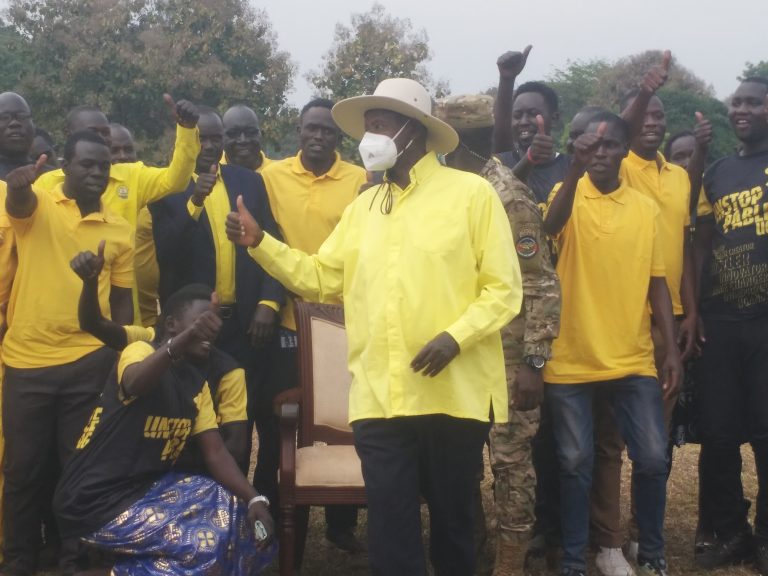
While campaigning in the Acholi sub-region in October 2025, President Yoweri Museveni pledged to compensate all registered war victims who lost their cattle during the conflict. Similar promises have been made during previous election cycles, even as many war victims have since died without receiving compensation. The President also committed to distributing five cows to each of the 460,000 households across the Acholi sub-region.
Insecurity, gangs, and a generation at risk
Beyond historical injustices, the charter highlights emerging security threats, including cattle rustling, cross-border raids, and the rise of urban youth gangs locally known as Aguu.
In districts bordering Karamoja, such as Agago, Kitgum, and Lamwo, cattle raids have resulted in deaths, displacement, and loss of livelihoods. Citizens argue that purely militarized responses have failed and call for community-centred solutions, including early-warning systems, community policing, and coordinated development interventions.
At the same time, the growth of youth gangs in urban areas is linked to unemployment, weak parenting structures, and eroding cultural institutions. The charter calls for corrective community policies focused on rehabilitation, youth reintegration, and clearer leadership accountability at local levels.
The Executive Director of the Gulu NGO Forum said some young people who are often wrongly labelled as Aguu have expressed frustration over being repeatedly and unfairly accused. He noted that they believe inadequate parental guidance contributed to the situation they now face.
Women, health, and education left behind
Gender-based violence (GBV) remains widespread in Acholi, exacerbated by poverty, conflict legacies, and weak social services. District Community Services Departments, the charter notes, are underfunded and overstretched.
Citizens are demanding increased funding, stronger national GBV response frameworks, and gender-sensitive legislation, alongside grassroots coordination with civil society organisations.
The charter also raises alarm over rural healthcare, citing poorly equipped facilities, frequent drug stock-outs, and limited capacity to respond to epidemics. It calls for well-equipped district hospitals, stronger referral systems, and tighter supervision of health workers.
In some health facilities, security guards were found registering patients because health workers were often absent from the units.
“I personally witnessed a case where a senior security guard was administering treatment to a patient. This is not an isolated complaint; similar situations were observed across several health facilities in the sub-region,” Okello said
In education, teachers complain of low pay, poor motivation, and discriminatory salary structures, particularly between arts and science teachers. The charter urges government to adopt an equitable and progressive salary framework to retain teachers and improve learning outcomes.
A call to action, not a wish list
Unlike many policy documents, the Acholi Citizens’ Charter explicitly assigns responsibilities to the President and executive, Parliament and area MPs, local governments, and, crucially, to citizens themselves.
“This progression cannot be undertaken singly by national and local leadership,” the charter states. “It requires our input as citizens.”
The document calls for political will, decisive action against corruption, stronger monitoring mechanisms, and the enactment of laws needed to operationalize citizens’ demands.
Dr. Loum Constantine, a board chair of the Gulu NGO Forum, said resolving the key issues highlighted in the study requires unity among traditional leaders. He noted that divisions within Acholi’s cultural leadership remain a major challenge that must be addressed.
He urged cultural leaders to set aside their differences and work together for the development of the Acholi sub-region.
Rwot Latim Baptist of the Pawel clan observed that uniting the Rwodi has become increasingly difficult, as some chiefs perceive themselves as more powerful than others. “In Acholi, all Rwodi are equal. Until this is recognised, unity among cultural leaders will remain elusive,” he said.
Meanwhile, Rwot Yusuf Adek of the Pageya clan said cultural leaders have lost influence among their subjects largely because of widespread poverty. “People may respect us, but they no longer listen to us because we are poor. Today, respect is often tied to money,” he added.
As Uganda approaches another election cycle, the Acholi Citizens’ Charter stands as both a warning and an invitation: a warning against continued neglect, and an invitation to build a peaceful, prosperous, and dignified Acholi rooted in justice, accountability, and inclusive development.
“For our children, for our land, for our future,” the charter concludes. “This is our voice.