Uganda’s history provides a sobering context to these warnings. Since the first elections in 1958, the country has struggled to establish a stable, violence-free electoral process.
By Willy Chowoo
Gulu City-As Uganda edges closer to the general elections scheduled for January 15, memories of past electoral violence, intimidation, and voter apathy continue to haunt the country’s democratic journey. From the first elections under colonial rule in 1958 to the most recent polls, Uganda’s elections have often been marked by fear, bloodshed, allegations of rigging, and declining voter turnout. Against this troubled backdrop, religious leaders in Gulu City have stepped forward, urging citizens to vote with conscience, reject violence, and defend the sanctity of the ballot.
On Sunday, two powerful sermons—delivered separately at St. Philip’s Anglican Cathedral and Holy Rosary Catholic Cathedral—carried a united message: Uganda’s future depends not on intimidation, money, or force, but on moral leadership, peaceful participation, and respect for the country’s constitutional values.
At St. Philip’s Anglican Cathedral in Gulu City, Rev. Canon Eunice Opok, the vicar at the Cathedral, urged Christians to vote for leaders who are God-fearing, morally upright, and capable of making sound legislation for the country. Speaking to a packed congregation, Rev. Opok warned against the normalisation of election violence and the growing culture of voter manipulation.
“Leadership is not about how much money one gives or the gifts they distribute,” she said. “It is about character, integrity, and the fear of God.”
Too often, Ugandans vote for leaders simply because they have donated ambulances, distributed money, or provided alcohol, forgetting that the cardinal role of an elected leader is to legislate and make laws that serve the public interest. As the country heads to the polls on Thursday, voters are urged to choose leaders of good character—God-fearing individuals with integrity, competence, and the ability to account for their stewardship over the next five years.
Quoting Proverbs 29:2— “When the righteous are in authority, the people rejoice; but when the wicked rule, the people groan”—Rev. Opok reminded worshippers that elections are both a constitutional and civic duty. She cautioned voters against being misled by politicians who offer money, ambulances, or material gifts in exchange for votes, describing the practice as a betrayal of the nation’s democratic ideals.
“Selling your vote today is choosing bad leadership tomorrow,” she said. “And when bad leaders emerge, the whole country suffers.”
Warning Against Violence and Intimidation
The Anglican cleric emphasised that elections should never be fought with fists, weapons, or threats. She appealed to Christians to reject violence and uphold peace as both a civic and Christian duty.
Rev Canon Opok further warned against intimidation and violence, stressing that such acts not only undermine democracy but also fuel fear that keeps many citizens away from polling stations.
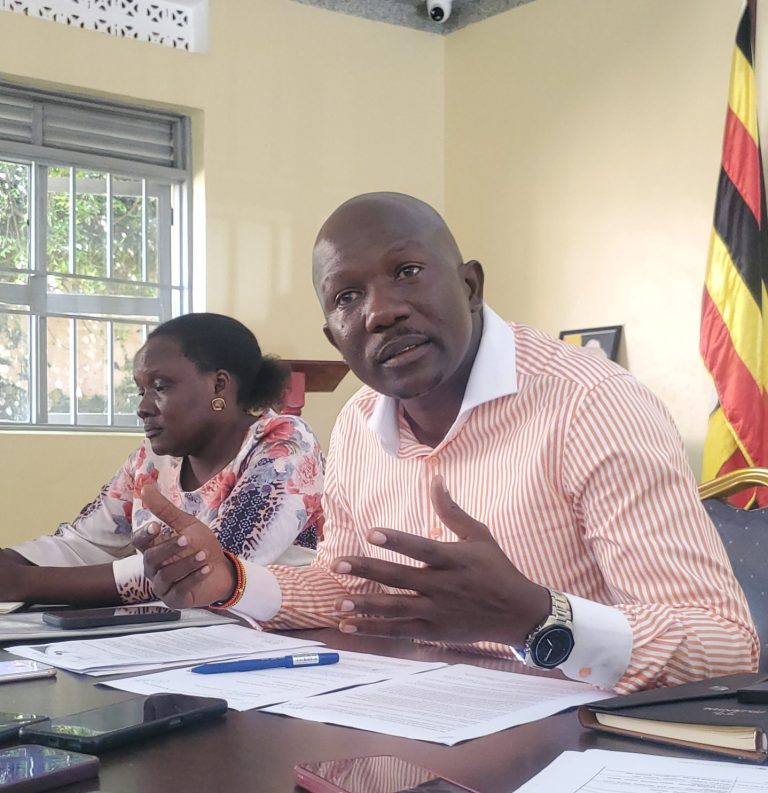
Voice-1: Rev Canon Piloya Eunice Opok speaking about voting for good leaders
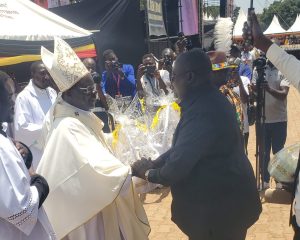
Across town at Holy Rosary Catholic Cathedral, Rev. Fr. Robert Obol Nyeko echoed similar sentiments, grounding his message in Uganda’s national motto: “For God and My Country.” Fr. Nyeko called on both leaders and citizens to reflect deeply on what the motto demands during an election period.
“It is important to note that election time is not only a time to vote, but it is a time of national reflection on what it means to be a citizen because all God’s people and citizens of Uganda are asked to determine the Destiny of their country”, he told the congregation.
Rev. Opok also appealed to election constables and the police to refrain from using excessive force while handling voters on polling day, warning that heavy-handed security responses could trigger election violence.
Her remarks come amid ongoing national debate over the military’s “vote and go home” message, following constitutional provisions that require voters to remain only within 20 metres of polling stations after casting their ballots.
Fr. Nyeko strongly condemned election malpractices that have become familiar in Uganda’s political landscape. He cited ballot stuffing, abduction of candidates’ agents, manipulation of results, use of state power to shut down electricity and internet, voter intimidation, and post-election violence as actions that distort the very foundation of the nation.
“These practices lead to bloodshed, mistrust, and hopelessness,” he said. “They make citizens lose faith not only in elections, but in the country itself.”
He urged Ugandans to participate in the elections peacefully, guided by faith and patriotism, and to resist fear even in moments of tension.
Voice-2: Rev Fr Obol Robert Nyeko calls for free and fair elections
Uganda’s history provides a sobering context to these warnings. Since the first elections in 1958, the country has struggled to establish a stable, violence-free electoral process. Elections in the post-independence period, particularly those of 1962, 1980, and the contested polls of the 2000s, have been marred by allegations of rigging, military involvement, and suppression of opposition voices.
The consequences have been profound. Election-related violence has claimed lives, displaced communities, and deepened political divisions. In Northern Uganda, a region already scarred by decades of armed conflict, elections often reopen wounds of fear and mistrust, especially among populations that lived through insurgency and state violence.
Low Voter Turnout: A Silent Crisis
Alongside violence, voter apathy has become a silent crisis. Turnout has steadily declined over the years, with many Ugandans citing fear, voter fatigue, lack of trust in electoral institutions, and a belief that outcomes are predetermined.
Civil society organisations note that young people and marginalised communities are the most affected, often choosing to stay away from polling stations to avoid confrontation or harassment.
According to civil society groups, many Ugandans—especially in rural and post-conflict areas—stay away from polling stations to avoid confrontation with security forces or political mobs. Others feel that their vote does not matter in a system they perceive as compromised.
It is this combination of fear and disillusionment that religious leaders now seek to confront.
By speaking from the pulpit, Rev. Opok and Fr. Nyeko are tapping into one of the most trusted platforms in Ugandan society. Religious institutions remain influential moral voices, often commanding more trust than political actors or state institutions.
Their cross-denominational message, delivered from both Anglican and Catholic cathedrals, underscores a rare unity of purpose: that elections must be reclaimed as peaceful civic exercises rather than battlegrounds.
Rev. Opok believes that vote manipulation and low voter turnout have allowed many unfit leaders to win elections. “If you don’t go and vote, it is the bad leaders who will continue to lead us for the next five years,” she warned, urging voters to turn out in large numbers to prevent the election of leaders lacking integrity and competence.
The election statistics reveal a worrying paradox in Uganda’s democratic process. While the number of registered voters has steadily increased over the decades—rising from fewer than five million in 1980 to over 18 million in 2021—the proportion of voters who actually turn up to vote has consistently declined.
In 1980, Uganda recorded one of its highest voter turnouts at over 85 percent, despite a relatively small voter register. By contrast, the 2021 general elections, which had the largest voter register in the country’s history, recorded a turnout of just about 59 percent. This downward trend has been evident since the mid-1990s, with turnout falling from over 72 percent in 1996 to below 60 percent in both 2011 and 2021.
This pattern suggests that numerical growth in voter registration has not translated into increased civic participation. Analysts attribute the decline to several factors, including fear of election-related violence, mistrust in electoral institutions, voter fatigue, monetisation of politics, intimidation by security forces, and perceptions that election outcomes are predetermined.
Ironically, while population growth and voter registration drives have expanded the electorate, repeated allegations of rigging, vote buying, internet shutdowns, and post-election violence appear to have discouraged many citizens, especially the youth and residents of post-conflict regions, from participating in elections.
The statistics, therefore, point to a deeper democratic challenge: Uganda’s problem is no longer voter registration, but voter confidence. Unless elections are seen as peaceful, transparent, and meaningful, increased registration alone will not reverse declining turnout.
The Road to January 15
As January 15 approaches, the challenge remains whether political actors will heed these calls. Uganda’s election seasons have repeatedly tested the country’s commitment to democracy, often exposing the gap between constitutional ideals and political practice.
Yet, for many worshippers in Gulu City, the sermons offered a renewed sense of responsibility and hope.
“If we want change, it must begin with us,” said Rev Opok. “We cannot keep complaining about bad leaders if we continue to sell our votes or stay at home on election day.”
In a country where elections have too often been associated with fear, the clergy’s message offers a different vision, one rooted in faith, conscience, and patriotism. Whether that vision translates into peaceful participation and credible outcomes remains to be seen.
But as Uganda stands once again at a democratic crossroads, the words spoken from Gulu’s cathedrals resonate far beyond church walls: the future of the nation lies not in violence or money, but in the moral choices of its people—for God and for country.