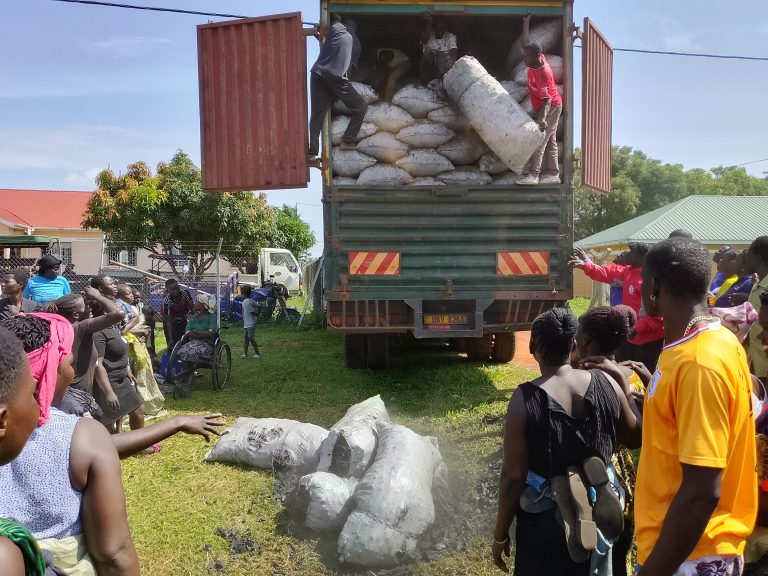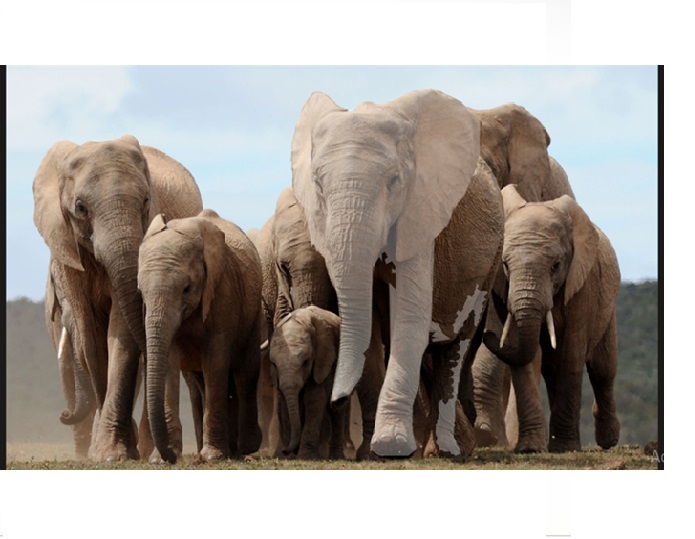
According to the Wildlife Resources report 2026, climate change is altering rainfall patterns, increasing temperatures, and triggering more frequent droughts—conditions that directly affect wildlife habitats and migration.
By Chowoo Willy
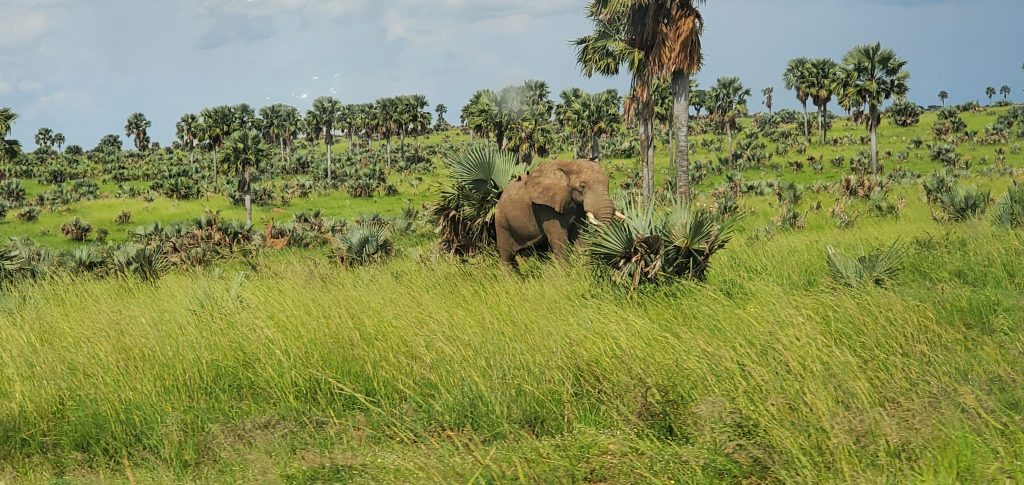
Gulu City—In the vast savannahs of Murchison Falls National Park and the rugged plains of Kidepo Valley National Park, elephants have for generations followed ancient migration paths: routes carved into memory, guided by water, vegetation, and seasonal rhythms.
But today, those routes are changing.
Uganda is home to two elephant species: the African savannah and African Forest elephants, both of which are classified as Critically Endangered in Uganda by the IUCN.
However, a new report, the State of Wildlife Resources in Uganda 2026, reveals that climate change, combined with human pressure, is reshaping how elephants move, where they feed, and how they survive.
According to the report, climate change is altering rainfall patterns, increasing temperatures, and triggering more frequent droughts—conditions that directly affect wildlife habitats and migration.
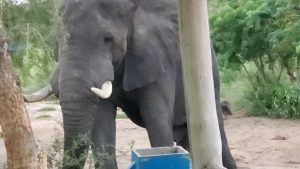
These environmental shifts are forcing elephants to move beyond their traditional ranges in search of water and food, according to Uganda Wildlife Authority satellite data.
The Executive Director of the Uganda Wildlife Authority (UWA), Dr James Musinguzi, believes the movement is attributable to the elephants’ natural migratory behaviour.
“EarthRanger data for elephants show widespread transboundary movement into neighbouring countries due to natural migratory behaviour and landscape,” he notes.
In some areas, such as Kidepo, wildlife, including elephants, is increasingly found outside protected areas during dry seasons, a sign that natural resources within parks are no longer sufficient.
“Usually, they come when there is a bumper harvest; they come in large numbers and destroy crops and fruit trees and/or kill people. The situation has not been good, coupled with injuries,” says Opyet Geoffrey, the local council three chairman of Namokora Subcounty, Kitgum District.
This marks a significant break from historical migration patterns.
Climate change is rewriting the rules.
The State of Wildlife Resources report 2026 identifies climate change as a “cross-cutting force” affecting wildlife survival in Uganda.
Northern Uganda, especially the landscapes around Murchison Falls and Kidepo Valley National Parks, experiences delayed-onset rains, a shorter but more intense rainy season, and prolonged dry spells, according to the Uganda Meteorological Service report.
The erratic rainfall, prolonged droughts, and extreme weather events are reducing water availability, degrading vegetation, and forcing animals to shift their range.
Murchison Falls National Park, which is traversed by the River Nile, experienced significant flooding in 2022. The overflow along the Nile Delta inundated large sections of the park, forcing crocodiles to migrate upstream toward the upper falls.
The new change is making the seasonal rivers, wetlands, and waterholes dry up earlier than expected. This, therefore, leads to grassland drying out, reducing the regeneration of browse (trees and shrubs) and increasing the prevalence of invasive plant species.
Uganda has experienced a drastic change in land use and cover within its protected areas between 1990 and 2024, losing 236 units (or square meters) of its wetlands. Queen Elizabeth NP suffered the most, with a loss of 157 million units, followed by Murchison Falls NP at 41 million units and Lake Mburu NP at 36 million units.
The loss of 236 million units of wetlands in these national parks drives a serious conservation and livelihood crisis by destroying wildlife habitats, reducing food and water supplies for species such as elephants, and accelerating the spread of invasive plants.
This affects elephants, which depend heavily on grasses, shrubs, and tree bark.
As resources shrink, more elephants concentrate around the few remaining water points, and some are pushed to explore entirely new routes—often through villages, abandoning predictable seasonal routes and adapting to new, uncertain environments.
Kitgum District, which borders Kidepo Valley National Park, is among the areas affected by increasing elephant incursions into surrounding communities.
Gazetted in 1962, Kidepo Valley National Park was established to conserve wildlife and protect nearby populations, particularly migratory species. However, the park lies within a semi-arid ecosystem where water sources are largely seasonal, flowing mainly during the short wet season and drying up for the rest of the year, which is dominated by prolonged dry conditions.
The only region of the park containing water during the dry season is the Narus Valley. Although the park authority has excavated five dams within the Kidepo Valley Conservation Area, the area, which is semi-arid, has seen animals move out in search of water.
This makes communities no longer predict when elephants will pass, making preparedness difficult. They expand their range into farmland where crops like maize, cassava and sorghum are more nutritious and accessible
Therefore, farms become alternative feeding grounds, putting elephants outside the corridors. A corridor that is used only in the dry season is now used year-round or abandoned altogether.
Opiyo Dominika, 67, a resident of Namukora North, says the elephants, often moving in large herds of about 100, have, over the past three years, abandoned their traditional corridors and established a new route stretching through Obutu Cell, Ogul, Katoceko, Wang Pok, and Ladoto Onen.
The elephants previously entered the village through Wilyec, Tikkao, Tuboi, Labworomo, and Langnura to Masaka, their traditional corridors, before dispersing across community land and exiting through Bola. However, these traditional corridors are now heavily occupied by settlements and community farms.
The rapid spread of invasive and problematic plant species is also emerging as another major threat to wildlife conservation in Uganda, with experts warning that climate change is accelerating the destruction of critical habitats.
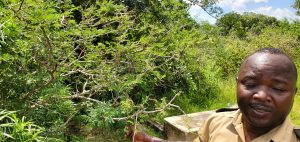
Kato Raymond, an ecological monitoring expert working with the Uganda Wildlife Authority, recently explained that native plants have been forced by climate change to become invasive species due to their adaptive and mitigating strength
The UWA report shows that invasive vegetation is steadily overtaking protected areas, reducing food sources for wildlife and pushing animals closer to human settlements.
Invasive alien species such as Lantana camara and Chromolaena odorata are spreading rapidly across national parks and reserves. These plants thrive under changing climate conditions, particularly erratic rainfall and prolonged droughts, allowing them to outcompete native vegetation.
“This displacement reduces the availability of forage and breeding grounds for wildlife,” the report notes, warning that the changes are altering habitat structures and limiting animal movement.
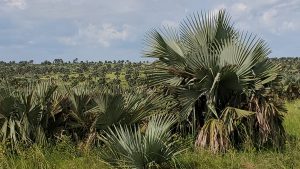
The situation is further compounded by the spread of problematic native species, including Borassus aethiopum, Dichrostachys cinerea, and Imperata cylindrica. Although indigenous, these species are increasingly acting like invasive plants under shifting climatic conditions, aggressively colonising large areas of land.
The report indicates that the spread of these plants is shrinking open grasslands that are essential for grazers such as zebras, topis, and Ugandan kobs. As a result, wildlife is being forced out of protected areas into nearby communities in search of food.
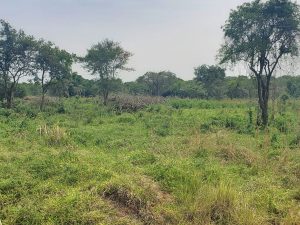
“For those who were here 10 or 20 years ago, all this was grassland. But today, succession is taking place, and the area is turning into woodland,” said Kiiza Fredrick, the chief warden of Murchison Falls NP. “When this happens, animals are forced to migrate because the food they rely on disappears.”
This migration is contributing to a rise in human–wildlife conflict, with more crop raids and livestock attacks reported in affected areas. In many instances, such conflicts lead to retaliatory killings and illegal hunting, further endangering wildlife populations.
The Wildlife Report also indicates that between 2018 and 2025, the population of elephants has declined by 1,613, making the current population 6,352.
The Wildlife Census reports show that Uganda lost 1354 elephants between 2018 and 2022 and lost an additional 269 elephants between 2022 and 2025.
“The decline highlights ongoing migrations into neighbouring countries and occupations of community areas in Karamoja,” the report reads in a piece.
Dr. Musinguzi acknowledges that climate change, land-use transformation, agricultural expansion, and the spread of invasive plant species are altering wildlife movement patterns, reshaping their ranges, and influencing their behaviour.
In effect, climate change is rewriting the ecological map that elephants have depended on for centuries.
Mitigating Climate Change’s Impact
Despite these challenges, the Uganda Wildlife Authority (UWA) has undertaken a range of interventions, including forest restoration, protection of water dams, removal of invasive species, ecological monitoring, and efforts to maintain habitat integrity.
Although Queen Elizabeth, Lake Mburo, and Murchison Falls National Parks have collectively lost over 1 billion units of rangeland and grassland between 1990 and 2024, the authority has managed to restore more than 157 million units of rangeland in Kidepo Valley National Park. However, the park has still experienced a loss of about 4.3 million units of rangeland to agricultural expansion.
The authority has also recovered more than 2 billion units of its forest or woodland over the same period, with the highest recovery being at MFNP, with more than 1 billion units.
This recovery reflects reduced disturbance, improved protection, and natural vegetation regeneration.
With unspecified hectares of the protected areas taken over by the invasive species, the Uganda Wildlife Authority, in collaboration with its partners and local communities, has successfully restored 5,166 hectares (56.7 square kilometers) of land previously degraded by invasive alien and native plant species across 12 protected areas.
At Murchison Falls National Park (MFNP), more than 200 hectares have already been restored in recent years as the authority intensifies efforts under a broader campaign aimed at restoring over 10,000 hectares.
Area Chief Warden Fredrick Kiiza reveals a plan to restore an additional 10,000 hectares currently affected by invasive plant species.
“Our goal is to reverse vegetation succession back to its natural state—grassland. This allows herbivores to feed while maintaining a balance for other species that rely on shrubs and trees,” he said.

Despite the loss of about one million units of wetlands, the park authority has managed to restore approximately 116 million units of water resources across Kidepo Valley National Park (KVNP), Murchison Falls National Park (MFNP), Lake Mburo National Park (LMNP), and Queen Elizabeth National Park (QENP).
The Uganda Wildlife Authority (UWA) Communication Manager, Hangi Bashir, highlights what they have done to restore water within national parks.
“One of the things we are looking at is excavating dams. The other day, I saw a kob collapsing. It is a big issue; we are playing our part; we need to take a collective effort to combat climate change,” Bashir adds.
At Kidepo Valley NP, they have been able to excavate five dams across the park in a move to restrain wildlife from encroaching on the community land.
In areas such as Murchison Falls National Park (MFNP), permanent water reservoirs are available and are considered sufficient to sustain wildlife during dry spells.
“We know that the waterholes are technically large enough to support animals throughout the dry season until the rains return,” Kato adds.
Ancient Corridors Under Threat
For decades, elephants have relied on migration corridors linking ecosystems across Uganda and even beyond its borders. But these pathways are now under pressure.
Land-use change, agriculture, and infrastructure development are blocking key wildlife corridors, especially those connecting northern Uganda to South Sudan, according to the Wildlife Resource Report.
As human settlements expand, these routes are being fragmented—cutting off access to seasonal grazing and water sources.
This is due to rapid population growth and expanding settlement into wildlife habitats and wildlife corridors. The disruption of these traditional corridors has systemically contributed to the increased exposure being experienced across the country.
The Ugandan Minister of Tourism, Wildlife, and Antiquities, Tom Butime, acknowledges that despite positive progress, Uganda’s wildlife is still under enormous pressure from human activities and habitat loss and fragmentation, which pose serious challenges for wildlife conservation in the country.
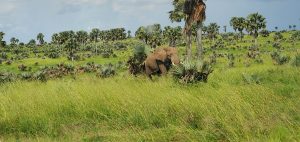
Murchison Falls National Park, Uganda’s biggest park with the largest number of elephants in Africa, has its traditional elephant corridors, such as the Aswa-Lolim corridor, which served as a major dispersal area and elephant movement zone north of Murchison Falls National Park into the Acholi plains.
This corridor has long been used for routes for elephants moving northwards beyond the Nile.
The elephant traditionally moved along the east side of the Nile River, north of Murchison Falls National Park, reaching into the greater Acholi sub-region in search of food and seasonal grazing. These paths are ancestral routes elephants have followed for generations, but have been disrupted by human settlement and agriculture
Another historical elephant corridor is the Kidepo-Kitgum/Agago pathways, where elephants from Kidepo Valley National Park and surrounding areas are known and historically expected to stray along ancient routes that connected grazing lands.
Even though these corridors have been largely overtaken by settlement, elephants continue to use the same paths for movement.
Historically, elephant corridors in Northern Uganda were extensive and allowed large mammals to move between major habitats and even across borders (e.g., Sudan, South Sudan, and Kenya).
Many of the old corridors are not officially recognised today because protected areas or reserves (Aswa-Lolim) were degazetted and lands were opened for farming. Aswa-lolim is being used by the herdsmen to rear their cattle, and the wild and domestic animals are fighting for the same space for grazing, leading to stress on the rangeland.
“We have many elephant corridors that have become urban centers, towns, and sub-counties, leading to fragmentation of habitats and corridors, changing the food menu for the elephants,” said Odokorwot Walter, conservationist.
At the same time, climate change is intensifying the crisis, shrinking available resources and forcing elephants into new, often risky territories.
Rising Human–Elephant Conflict
As elephants move outside protected areas, they increasingly encounter human communities.
Between 2020 and 2025, Uganda recorded over 6,100 human-wildlife conflict incidents, with crop destruction accounting for nearly 90% of cases.
Elephants were responsible for the majority of incidents, followed by buffaloes, hippopotamuses, baboons, and large carnivores
Farmers in areas bordering national parks now face crop raids, property destruction, and safety risks.
The most affected areas are Murchison Falls and Kidepo National Parks, where, over the past few years, they have recorded the highest number of incursions by the elephants.
At Lagazi Cell in Purongo Town Council, Nwoya District, one of the epicenters of the elephant incursions, Ojok David, a resident, says the animals have turned their farmlands into a second home.
“Many people here have lost their lives and crops due to the incursions by straying elephants, and it is difficult to predict when they will strike,” Ojok explains.
At Kidepo Valley Conservation Area, the elephants have established a permanent niche outside Kidepo Valley Conservation Area, where they launch crop raids, making the area a hot spot for human-wildlife conflict.
Opiyo, a resident of Namokora North Village who has lost acres of cassava, maize, and sorghum, says fear has gripped the community to the extent that some people are hesitant to plant crops anymore.
“They have created new routes. Even when we plant near our homes, we are forced to beat containers to scare them away,” he explains.
Opyet, a sub-county leader, says the incursions have displaced residents in several villages, including Masaka, Orebo, Orabul, and parts of Guda in the greater Namokora sub-county.
“People are no longer able to carry out productive farming, and many have relocated to Tim Lipan, which was traditionally a hunting ground for the Acholi people,” he adds.
Mitigating Human-Wildlife Conflict
By 2025, the Uganda Wildlife Authority (UWA) had installed 221.7 kilometers of electric fencing across conservation areas, alongside 291 kilometers of trenches, mainly targeting elephant movement corridors and identified human-wildlife conflict hotspots to reduce wildlife incursions.
Queen Elizabeth National Park accounts for the largest share of the fencing at 126.7 kilometers, followed by Murchison Falls National Park with 91 kilometers and Kidepo Valley National Park with 4 kilometers. For the 2025/2026 financial year, UWA plans to extend the fencing by an additional 4 kilometers in Murchison Falls National Park and 94 kilometers in Kidepo Valley National Park.
According to UWA operational evidence reports covering 2022–2023, these interventions have contributed to an 11% reduction in human-wildlife conflict cases in Murchison Falls and Queen Elizabeth National Parks.
The authority has also compensated 1,014 households by 2025, disbursing approximately UGX 2.9 billion. However, Namokora Sub-county LC Chairperson Opyet reports that only 20 people in the six sub-counties bordering Kidepo Valley National Park have received compensation, out of about 7,000 claimants.
UWA spokesperson Hangi Bashir reaffirmed the authority’s commitment to compensating affected communities, attributing delays in payments to challenges related to incomplete or improper documentation.
This growing conflict is not just a conservation issue—it is a livelihood crisis.
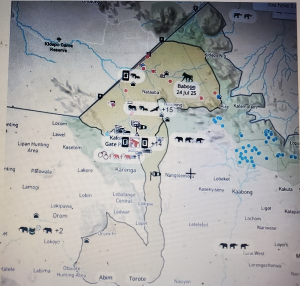
However, some conservationists have criticised the Uganda Wildlife Authority’s (UWA) reliance on fencing as a strategy to reduce human-wildlife conflict. Odokorwot argues that fencing may instead be contributing to the rerouting of elephant migration corridors, warning that more sustainable approaches are needed.
“The fences are often erected along migratory corridors. When elephants encounter them, they tend to follow the fence line until they find an opening, which leads them to create new routes into community land,” Odokorwot explains.
A Future Uncertain
Although Uganda has made gains in wildlife conservation, the report warns that elephant populations in some areas are experiencing delayed recovery or decline due to pressures arising from habitat loss, climate variability, environmental encroachment, and poaching.
Together, these forces are reshaping not just elephant movement but also their long-term survival.
Elephants are known for their memory, passing migration knowledge across generations. But as climate change disrupts ecosystems, even this deep-rooted instinct is being tested.
The question now is whether elephants can adapt fast enough to a rapidly changing world—or whether the loss of their ancient routes signals a deeper ecological crisis.