Today, the historic site is drawing growing interest from historians, tourists, and cultural enthusiasts eager to understand the stories that unfolded here.
By Willy Chowo
Rising above the vast plains of Patiko in Gulu District, the historic Fort Patiko stands as a quiet witness to centuries of history. Once associated with the East African slave trade, the site is today gradually emerging as one of Northern Uganda’s most fascinating cultural and heritage tourism destinations.
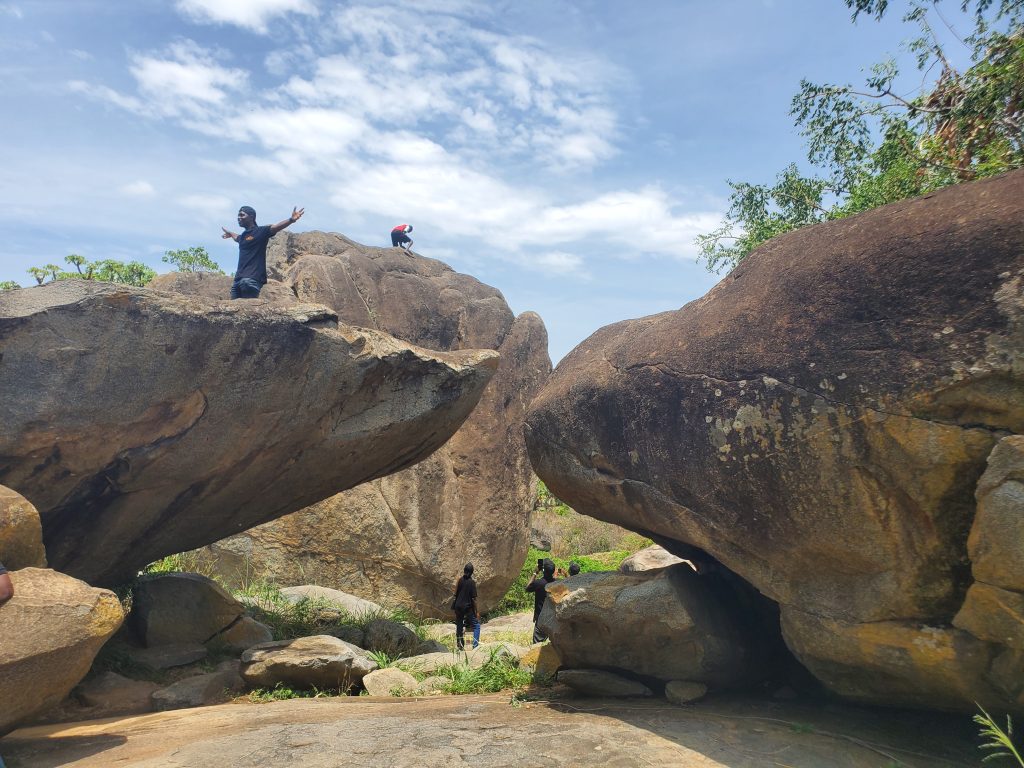
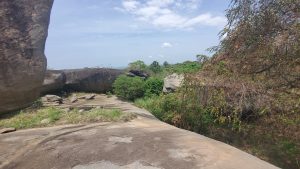
Located about 30 kilometres north of Gulu City, the rocky Patiko hills command sweeping views of the surrounding landscape. Across the terrain lie scattered stone ruins, caves, and the remains of an old fort, enduring reminders of a turbulent chapter that shaped the region’s past.
Today, the historic site is drawing growing interest from historians, tourists, and cultural enthusiasts eager to understand the stories that unfolded here.
“Last year alone, we received about 276 tourists, most of them from outside the country,” says Kitara Patrick, the Gulu District Tourism Officer, noting the increasing attention the site is attracting from international visitors.
According to local accounts, Patiko was once a pristine landscape covered with indigenous trees and frequented by elephants long before the arrival of traders from the north. The area later became a stopover point for Arab traders who travelled from Khartoum in the mid-19th century in search of ivory.
Because the area lay along elephant migratory routes toward what is now South Sudan, the traders found Patiko strategically located for the ivory trade.
“It was a silent trade for about three years because of the language barrier,” explains Okello Ronald, a tour guide at Fort Patiko. “The local people and the Arab traders initially communicated through signs during barter exchanges.”
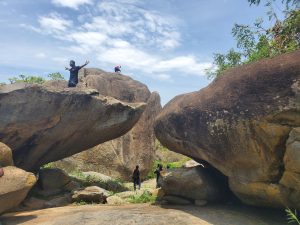
Over time, however, the nature of the trade changed. What began as an ivory trade gradually expanded into the slave trade, with young men and women, some as young as 19, captured and transported along caravan routes through Sudan toward markets in North Africa and beyond.
Today, the remnants of the fort and surrounding caves stand as powerful reminders of that history, while also offering visitors a chance to explore one of Northern Uganda’s most significant yet lesser-known heritage sites
The site has also evolved into a vibrant venue for cultural and recreational activities. Visitors to Fort Patiko now take part in a variety of experiences, including camping, scouting activities, traditional arrow shooting, nature walks, and evening festivities sometimes marked by fireworks.
Guests also get the chance to sample wild fruits found around the hills, such as ‘Amurula’, adding a unique local flavour to their visit.
“We organise these activities to create memorable experiences for our visitors,” says Okello, a tour guide at the historic site. “We want to ensure that anyone who comes here leaves with unforgettable memories of the place.”
A painful but important history
Fort Patiko gained prominence in the 19th century when it became associated with the activities of slave traders who operated across parts of East and Central Africa. The site later became associated with the British explorer Sir Samuel Baker, who established a military outpost there while campaigning against the slave trade in the area. Sir Samuel Baker arrived in 1870 and returned in 1872 to fight the slave trade in the land.
Omona Wilson Oyo, an elder from the clan, recalls the oral tradition passed to them by their great-grandparent, “when Sir Samuel Baker came, on 6th March 1872, he joined forces with Rwot Ywajimoro, the chief of Patiko Pagwinyi, fought and captured 73 Arabs who had been enslaving local people”.
Remnants of the fort walls, holding areas, and rocky caves remain visible today, serving as reminders of a complex chapter in the region’s history. In 1972, the Ministry of Tourism gazzetted as one of the tourism sites in the country.
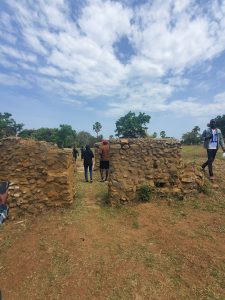
One of those walls is Point of No Return, which was the entrance point of the fort, where those who were found to be weak or ugly were slaughtered, never to return, while those found fit exited the place through the western gate of the caves.
According to officials at the Uganda Tourism Board, Fort Patiko is among the historical sites that hold enormous potential for heritage tourism in Northern Uganda.
“Fort Patiko is not only historically significant but also offers a unique tourism experience. Visitors can learn about the history of the slave trade, colonial encounters, and the resilience of local communities,” Okello, the guide at the ministry, says.
Cultural heritage and local memory
For the Acholi community, the site represents more than a historical monument. It is a place where oral history, cultural identity, and memory intersect.
Leaders from the Patiko chiefdom say preserving the site is important for educating younger generations about their heritage.
Oketta Charles-80, an elder from the chiefdom and a custodian of local tradition, explains that the hills and caves around the fort are deeply embedded in Acholi history.
“Our elders tell stories of what happened here many generations ago. Preserving this place is important so that our children understand the history of our land,” the cultural leader says.
Oketta, a local elder who has grown up hearing stories about the site, also emphasises its historical importance. “When visitors come here, sometimes they visit us, and we share our memories with them.”
One other elder in Patiko recounts how the stories of the slave trade and colonial encounters have been passed down through generations.
“This place reminds us of a difficult time in history. But it also shows how our people survived and continued with life,” Omona Wilson Oyo says
The leadership of the Patiko chiefdom is also taking steps to preserve the area’s cultural heritage. The guide said the chiefdom-initiated plans to construct a small museum near Fort Patiko to safeguard important cultural artefacts linked to the history of the place.
According to local leaders, the proposed museum will house royal drums and other traditional items associated with the chiefdom. Among these are ceremonial drums believed to contain human skulls within their structure—artefacts that reflect the complex cultural traditions and historical memory of the community.
The museum will serve as an important centre for preserving the heritage of Patiko while also educating visitors about the history and traditions of the Acholi people.
Tour guides at Fort Patiko play a critical role in bringing the site’s history to life for visitors. There are three guides, one recruited by the Ministry of Tourism, Wildlife and Antiquities and two locally trained guides who always take visitors through the oral history of the place.
One tour guide at the site, recruited by the Ministry of Tourism, Wildlife, and Antiquities, who regularly leads groups through the site, explains that visitors are often fascinated by the stories behind the caves and stone structures.
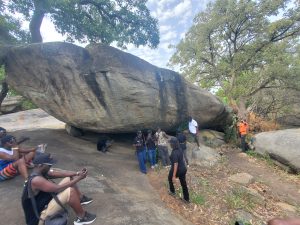
Many tourists are surprised to learn that such an important historical site exists here in Northern Uganda. “When we explain the history and show them the remains of the fort, they begin to appreciate the significance of the place,” Okello Ronald says.
Okello notes that visitors often enjoy hiking through the rocky granite terrain and taking photographs of the panoramic views from the hilltop. The hiking usually takes place at Ajulu Hills (Got Ocecu), adjacent to the Fort.
Tourism potential for the region
According to the Ministry of Tourism, Wildlife and Antiquities, heritage tourism is increasingly becoming an important part of Uganda’s tourism strategy.
Eunice Kansiime, the ministry spokesperson, says Fort Patiko could become a major attraction if properly developed and promoted.
“AS the ministry, we feel this is a historic and important site to maintain and protect. As a result, we are also undertaking the development of the site.” She notes.
When such historical sites are properly preserved and promoted, they can attract both domestic and international tourists, which benefits the surrounding communities.
Fort Patiko provide opportunities for cultural education while also supporting local economies. Some schools have been taking their children to learn the oral history of the place, as well as hosting the scouting and Girl Guides competition.
At the district level, the Gulu District Tourism Officer, Kitara Patrick, believes Fort Patiko remains one of the most underutilised tourism sites in the Acholi subregion.
“Many people know about national parks in Uganda, but few are aware of the rich historical attractions we have here in Gulu. Fort Patiko has great potential to become a key tourism destination if we invest in infrastructure and promotion,” the officer explains.
Kitara notes that the site needs good toilets, power, and water facilities, which we lack; however, these are provided by communities around here. “I am very happy there is an investor who wants to set up world-class accommodation with all sorts of amenities here,” he adds.
The site sits on 23 acres of unfenced land
Community hopes for tourism
Residents of Patiko believe that expanding tourism at Fort Patiko could open up new economic opportunities for the community. Locals say that although visitors occasionally come to explore the historic site, they hope the numbers will increase in the coming years.
A community member notes that more tourists could create jobs for young people in the area.
“If more visitors come here, our youth can work as tour guides, sell crafts, or start small businesses to serve tourists,” Anena Mary says.
Local leaders, however, say that the growth of tourism will depend largely on improved infrastructure and visitor facilities. According to them, basic amenities such as sanitation, electricity, and a reliable water supply are still limited at the site.
“We are lacking some important facilities such as proper toilets, electricity, and water services. At the moment, much of the support is being provided by the surrounding communities,” explains Oketta Charles, an elder at Patiko Ker, the area where the historic fort is located.
Oketta urges the government to invest in infrastructure to match the growing number of visitors exploring the site.
He also believes that developing accommodation facilities near the fort would significantly strengthen tourism in the area.
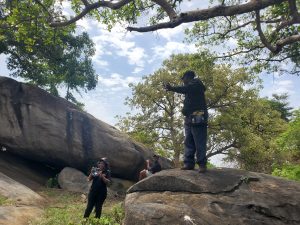
“If hotels and leisure facilities like swimming pools were established here, visitors would be encouraged to stay longer instead of returning immediately to Gulu City after their tour,” he says. “The area has a cool breeze and a very peaceful environment that tourists would truly enjoy.”
At the same time, conservation concerns remain a challenge. Encroachment around the area has led to the gradual depletion of some of the historic and indigenous trees that once defined the landscape of Fort Patiko.
To address this, local authorities and tourism stakeholders have introduced community-based tourism initiatives aimed at encouraging residents to protect the environment while benefiting economically from the site.
Okello Ronald, a tour guide at the fort, explains that the initiative focuses on equipping community members with skills that allow them to participate in tourism activities without harming the environment.
“To protect nature, we train community members to prepare traditional Acholi dishes, as well as pottery and craft-making, so they can earn from tourism,” Okello says. “When people begin to benefit from the site, they develop a sense of ownership and learn to value and protect it rather than destroy it.”
Turning history into opportunity
Despite its historical significance, Fort Patiko remains relatively unknown compared to some of Uganda’s major tourist attractions.
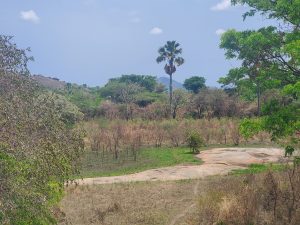
However, tourism experts believe the site’s powerful history, dramatic landscape, and cultural significance make it a strong candidate for heritage tourism development.
Kitara, the district tourism officer, says there are ongoing negotiations with an investor to set up state-of-the-art facilities at the fort with well-refurbished amenities
“There is an investor who wants 100 acres to set up high-class accommodation, so negotiation is still going on with the ministry,” Kitara adds.
He also added that the ministry intends to set up a state-of-the-art latrine at the site.
Standing quietly on the hills of Patiko, the ruins of the fort continue to tell stories of the past. For Northern Uganda, the challenge and opportunity lie in transforming this powerful history into a tourism asset that preserves memory while creating opportunities for the future.