


In his inaugural address, New Gulu City Mayor Acire Julius Labeja struck a reflective and firm tone, reminding leaders that their positions are not privileges but responsibilities entrusted to them by the people.
By Willy Chowoo
Gulu City—A vibrant atmosphere filled with ululation and oath-taking marked the official swearing-in of newly elected councillors, ushering in a new leadership phase for Gulu City with strong calls for unity, integrity, and service delivery.
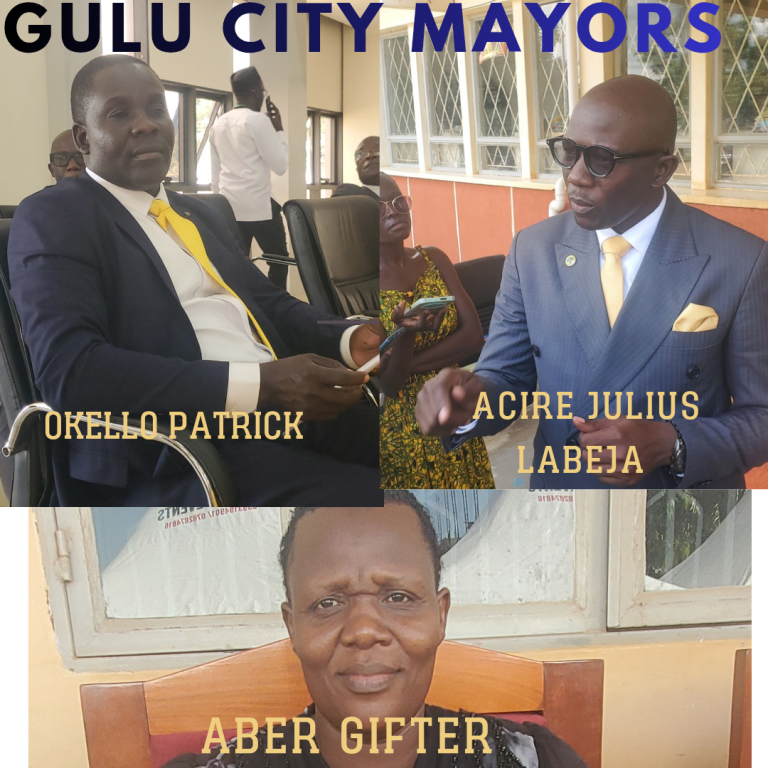
Mr. Acire Julius Labeja, popularly known as Gunya, was sworn in as the second mayor of Gulu City Council, succeeding Okwonga Alfred. He took the oath alongside 15 councillors who will constitute the city council for the next five years.

In his inaugural address, Mayor Labeja struck a reflective and firm tone, reminding leaders that their positions are not privileges but responsibilities entrusted to them by the people.
“This position is not one of privilege, but a responsibility on our shoulders to deliver and repay the trust that the people of Gulu City have invested in us,” he said.
Drawing from philosophical and historical references, Labeja urged councillors to define and fulfil their mission in leadership, warning that failure to do so would betray public trust. He emphasised that the council now serves as a trustee for future generations and must deliver tangible results.

He outlined key service delivery priorities, including clean streets, safe water, security, functional health facilities, good schools, accessible markets, and decent housing, stressing that leaders must fully grasp the weight of responsibility they carry.
The mayor also cautioned against complacency and mediocrity, urging all leaders and civil servants—from councillors to street cleaners—to give their best in service.
Call for Unity Beyond Politics
A central theme of Labeja’s speech was unity and non-partisan leadership. He warned against divisionism, cliqueism and political rivalry within the council.
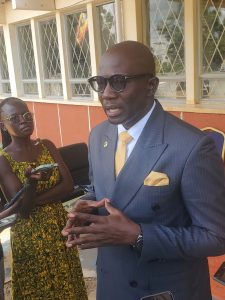
“We are Gulu City Council. We are not NRM, FDC, NUP, UPC or DP… That kind of division has no place in Gulu City,” he said.
He encouraged leaders to “agree to disagree without being disagreeable” and called for strong collaboration not only among politicians but also with technocrats, emphasising mutual trust and respect in delivering services.
People at the Centre
Labeja reaffirmed his commitment to people-centred governance, noting that citizens must guide policy and decision-making.
“Before we make any resolution, let us ask ourselves how it impacts the lowest common man,” he said.
He pledged an open-door policy to ensure public engagement and accountability, while urging councillors to consult widely and provide feedback to citizens.
Strong Warning on Corruption
In a candid moment, the mayor warned leaders against using public office for personal enrichment.
“The unpleasant truth is that there is no money in this job. If you came to enrich yourself, you will be utterly disappointed,” he said.
He emphasised integrity, transparency and accountability, promising zero tolerance for corruption and “under-the-table deals.”
New City Speakers
Meanwhile, former Deputy Speaker and Workers’ Representative, Akena Lamex Lambert, was elected

unopposed as the new Speaker of Gulu City Council, replacing Alimo Joyce Reni.
His nomination was proposed by Ojok Patrick Angella, councillor representing persons with disabilities, and seconded by Acan Susan of Laroo-Layibi South.
Akena acknowledged the magnitude of the task ahead, noting the vast size of Gulu City and the responsibility it places on leaders.
“It is not an easy task; Gulu City is large, with 255 square kilometres, and if this were a football field, each one of us would have 15 square kilometres.” He adds.

Anyengo Venessa was also elected unopposed as deputy speaker after being proposed by youth councillor Rubangakene Daniel and seconded by Alarokume Caroline of Laroo-Layibi North.
Executive Appointments
In accordance with the Local Government Act (Cap 138, Section 18), Mayor Labeja appointed Ali Geoffrey, an independent councillor representing the elderly, as deputy mayor. Ali is a retired teacher and a member of the Gulu University Governing Council.


Angeyo Christine Olok, the former deputy mayor and workers’ representative, was reappointed secretary for Administration, Finance, and Planning.
Acan Susan was named secretary for Community Services, while Ojok Patrick Angella was appointed Secretary for Works, production, and Technical Services.
Labeja said the appointments aim to promote inclusive leadership, efficiency, and improved service delivery.
A Shift from Politics to Service
Mayor Labeja urged leaders to shift focus from politics to service delivery and collective responsibility.

“We need to shift focus from politics to service delivery—
mute all the noise that politics brings to divide us,” he warns.
With a strong emphasis on unity, integrity, continuous learning, and public service, the new leadership now faces the task of translating its commitments into tangible development outcomes for the people of Gulu City.
“The progress and transformation of Gulu City cannot be achieved by one person alone. It requires a united, competent, and accountable team,” he said.
The Need for Further Studies
Mayor Labeja emphasised the importance of continuous learning among council members, noting that experience alone is no longer sufficient in a rapidly evolving environment. He observed that knowledge acquired years ago may not adequately address present and future challenges, underscoring the need for leaders to keep updating their skills.

“You may have been in this council for quite some time, but what you knew five or ten years ago may not be applicable today or tomorrow,” he said. “Learning never stops, and the cup of knowledge of the wise is never full.”
He encouraged councillors to embrace further studies and continuous self-improvement, stressing that education is key to effective leadership. “If you can, let us go back to school,” he urged.
According to the mayor, investing in knowledge not only builds individual capacity but also strengthens collective decision-making, which is essential for effective governance and the progress of the city.












One Response
Great stuff and sound speech from the Mayor.