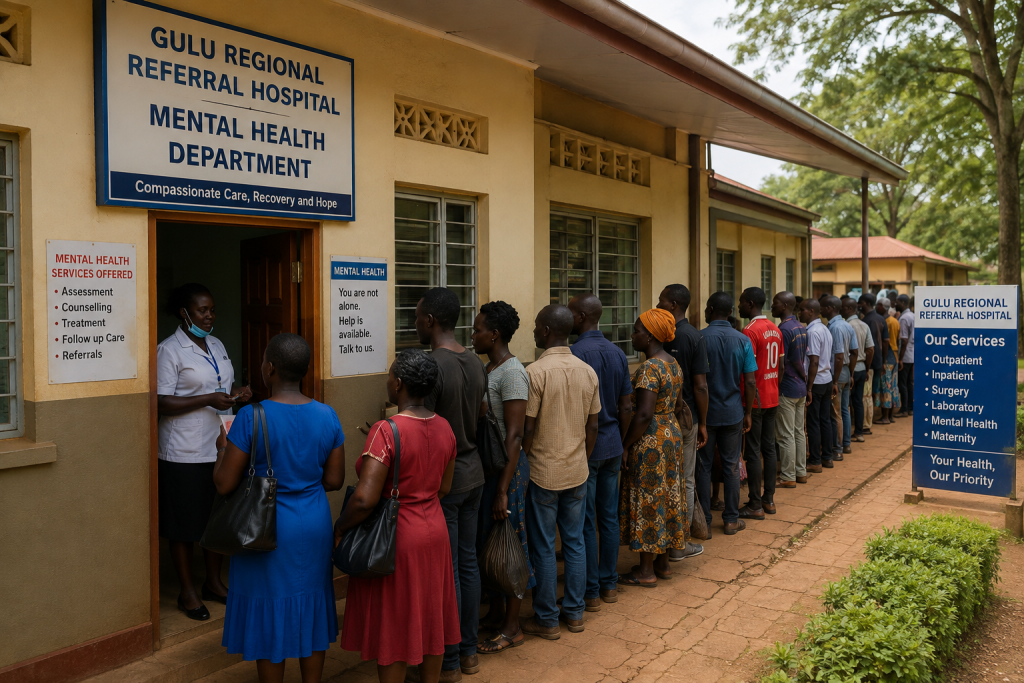
The joint community camp would focus on raising awareness about mental health conditions, suicide prevention, substance and alcohol abuse, and where people can obtain professional help.
By Willy Chowoo
Gulu City
Mental health experts and community-based organisations in Gulu City are set to hold a three-day integrated mental health and medical services camp aimed at reaching at least 500 people as part of efforts to break stigma and promote early access to mental health care.
The camp, scheduled for September 2–4, 2026, at Gulu Prison Primary School, will be held under the theme “Lived Experiences Heard: Real Voice, Real Change.”
The organisers say the initiative is intended to take mental health services closer to communities, where many people experiencing psychological distress often delay seeking professional help because of stigma, lack of information or misconceptions about mental illness.
The camp will bring together mental health practitioners, psychologists, psychiatrists, psychiatric clinical officers, counsellors, social workers and other health professionals to provide free services for each day.
Speaking ahead of the camp, Kinyera Stephen, coordinator of the Gulu-Sheffield Mental Health Partnership and a Psychologist /Nurse at mental health department at Gulu Regional Referral Hospital, said the partners decided to move services outside the conventional hospital setting to create an environment where people can freely discuss their experiences.
“We decided as partners to have it outside the facility, outside where somebody is free and willing to express his or her feelings.”
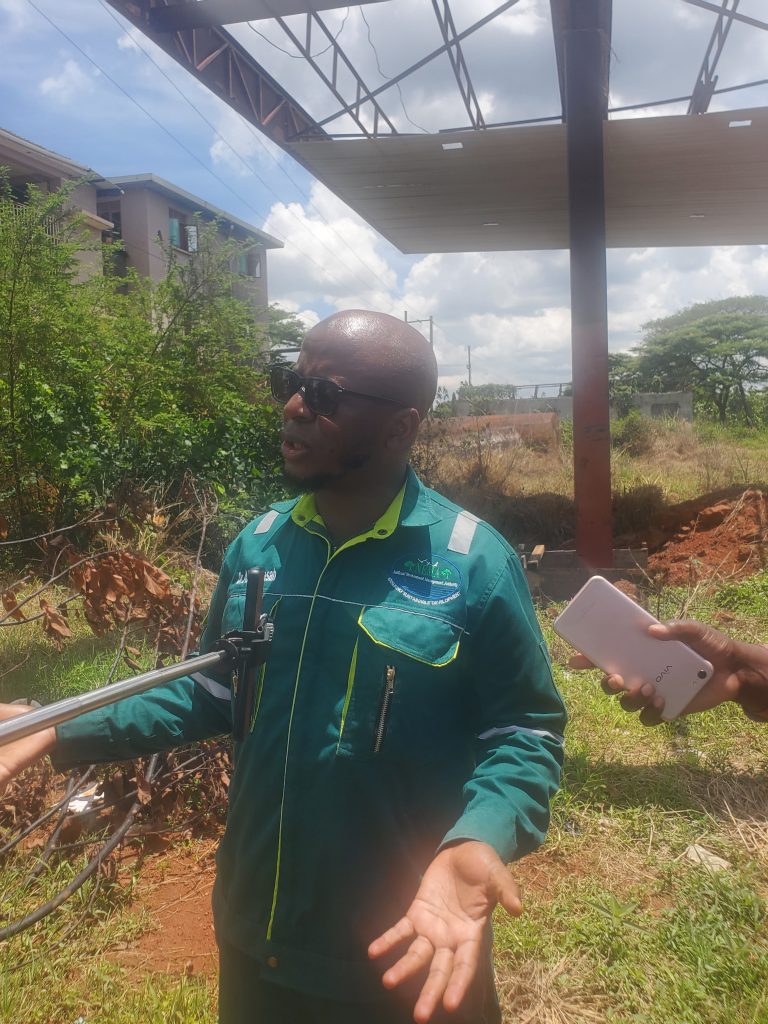
The joint community camp would focus on raising awareness about mental health conditions, suicide prevention, substance and alcohol abuse, and where people can obtain professional help.
Suzanne Akwir, a clinical psychologist and technical lead for the Mental Health Camp 2026, said the initiative will provide an opportunity for members of the public to have their first contact with professional mental health services.
Akwir said participants will receive mental health awareness, screening and referral services, with specialists available to determine the appropriate support for each person.
The services will include clinical psychologists, psychologists, counsellors, psychiatrists, psychiatric clinical officers and social workers.
she added that the camp would also provide integrated medical services including cervical cancer screening, sickle-cell screening, eye check-ups, HIV services and general medical support.
The technical lead emphasised that the initial screening will not constitute a diagnosis but will help professionals determine what support or referral a person may require.
“We’re not promising that we’re going to solve all people’s problems in these three days. But people will have the first contact for support,” she said.
The camp comes at a time when the Ministry of Health is describing mental health as a “silent emergency” in Uganda in The State of Uganda Population Report 2025.
According to the Ministry of Health, the State of Uganda Population Report 2025 estimates that 24.2 percent of adults and 22.9 percent of children in Uganda are affected by mental health conditions. However, fewer than one in ten people who need care receive appropriate support.
The Ministry also reports that Uganda’s mental health outpatient attendances increased to 616,175 in the 2023/24 financial year, up from 520,614 the previous year. Epilepsy accounted for 45.5 percent of the attendances, followed by unipolar depressive disorder at 15.6 percent and bipolar disorder at 9.5 percent.
Notably, attendances for unipolar depressive disorder increased by 53 percent, from 44,824 in 2022/23 to 96,277 in 2023/24. Alcohol-use disorder accounted for 13,140 attendances, while substance-use disorders accounted for 11,491.
The Ministry says the government plans to strengthen the integration of mental health services into primary healthcare and community-based systems, expand the mental health workforce and increase funding for mental health services.
For Oliver Atim, founder of Santa Foundation, the mental health camp is rooted in personal experience.
Atim said she experienced a mental health crisis with her family in 2022 but did not initially understand what was happening or where to seek professional support.
“I honestly had no idea what mental health was. Not until when it hit me very close.”
The experience prompted him to leave his job and begin advocating for mental health awareness and access to services.
The first camp was heled in January 2026 as a pilot camp and demonstrated the need for continued collaboration among mental health organisations and service providers. It was attended by 80 people.
The September camp, she said, is deliberately being held during Suicide Prevention
Awareness Month to bring services directly to people experiencing depression, trauma, suicidal thoughts and substance-use problems.
Need for Early Intervention
Mental health experts also have expressed concern that many people only seek professional mental health services when their conditions have become severe, often treating hospitals as a last resort.
They have urged the community to seek help early whenever they notice signs and symptoms of mental illness, saying early intervention can prevent conditions from worsening.
Kinyera says many people struggling with mental health conditions do not understand what they are experiencing because of limited awareness about the signs and symptoms.
The mental health camp is intended to break stigma, raise awareness and help people identify where to seek professional support.
“People that are struggling outside there with mental health conditions sometimes they don’t know what they are going through,” Kinyera said.
Kinyera noted that many people do not seek help from health facilities when symptoms first emerge, instead turning to pastors or other sources for assistance before eventually seeking medical care.
“We feel like people should take mental health as a priority and when symptoms exist, they should seek advice and come straight to the hospital,” he said.
He said many people do not recognise the early signs of mental illness and often seek help only when their conditions have become severe.
“Hospital people take as a last resort,” Kinyera said, noting that some people first turn to pastors or traditional and other informal sources of support before seeking professional mental health services.
Atim said many people are encouraged to “speak up” about mental health challenges but are not told where to go for professional assistance.
The psychologist urged the public to seek help early whenever they notice changes in behaviour, emotions or functioning.
“We want people to be free to come and get the service,” Atim said, adding that the initiative also seeks to establish a stronger referral pathway among mental health service providers in northern Uganda.
One of the major challenges stopping people to open up while undergoing difficult of time of mental health illness is stigma.
Larubi has called for an end to stigma against people experiencing mental health conditions, saying family and social support are important components of recovery.
“Let’s embrace those who are sick, support them, show them love and care,” she said.
Mental health and community productivity
Mental health experts have raised concern over increasing cases of mental illness, saying they are contributing to low productivity among young people in the post-war Acholi Sub-region, where alcohol and substance abuse remain widespread.
Experts also warn that excessive alcohol consumption and substance abuse in the sub-region are contributing to an increase in suicide cases.
Paul Oloya, Programme Manager at Global Mental Health Alliance and clinical psychologist, said mental health problems affect not only individuals and families but also community and national productivity.
Oloya says people experiencing depression may lose interest in work, farming and social relationships, ultimately affecting household incomes and community productivity.
Global Mental Health Alliance provides trauma counselling, family counselling, individual and group counselling, is among the partners supporting the camp.
Christine Larubi, a psychologist at Gulu Regional Referral Hospital, said alcohol and drug abuse are among the common mental health-related problems affecting young people in Gulu and the wider northern region.
At the hospital mental health unit, depression is a major concern, particularly among women.
However, Kinyera notes that camp will also address the growing concern over suicide in the community by helping people recognise warning signs and access support early.
The challenge has been a lack of awareness about the early signs of mental illness, largely due to limited access to information. The camp has been organised to address this gap by providing mental health awareness, screening and referral services to the community
Larubi urged families to pay attention to behavioural and emotional changes among their relatives instead of ignoring early warning signs.
“There are early warning signs. But when you leave it unattended to, that’s when it keeps progressing to another stage.”
Oloya said participants will have access to counselling, assessment and referral services at no cost, urging the public to utilise the opportunity.
“Something that you would pay 120,000 shillings for consultation, we are offering free of charge for the full three days,” he said.
The Mental experts have called for stronger government and partner investment in mental health, arguing that mental health should be treated as a major development issue rather than solely a medical concern.
Partners seek lasting collaboration
The organisers say the camp is also intended to strengthen collaboration among mental health organisations operating in northern Uganda.
Atim said individual organisations cannot meet the mental health needs of the entire community on their own.
“If we work together, we are able to help our community as practitioners in different capacities,” he said.
The organisers hope the initiative will create a functioning referral network through which families can identify where to seek specific mental health services.
The Ministry of Health has similarly called for coordinated action across government and other sectors, noting that mental health is a shared responsibility rather than solely a medical issue.
The Gulu camp is expected to serve as a platform where people can access services, learn about mental health and establish contact with service providers for continued care beyond the three-day event.
The organisers are calling on residents of Gulu City and the wider northern Uganda region to attend the camp and seek help without fear of stigma.
The camp will run from September 2 to 4, 2026, at Gulu Prison Primary School, from 8am to 4pm daily.