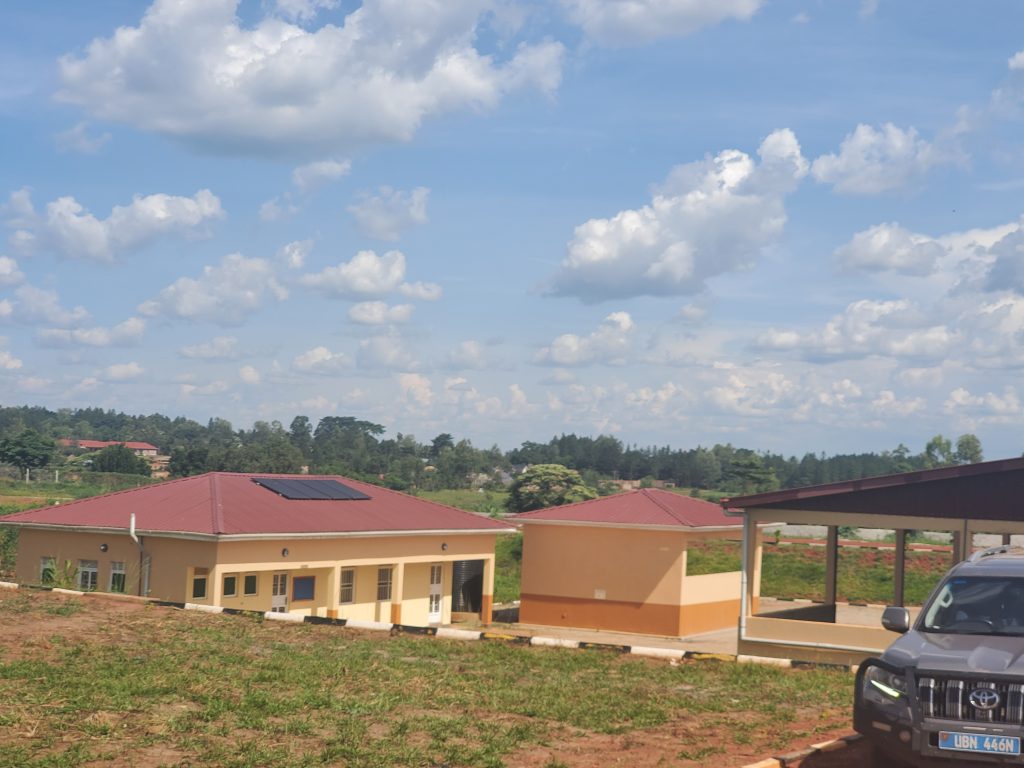
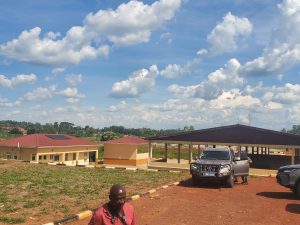
The landfill is located on a 7-acre piece of land in Agwee Ward, Laroo-Pece Division.
By Willy Chowoo
The National Environmental Management Authority (NEMA) has advised Gulu City Council to repurpose its Modern Waste Management Landfill Facility, warning that failure to act could lead to environmental pollution and conflicts with surrounding communities.
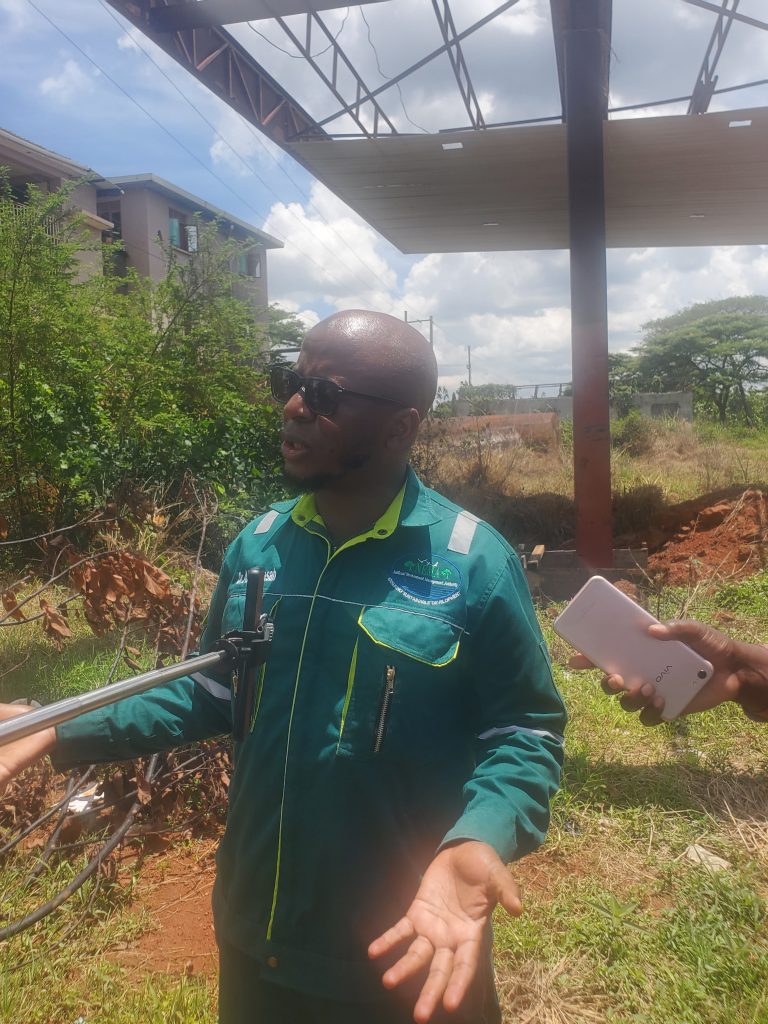
The Executive Director of NEMA, Dr. Barirega Akankwasah, noted that the current landfill is situated on a small piece of land and is encircled by residential areas, posing serious risks.
“The landfill, with residences less than 500 meters away, you will have just started conflict within one year of the project and will have public health issues,” Akankwasha notes.
He criticised the city council for failing to follow earlier guidance issued by the authority. “We issued an advisory to Gulu City Council, but they have not taken up the recommendation.”
The landfill is located on a 7-acre piece of land in Agwee Ward, Laroo-Pece Division. During a recent visit to the site, Dr. Akankwasah warned that the current design may not provide value for money.
Gulu City, formerly a municipality, secured 5.9 billion shillings from KfW, a German state-owned development bank, and the World Bank to construct a modern waste management plant. In 2021, the city council signed a memorandum of understanding to implement the project.
However, Dr. Akankwasah emphasised that the existing landfill design is unsuitable and recommended redesigning it to handle hazardous or chemical waste only.
“We have you in our best interest; we don’t want you to start and fail. It will be a wasted investment. “
Currently, the facility is designed to manage solid waste.
The chairman of the board, Prof. James Okumu Okot, cautioned against replicating the challenges experienced at the Kiteezi Landfill.
“And in case you have an alternative somewhere and you overaccumulate, a similar incident that happened in Kiteezi must not happen here,” he warns.
Need for an Alternative Site
NEMA experts recommend that the long-term solution lies in acquiring a larger piece of land to accommodate expansion and improve waste management efficiency.
Dr. Akankwasah further urged the council to invest in an organic or biodegradable waste facility that can generate value-added products.
“You can do direct manure contribution to the farm, and you can do biogas generation; the opportunities are many.”
Currently, Gulu City relies on a dumpsite in Pabbo, Owo Sub-County, about 12 kilometers northwest of the city, where unsorted waste is disposed of using rudimentary methods.
The City Health Inspector, Rubanga Michael, who oversees the facility, acknowledged that waste is still being handled using traditional dumping practices.
Prof. Okumu warned that such methods are not suitable for a modern facility.
“The issue of dumping here will not help. In planning, you need to have a large chunk of land for the reciprocal decomposition.”
Dr. Akankwasah suggested that converting the existing site into a medical waste facility could help manage waste volumes more effectively.
“You can actually convert this facility into medical waste, which is manageable; the volume is manageable, and then focus the effort of the municipal waste to the other site
Innovative Living Lab Initiative
Gulu City Council is also partnering with Gulu University to introduce innovative approaches aimed at reducing biodegradable waste.
The city environment officer, Ocan Michael, said the initiative will include the installation of JPIR equipment to monitor methane gas emissions.
“We had no plan to incorporate that plan; instead of filling that space, we can easily transform biodegradables into other usable products while we bring the aspect of large-scale production of soldier flies,” Ocan notes.
About the Facility
The landfill is located in Agwee Ward, within Pece-Laroo Division, approximately 3 kilometres from Gulu City centre, near Pece Stream. It was designed as a modern sanitary landfill to handle increasing urban waste.
The project, estimated at 4.7 billion shillings, is funded by the German Development Corporation (GIZ/KfW). The facility has a capacity of 1,880,000 cubic meters and is intended to handle over 130 tonnes of waste daily.