The survivors are deliberately shifting from mourning to economic recovery, with this year’s theme focusing on “from loss to legacy—celebrating the economic spirit of Atiak’s fallen entrepreneurs.”
By Willy Chowoo
Thirty-one years after the tragic events of the Atiak massacre, survivors in Atiak are slowly transforming a history of loss into a story of resilience—driven not by government compensation but by community effort, savings groups, and determination to rebuild.
The survivors are deliberately shifting from mourning to economic recovery, with this year’s theme focusing on “from loss to legacy—celebrating the economic spirit of Atiak’s fallen entrepreneurs.”
The theme focuses on acknowledging the profound loss while celebrating the community’s enduring entrepreneurial spirit, aiming to turn a tragedy into a legacy.
“Survivors and victims have turned to climate-smart farming, such as rearing goats and cultivating crops, to build their lives,” said Okot Fred, a survivor and the chairperson of the Atiak Massacre memorial site.
The April 20th massacre caused devastating losses for the business community, with many people losing both their lives and property when rebels from the Lord’s Resistance Army (LRA) attacked the trading center and reduced it to ashes.
Okot notes that the commemoration is meant to prevent future occurrences: “We mark this day by empowering the younger generation to protect and sustain peace.”
Rebuilding Through Collective Strength
At the heart of this transformation is the Atiak Massacre Survivors Association (AMSA), led by Aketo Paska, who is championing economic self-reliance among survivors. They have now formed themselves into a Village Savings and Loan Association (VSLA).
Akello, who was 14 years old on the day of the Atiak, now runs a poultry business to support a single family. This business has helped her raise two children and support her sister’s children.
Through a VSLA supported with UGX 50 million from the president in 2016, the group has extended loans to at least 50 members—each accessing up to UGX 2 million to start or revive small businesses.
The association, which brings together 67 members across generations, has also invested in basic needs like iron sheets for housing. This is only for members who have subscribed to the association but not the entire survivor group.
They used 16 million shillings to buy iron sheets and distributed them to members to move away from thatched grass huts. The iron sheets were given to 37 beneficiaries, with each member getting 10 pieces.
But beyond immediate relief, the group is thinking long-term.
“The wait to compensate has been long. We can’t continue anymore. Some of our members are dying. We feel the cows that we intend to give to members shall make some of us heal,” Paska says.
The plan to provide cattle to each member reflects a shift toward climate-resilient livelihoods, especially as weather patterns in northern Uganda become increasingly unpredictable. They intend to do it by the end of the year, and currently, they have 23 million in their account.
Farming, Climate, and a New Kind of Survival
With hopes of receiving meaningful government support fading each day, the survivors were left disappointed when the Office of the Prime Minister in 2025 provided them with five oxploughs to share among all members. The equipment has since remained unused due to the absence of oxen to operate it.
However, Okot notes that many survivors have turned to farming and livestock rearing as both a livelihood and a pathway to healing. This transition is now intersecting with climate realities.
Openytoo Lawerence Atodwong, 61, a resident of Kibogi, one of the survivors, has since shifted away from the business he lost and turned to livestock farming, where he now rears a few cattle.
Okot challenged people to move beyond focusing solely on the physical massacre and instead confront the different forms of “massacre” affecting society today—educational, environmental, moral, political, leadership, and mental—which continue to erode the population.
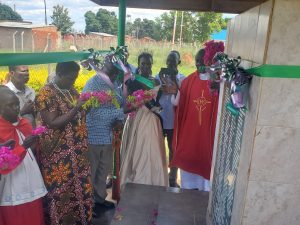
“If you continue to dwell on the physical massacre, it will destroy us all. Stop crying, rebuild yourselves, focus on resilience and restoration, and embrace entrepreneurship and business,” Okot emphasised.
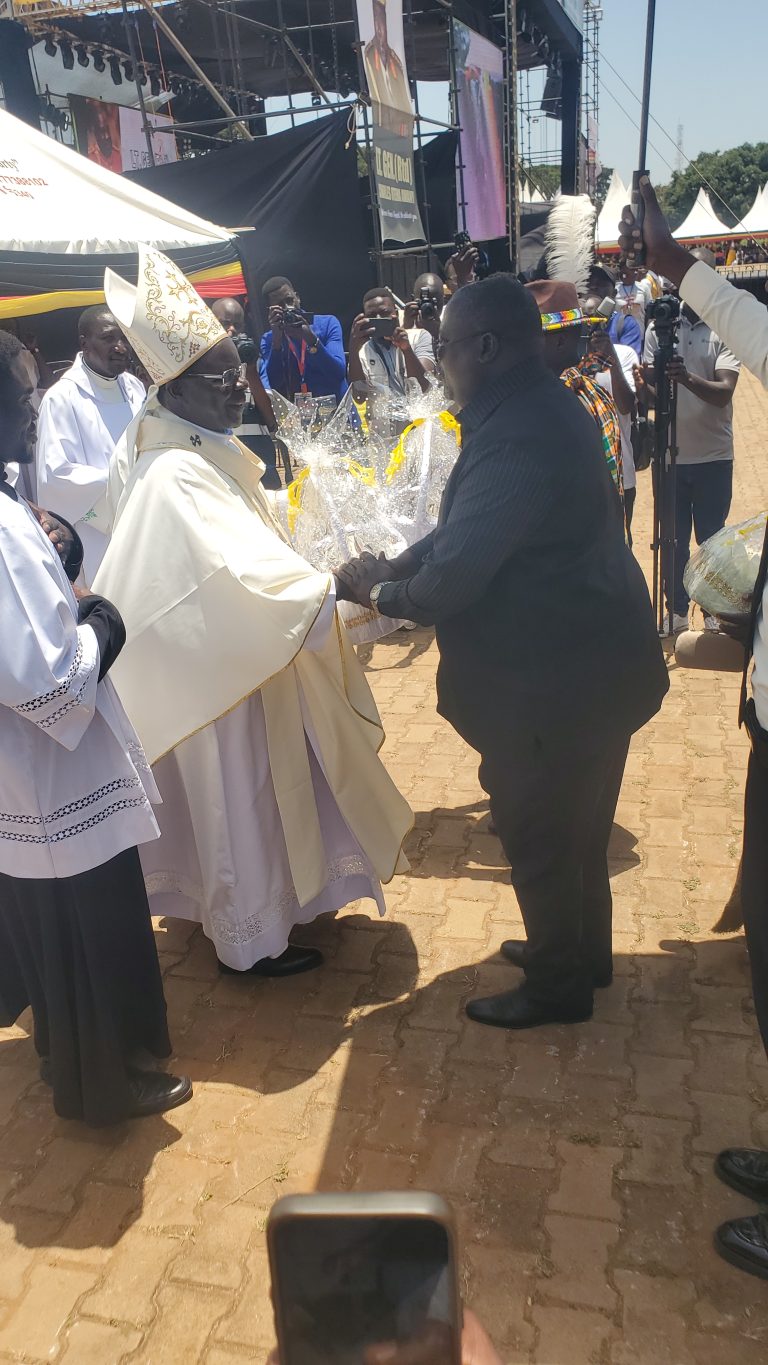
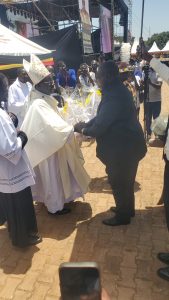
During the memorial prayers, Rev. Fr. Abraham Ocen, the Parish Priest of Atiak Catholic Mission, called on the community to take environmental action
“The physical massacre happened here 31 years ago. It is now time to fight environmental massacre; we need to plant trees to restore the depleted,” he adds.
His message underscores a growing awareness that climate change is the new threat, and resilience must now include environmental stewardship, such as tree planting.
Stories of Loss and Survival
Behind the recovery efforts are deeply personal stories of pain and endurance.
Akello Christine, a 90-year-old survivor, lost two sons in the massacre, her husband, and another son in a separate rebel attack in Pabbo. Today, age has locked her out of economic programs like the Parish Development Model (PDM), leaving her dependent on hope.
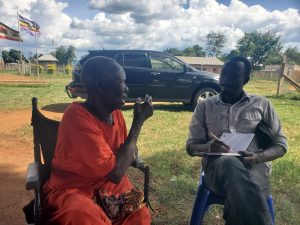
“The only way I can benefit before I die is SAGE,” she says, appealing to the government to enroll her in the Social Assistance Grants for Empowerment program.
Akello is now staying with the grandchildren behind the former Local Defense Unit LDU detachment that was overrun by the rebels in 1995.
For others like Openy-too, survival has meant rebuilding from nothing. After losing two shops during the 1995 attack and surviving a shooting spree at Loka Kitang, he has relied solely on personal effort.
“I have not benefited from any government intervention, but I have continued to work hard and sustained my family,” he says.
From Trauma to Transformation
With many of the survivors and the victims still struggling to heal completely from the massacre, cultural leaders say the time has come to move beyond grief and focus on progress.
Okot Justo Gwanga, the prime minister of Ker Kwaro Atiak, emphasised the need for a mindset shift. “As we reflect on the dark day in Atiak, it is high time people moved on and stopped lamenting.”
Okot applauded survivors who have managed to turn trauma into opportunity, aligning with the broader theme of economic resilience.
Despite visible progress, gaps remain—especially in healthcare, livelihoods, and social protection for aging survivors.
Stella Lanam Angle, the Executive Director of War Victims and Children Networking Initiative, notes that while many survivors are rebuilding through self-effort, targeted support is still critical
“We know reparation will take time to come, but special funds for memorial prayers can help support the livelihoods and medical care of survivors,” she notes.
Lanam argues that such interventions would not only sustain recovery but also accelerate healing and dignity among those affected.
The organisation was formed to overcome psychological distress and foster the livelihoods and economic well-being of the community affected by the war in Northern Uganda.
Okot Kenneth, the Chairperson of Local Council III of Atiak Town Council, says unity among the business community is key to helping survivors rebuild their businesses.
“Stop forming parallel survivor’s associations; that one would divide us further. Let us remain united as we overcome the trauma of the massacre,” he emphasised
What was once a scene of devastation is becoming a testament to resilience—where the ashes of tragedy are giving rise to a new generation of entrepreneurs determined to reclaim their future.
The Atiak Massacre
The Atiak massacre occurred on April 20, 1995, during the height of the insurgency by the Lord’s Resistance Army in northern Uganda. Rebels attacked Atiak Trading Centre in present-day Amuru District after overpowering a nearby army detachment. They rounded up civilians, looted property, and burned homes and businesses.
In one of the most horrific episodes, the rebels abducted hundreds of residents and later massacred many of them near a Kitang valley in the present Pogo Sub-County. Estimates indicate that more than 300 people were killed, leaving more than 400 survivors. The attack left the town devastated, with widespread loss of life, destruction of property, and long-term trauma among survivors.
The massacre remains one of the most painful reminders of the brutality of the LRA conflict in northern Uganda, and it continues to shape the community’s memory, resilience, and calls for justice and support.
For the past 31 years, survivors have continued to demand reparation and compensation from the government. However, meaningful support has remained limited. The government’s most notable intervention has been the establishment of Lwani Memorial College in memory of the massacre. As time passes, hopes for justice continue to fade, especially as the National Transitional Justice Policy has taken years without being enacted into law by Parliament to address the long-standing demands for compensation and reparations for war victims and survivors in Uganda