The development, reportedly linked to Oil Energy, has triggered resistance from sections of the local community who accuse the developer of encroaching on a sensitive wetland ecosystem.
By Willy Chowoo
The National Environment Management Authority (NEMA) has reaffirmed its commitment to protect wetlands in Gulu City as a dispute over the proposed construction of a patrol station in the Pece stream wetland heads to court.
The development, reportedly linked to Oil Energy, has triggered resistance from sections of the local community who accuse the developer of encroaching on a sensitive wetland ecosystem. A verification report on the site indicates concerns about the nature of the land and its environmental status, forming part of the evidence now before court.
Speaking on the matter, NEMA Executive Director Barirega Akankwasah said the authority is constrained from taking action until the court process is concluded.
“This matter is in court, so I am restricted… I am unable to make any substantive comment on such a matter because it is before court. Until court has resolved the matter, that’s when we can make our comments,” he said.
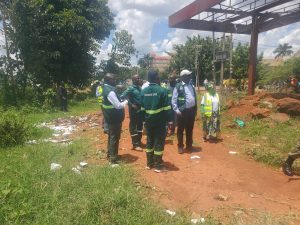
However, Dr. Akankwasah emphasised that any development in wetlands or other sensitive areas must strictly follow established legal and environmental procedures.
He explained that developers are required to go through three critical approval stages: clearance by the physical planning committee, environmental and social impact assessment by NEMA, and final approval by the building control committee.
According to him, failure to follow this process not only violates the law but also risks environmental degradation.
“If we confirm that the impacts cannot be mitigated, we recommend no development. If the impacts can be mitigated, we give conditions and technical guidance,” he noted.
The controversy in Pece stream highlights growing pressure on urban wetlands in Gulu City, where rapid expansion and infrastructure projects are increasingly competing with conservation priorities.
Local residents have protested the planned patrol station, arguing that the wetland plays a critical role in drainage, flood control, and environmental protection. They fear that construction could lead to long-term ecological damage.
Dr. Akankwasah used the case to caution developers across the country, urging them to respect land-use zoning and proper planning frameworks.
“Other developers must learn that before you undertake any development, seek approval from the physical planning committee… and ensure compliance with environmental requirements,” he said.
He further warned against unregulated mixed land use, which he said has contributed to environmental and planning challenges in urban areas.
As the court prepares to determine the legality of the Pece wetland development, the case is expected to set a precedent for how Gulu City and other fast-growing urban centers manage the delicate balance between development and environmental protection.