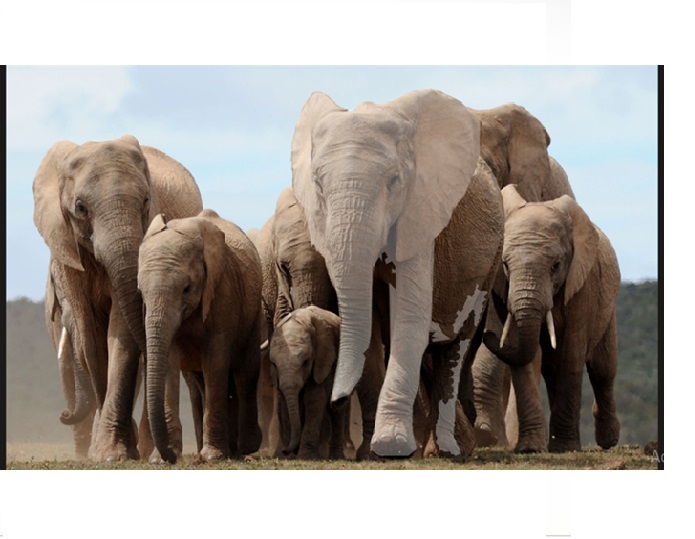
Data tracking elephant numbers between 2011 and 2025 shows a gradual recovery in earlier years, followed by fluctuations and a recent decline.
By Willy Chowoo
Gulu City
Uganda’s elephant population has followed a mixed trajectory over the past decades, reflecting both conservation gains and emerging threats that continue to test the resilience of one of the country’s most iconic species.
Elephant numbers have risen over the years but have recently stalled, signalling a fragile and uncertain recovery. Data tracking elephant numbers between 2011 and 2025 shows a gradual recovery in earlier years, followed by fluctuations and a recent decline.
The trend mirrors a broader national picture captured in the State of Wildlife Resources in Uganda Report 2026, which highlights uneven progress in wildlife conservation.
According to the report, the population of elephants declined to 6,352 in 2025 from 6,621 in 2022.
The Uganda Wildlife Authority (UWA) attributes the decline to habitat loss, human-wildlife conflict, and illegal poaching.
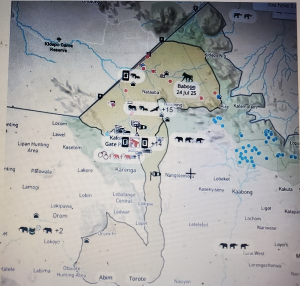
The authority says the decline of the elephant population at Kidepo Valley Conservation Area (KVCA) highlights ongoing migrations into neighbouring countries such as Kenya and South Sudan, occupation of community areas in Karamoja where they are not counted during surveys, and limited poaching.
“Other collared elephants have been recorded on UWA’s EarthRanger to have migrated into Kenya.” The report reads in part.
The authority estimates the current number of elephants in the landscape to be around 1000.
Around the Kidepo Valley Conservation Area (KVCA), elephants have established permanent ranges outside the protected area, from which they frequently raid nearby farms, making KVCA a hotspot for human-wildlife conflict.
Uganda’s elephant population suffered a dramatic decline between 1971 and 1986, during a period of political instability and civil unrest when large numbers of wildlife were killed.
By the 1980s, wildlife in savannah ecosystems had declined by an estimated 95 percent compared to the 1960s.
According to the park authority, elephant numbers dropped sharply—from between 2,500-4,000 in Queen Elizabeth National Park in the 1960s to just 150 by 1980. In Murchison Falls National Park, the population fell from about 12,000 to only 1,420 over the same period.
Uganda is home to two types of African elephants: the African savannah elephant (Loxodonta africana) and the African forest elephant (Loxodonta cyclotis).
According to the IUCN list, African Forest elephants are Critically Endangered, while the African savannah elephant is classified as Endangered in its 2021 assessment.
However, a survey by UWA at Kibale National Park in 2023 shows an increase in Forest elephants from 506 to 703.
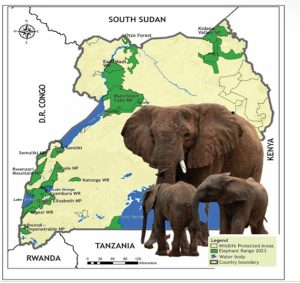
Elephants are distributed across several ecosystems in Uganda, with significant populations found in Murchison Falls National Park, Queen Elizabeth National Park, Kidepo Valley National Park, Kibale National Park, Bwindi Impenetrable National Park, Semuliki National Park, Toro–Semliki Wildlife Reserve, Katonga Wildlife Reserve, and Rwenzori Mountains National Park.
However, after the establishment of the Uganda Wildlife Authority (UWA) in 1996, nearly three decades ago, conservation measures have helped wildlife populations recover and improve their long-term protection to over 6000 elephants today.
Various reports indicate significant progress in wildlife conservation, although challenges remain, including habitat loss, human-wildlife conflict, and illegal poaching, particularly of elephants.
A fragile recovery
The population curve from 2011 shows a species on a slow path to recovery after years of heavy poaching and habitat loss. However, the more recent stagnation and slight drop suggest that conservation success is fragile and can quickly be reversed.
According to the report, elephant populations in monitored protected areas declined from 6,621 in 2021–2022 to 6,352 in 2023–2025, raising conservationists’ concerns about the sustainability of earlier gains. This shows a decline of 4.1%, meaning that 269 elephants were lost.
However, the country recorded its sharpest decline in elephant numbers between 2018–2020 and 2021–2022, losing 1,354 elephants as the population fell from 7,975 to 6,621.
This decline comes despite a decade-long recovery effort that had seen elephant numbers steadily improve, largely due to strengthened anti-poaching measures, better ranger patrol systems, and increased use of technology in wildlife monitoring.
The authority recorded its highest increase in elephant numbers between 2017–2018 and 2018–2020, with the population rising by 2,167 elephants, representing a 37.3% increase. From 2011- 2014 to 2015-2017, it registered an increment of only 69 elephants, jumping from 5,739 to 5,808.
Wildlife experts warn that while large-scale commercial poaching has reduced, elephants still face significant pressure from human encroachment, habitat fragmentation, and climate variability.
“Big Park, many animals, big problem,” Kizza Fredrick, the Chief Warden of Murchison Falls Conservation Area, notes. Adding that, “As we conserve, we expect the number to increase, but for some reason, some wildlife, like elephants, is targeted.”
Kizza attributes the fluctuating number mainly to illegal poaching targeting elephants for their ivory for international networks. Murchison Falls National Park is among the protected areas with the highest number of illegal poaching and wildlife trafficking.
“We are trying to use the carrot more than the stick to minimise poaching; I think when we work as a team, we shall stop poaching because poaching is bad,” he notes.

In 2022, the Uganda Wildlife Authority (UWA) and its partners confiscated more than 12 tonnes of leg-hold traps and wire snares during anti-poaching patrols in Murchison Falls National Park (MFNP).
Succession by invasive plants
As the anti-poaching campaign begins to bear fruit, another thing that remains a big challenge is Climate change, which is leading to the rapid spread of invasive plant species across protected areas in the country.
At MFNP, Borassus plants, Acacia Nilotica, and Dichrostachys Cinerea are also threatening to take over the savannah grasslands in the southern part of the park. This is affecting mainly the grazers, with habitats, reproduction, and feeding leading to displacement.
However, elephants are mixed feeders because they can significantly alter vegetation by both grazing and browsing, which can influence habitat structure and their own food availability. With the rate of uptake less than the rate of regeneration at MFNP, Borassus plants are rapidly colonising the savannah grassland.
“Succession is taking place here; former savannah woodlands are becoming forests and forcing wildlife to migrate to other areas.” Kizza adds.
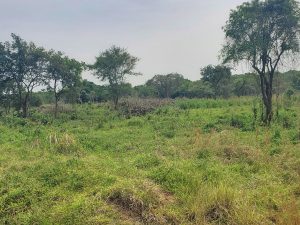
To tackle the problem, park authorities are deliberately managing the vegetation to restore more than 10,000 hectares of degraded land. This involves uprooting invasive plants mechanically and manually, followed by controlled burning to remove debris and stimulate grass growth.
However, the 2026 wildlife status report paints a complex picture. While elephant and lion populations are declining, several other species, including buffaloes, zebras, and antelopes, are recovering steadily.
This contrast highlights a critical reality: conservation gains are not uniform. Some species benefit more directly from targeted interventions, while others, like elephants, require larger habitats and face more complex threats.
Uganda remains one of Africa’s most biodiverse countries, with over 18,000 recorded species, but this richness is under increasing pressure from land-use change, infrastructure development, and environmental degradation.
A species at a crossroads.
Experts say the future of elephants in Uganda will depend on sustained investment in conservation, including protecting migration corridors, reducing human-wildlife conflict, and strengthening community-based conservation initiatives.
While speaking during the launch of a five-year strategic plan for the Uganda Wildlife Authority recently, Dr. James Musinguzi says the strategic plan provides new direction for technology-driven conservation. According to Dr. Musinguzi, the authority will continue to use drones, forensic science, GIS, and digital systems to strengthen anti-poaching and wildlife protection.
While the strategy offers hope for habitat restoration and improved management of the protected areas, continued settlement along wildlife migratory corridors, driven by population pressure, remains a pressing conservation challenge for elephant mobility.
For example, migratory routes between Murchison Falls National Park (MFNP) and South Sudan through the Dufile area have become increasingly restricted as human settlements and other developments expand along the corridors.
The blockage of these routes limits seasonal wildlife movements and cross-border gene flow, with potentially severe consequences for the long-term viability of wildlife populations. As habitat connectivity declines, opportunities for genetic exchange between populations are reduced, increasing the risk of isolation and local population declines, particularly among large, migratory species.
Wildlife veterinarian and conservationist Dr. Enyel has warned that blocking wildlife corridors could weaken the genetic diversity of elephant populations, leaving them more vulnerable to disease, birth defects, and other threats.
“We need the flow of genes, genetic flow between the landscapes. They can multiply, but you may end up multiplying a gene that is almost getting eroded,” Dr. Enyel said.
He compared the importance of genetic exchange in wildlife populations to humans marrying outside their immediate family to maintain genetic diversity.
“Yes, we may have 20, 50 or a million elephants, but with a very narrow gene pool, anything can happen, and it could wipe them all out at once,” he said.
Dr. Enyel said signs of genetic problems may not always be immediately visible but could include abnormalities during birth.
“That is why corridor connection or connectivity is very important for sustaining the livelihoods of even human beings,” he said.
UWA has recovered 31,108,094 million units of land from the three historical national parks of Murchison Falls, Queen Elizabeth, and Kidepo Valley taken by the community for farmland between 1990 and 2024. The largest recovery was at MFNP at 16 million units and 5 and 4 million units at QENP and KVNP, respectively.
This recovery shows improved protection and containment of the agricultural environment within park boundaries as per the Wildlife Report 2026.
The government and conservation agencies are now emphasising science-led management, including aerial surveys, digital monitoring systems, and improved data collection to guide decision-making.
Currently, UWA is using EarthRanger as one of the innovations to help reduce poaching in protected areas and GIS to detect animals’ movement outside the range.
However, without addressing the root causes, particularly habitat loss and human pressure, these efforts may not be enough to secure long-term population growth.
Hope in Electric Fence
As human populations expand, elephants are increasingly pushed into smaller habitats, heightening the risk of conflict with communities. These conflicts often result in crop destruction, retaliatory killings, or injury to both people and animals.
To reduce human-wildlife conflict, the Uganda Wildlife Authority (UWA) has embraced electric fencing as one of the interventions to protect communities and elephants, which are among the leading contributors to human-wildlife conflict.
Elephants are the leading wild animals causing human-wildlife conflicts in the communities neighboring the national parks, followed by buffaloes and hippopotamuses.
Elephants accounted for 76.9 percent of the 3,755 human-wildlife conflict incidents recorded in Uganda in 2022 and 2023, underscoring the scale of the challenge facing communities living near wildlife habitats.
Kidepo Valley National Park, which was created in 1962, is the latest protected area to begin installing electric fences in a bid to reduce rising human-wildlife conflicts.
The national park, which is bordered by six districts, has identified six human-wildlife conflict hotspots requiring electric fencing covering more than 200 kilometres.
The fencing exercise has started in Karenga District as well, where about 27 kilometres of electric fence have so far been installed.
Dr. Enyel, the Chief Conservation Warden at KVNP, said the exercise will be extended to other hotspots in Orom in Kitgum District, as well as Agago, Abim and Kaabong districts.
The initiative is aimed at preventing wildlife from straying into communities and protecting both people and wildlife from the increasing conflict.
Dr. Enyel said electric fencing could play a key role in reducing human-elephant conflict and in creating conditions for communities and wildlife to coexist.
“In this landscape, you will find some people settled along the corridors. But what we are saying is, if we combine electric fencing with the management of human-wildlife conflict, we are going to remove this conflict and then move towards coexistence,” Dr. Enyel said.
He said properly managed wildlife corridors could also create economic opportunities for communities living alongside protected areas.
“If you have an electric fence, you are protecting your crops, and the animal comes and stops here. Tourists will come and see animals on your land, and they will give you money,” he said.
Dr. Enyel said the fencing would prevent elephants from destroying crops while allowing communities to benefit from wildlife tourism.
“You will end up having that coexistence with love without any problem. That is what we are looking for,” he said.
As Uganda marked World Elephant Day today, the 12th August, 2026, Dr. Enyel said his priority was to see an end to the long-running conflict between people and elephants.
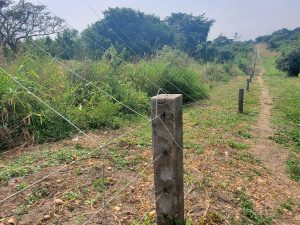
At Murchison Falls National Park, the authority has so far fenced 64 kilometres out of the targeted 110 kilometres. Meanwhile, at Queen Elizabeth National Park, about 87 percent of the planned over 200 kilometres has been completed—a move aimed at reducing human-wildlife conflict.
The story of Uganda’s elephants between 2011 and 2025 is one of hope tempered by warning. While the species has shown resilience and the ability to recover, the recent decline signals that progress is neither guaranteed nor permanent.
For conservationists, policymakers, and communities alike, the message is clear: protecting elephants will require not only maintaining past gains but also confronting the growing challenges that threaten their future.