The inaugural Gulu City Oktoberfest was held in 2025 as a major social and entertainment event in the city, bringing together residents, businesses and visitors.
By Chowoo Willy
A bitter dispute over the ownership and control of the Gulu City Oktoberfest has emerged, threatening to overshadow preparations for the 2026 edition of the festival and raising questions about who has the legal authority to organise, approve and ultimately benefit from the event.
The controversy came to public attention after Alfred Okwonga, a former mayor of Gulu City wrote to the Rotary president on September 9, 2026, advising that the 2026 Oktoberfest be cancelled.
Okwonga cited financial, regulatory, operational and reputational concerns, including outstanding sponsorship commitments, the absence of clearance from the Inspector General of Police and the lack of approval from Gulu City Council.
But behind the cancellation recommendation lies a more fundamental disagreement: whether Oktoberfest is a Gulu City event, a Rotary Club of Gulu City event, or an independently owned event that Rotary is seeking to help institutionalise through a partnership with the city.
The issue has now drawn the attention of Gulu City authorities, which say they are examining the ownership question before deciding whether to approve the use of Kaunda Grounds for the festival.
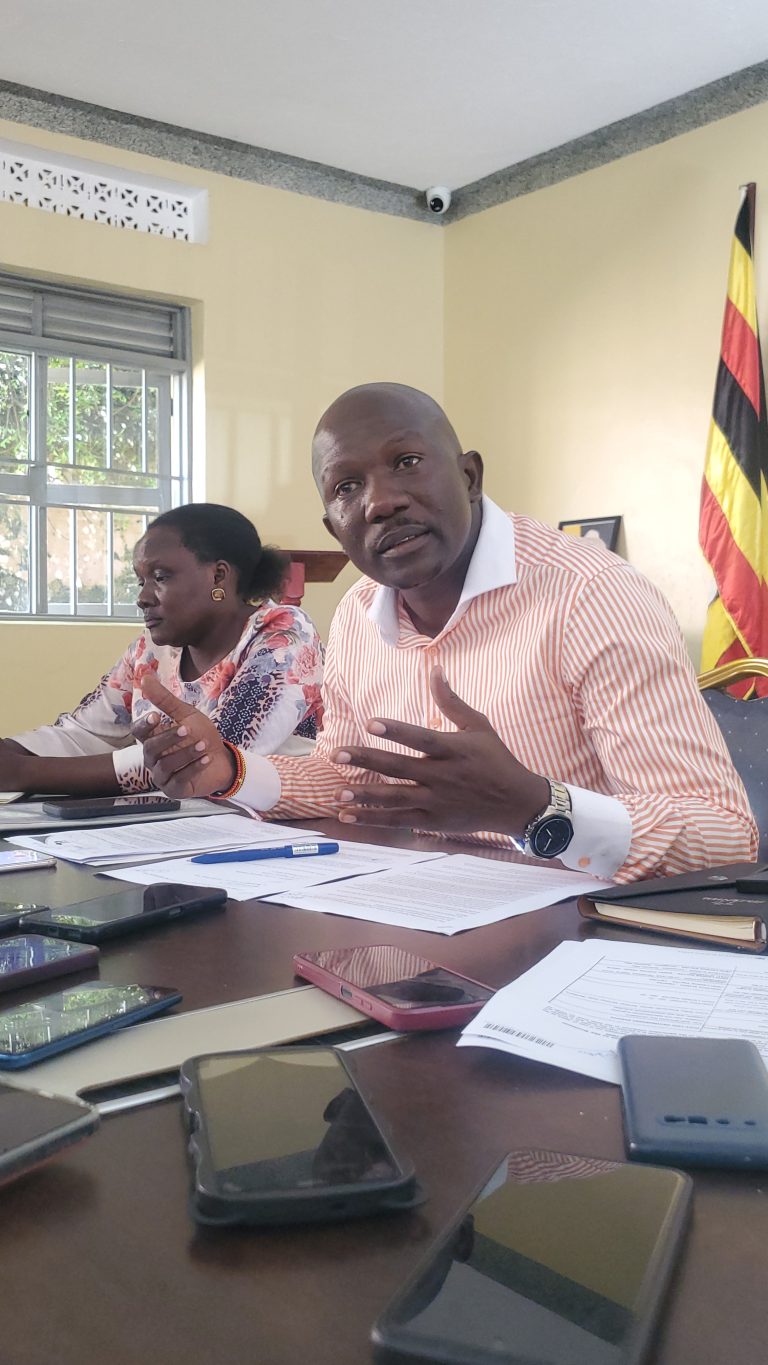
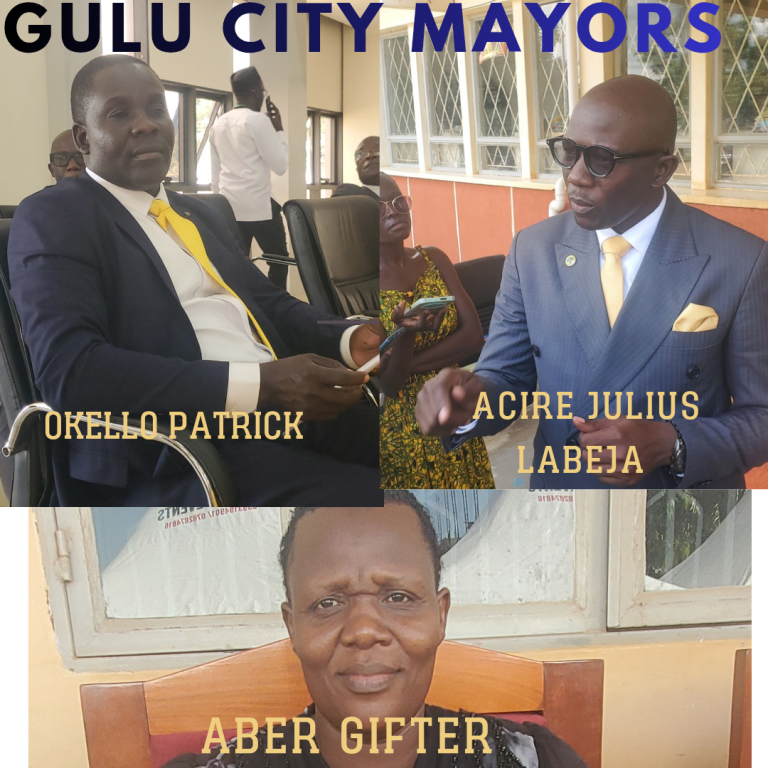
“We want to know who owns Gulu City Oktoberfest,” Acire Julius Labeja, Mayor of Gulu city.
The inaugural Gulu City Oktoberfest was held in 2025 as a major social and entertainment event in the city, bringing together residents, businesses and visitors.
The festival was designed to promote community interaction, entertainment and local economic opportunities, while showcasing Gulu City as a destination for cultural and social events.
The letter that triggered the storm
In his September 9 letter addressed to the Rotary Club of Gulu City president, Okwonga formally recommended that preparations for Oktoberfest 2026 be halted.
He argued that Uganda’s recent Ebola situation had affected international confidence, while some sponsors who had pledged support had not fulfilled their commitments, creating what he described as a significant funding gap.
The Mayor emeritus also raised concerns that the organisers had not obtained mandatory clearance from the Inspector General of Police (IGP) and that Gulu City Authority had not issued the necessary approval to host the event.
Okwonga further cited potential clashes with other events scheduled for the same venue and period. Gulu City is expected to host Congolese music star Koffi Olomide on October 9, 2026, which is not part of the planned Gulu City Oktoberfest celebrations.
However, the Oktoberfest was initially scheduled to run for nine days, from October 3 to October 11, 2026, with the Koffi Olomide performance forming one of the major highlights of the programme.
The extended festival was expected to bring together music lovers, businesses, vendors and visitors to Gulu City, creating opportunities for entertainment and local economic activity.
However, the planned event has since become the subject of controversy, with questions raised over its ownership, regulatory approvals, use of public space and the roles of the organisers, Rotary Club of Gulu City and Gulu City Council.
With this, Okwonga has therefore recommended that the event should be called off and that money collected from vendors and exhibitors be refunded in full and transparently.
However, this letter was a recommendation rather than a formal cancellation notice.
And that distinction has become central to the dispute.
Rotary stops short of cancelling the event
In a response, Rotary Club of Gulu City president Lora Florence Atim acknowledges receiving Okwonga’s letter but did not announce the cancellation of Oktoberfest.
Instead, Atim said the Rotary board would consider the letter and respond.
Rotary also revealed that it was already engaged in discussions with what it described as the registered owners of Gulu City Oktoberfest Events and Gulu City Council.
The stated objective is to regularize the festival as a Public-Private-Community Partnership (PPCP).
Rotary said the partnership would allow businesses, residents and other participants to benefit from the festival while supporting its focus on community economic development, entrepreneurship and job creation.
The club also acknowledges the concerns raised by Okwonga, including public health perceptions, sponsorship, regulatory clearance from police and Gulu City Council, and possible scheduling conflicts at Kaunda Grounds.
This position effectively shifts the debate from a straightforward cancellation to a question of institutional ownership and regularization.
Who owns Oktoberfest?
Gulu City Mayor Acire Julius Labeja says the city became concerned about ownership after receiving documents describing Oktoberfest as a Rotary Club of Gulu City activity.
According to the mayor, the city received two documents from Rotary on August 3: a notification and invitation for the second edition of Gulu City Oktoberfest and a request to use Kaunda Grounds.
The notification stated that the festival was now a Rotary Club of Gulu City activity and would run from October 3 to 11, with a fireworks display planned for October 9.
However, the mayor has questioned whether the wording represented a transfer of authority or ownership.
The city also received a request for use of Kaunda Grounds, which, according to the mayor, was appropriately addressed to the city clerk rather than the mayor because the mayor does not personally grant permission for the use of open spaces.
The mayor says the matter was subsequently referred to the city’s Technical Planning Committee and Executive Committee because city authorities could not simply rubber-stamp the request.
The handover statement
The ownership question became more complicated when the mayor referred to an earlier statement allegedly made during the handover and swearing-in ceremony.
Labeja said the outgone mayor had stated that Gulu City Oktoberfest was now a Gulu City Council event.
Yet the new communication from Rotary described it as a Rotary Club of Gulu City activity.
That apparent contradiction, the mayor said, prompted the city to seek clarification before proceeding with approval.
“If it is not something that is owned by the city,” the mayor said, “can the organisers clarify and relieve Gulu City of that burden?”
For the city authorities, the issue is not merely about branding.
It is also about accountability and liability.
When the former executive city council led by the former reported to the council, we demanded for accountability because our name was used,” says Acan Susan, Gulu city Council Secretary for Community Services.
Acan narrated that their effort to get sort out on the issue of the ownership of Oktbestfest in the previous council was futile,” When we asked for the ownership, we didn’t get the clarity for that, but later we learned that and we dissociate ourselves from Oktoberfest.”
A registration document enters the debate
The mayor also referred to a business-name registration document dated June 30, 2025, which he said listed individuals as partners in the ownership of Gulu City Oktoberfest Events.
He cited the names of Okwonga Alfred the former mayor of Gulu City and Ladwar Walter-former chairperson central committee for the Gulu City Oktoberfest 2025 as appearing in the particulars of the registered business.
The existence of a registered business connected to Oktoberfest raises another question: what relationship does that private ownership have with Gulu City Council and the Rotary Club of Gulu City?
The city says it wants that question answered before it gives the event a green light.
Gulu City Speaker Akena Lambert Lamex says the city has a responsibility to protect its name and reputation, and wants the former mayor to clearly explain the use of the name “Gulu City” in connection with Oktoberfest.
“The name Gulu City was used without the permission of the council. How is our name being used, and what happens if something goes wrong?” Akena wondered.
The city mayor Labeja said the council has a responsibility to establish who is behind the event, particularly where public land, public safety, sanitation and other city services are involved.
How can Rotary own event when they are not signatory to the bank account? The answer to this is another story for another day.
Meanwhile the mayor insists that Gulu City is not opposed to Oktoberfest.
On the contrary, he argues that a successful festival could generate revenue for the city through market dues, accommodation-related economic activity and other business opportunities.
But he wants organisers to provide clearer information about the event.
Among the questions raised are the expected number of visitors, vendors, security arrangements, sanitation requirements, parking and the identity of key guests.
“For a nine-day event,” the mayor city argues, “such information is important for planning.”
Labeja said the city therefore has a legitimate interest in knowing how many people are expected and how the organisers intend to manage the associated demands.
The mayor pointed to security, sanitation and public safety as areas where the city could ultimately carry responsibility if something goes wrong.
The city forms an ad hoc committee
Following discussions by the Technical Planning Committee and Executive Committee, an ad hoc committee was formed to interrogate the concerns surrounding Oktoberfest.
One of the committee’s key tasks is to engage the organisers directly.
According to the mayor, the committee will seek clarification on the history of the event, its ownership, accountability and the relationship between the organisers, Rotary and Gulu City Council.
The city Mayor says. “The city will make a decision on the use of Kaunda Grounds after this process.”
Until then, the mayor says, there is no formal cancellation before the city.
Acan, who attended the Ad Hoc Committee meeting, says the committee’s resolution remains binding and is to meet with the Oktoberfest organisers to iron out outstanding issues before arriving at a final decision on the event.
According to Acan, the committee has not yet made a final determination on the Oktoberfest. The meeting with the organisers is intended to address the concerns raised and provide clarification before the committee gives its final verdict.
Gulu City says it has not formally received formal document cancelling the event. Consequently, the report of cancellation remains unconfirmed from the city’s perspective.
Rotary’s proposed compromise
Rotary’s response appears to offer a possible route out of the impasse.
Rather than claiming outright ownership, the club says it is in discussions with the registered owners of Gulu City Oktoberfest Events and Gulu City Council to create a formal Public-Private-Community Partnership.
Such an arrangement could potentially bring together the private owners of the event, the city authority and Rotary under a defined framework.
For Rotary, the objective is to transform Oktoberfest into an annual festival capable of generating economic opportunities for local businesses, women and young people.
The club says institutionalising the event through a PPCP could provide a sustainable structure for future editions.
But whether all parties agree on the ownership and governance structure remains unresolved.
The disagreement has also exposed different interpretations of Okwonga’s letter.
Okwonga recommended cancellation because of what he described as unresolved legal, financial, operational and reputational risks.
Rotary, however, has not treated the letter as a cancellation decision.
Its president acknowledged the concerns and said the board would respond after meeting.
Mayor Labeja similarly said that a recommendation to cancel does not amount to an actual cancellation because Okwonga did not have the authority to cancel the event.
The mayor therefore maintains that the city is still waiting for a formal communication from Rotary.
The bigger question for Gulu
What began as preparations for a festival has now evolved into a debate about ownership, public authority and accountability.
The Oktoberfest organisers face the challenge of clarifying who owns the event and under whose authority it operates.
Rotary faces questions over its role after describing the festival as its activity while simultaneously saying it is negotiating with registered owners.
Gulu City Council, meanwhile, must determine whether and under what conditions public space can be used for the event.
And the public is left waiting for clarity on whether the 2026 Oktoberfest will proceed, be postponed, be cancelled or be reorganised under a new partnership structure.
For now, the festival’s fate appears to depend less on entertainment, fireworks or sponsorship and more on an unresolved question:
Who, exactly, owns Gulu City Oktoberfest?
Until that question is settled, the battle over the festival is likely to continue.