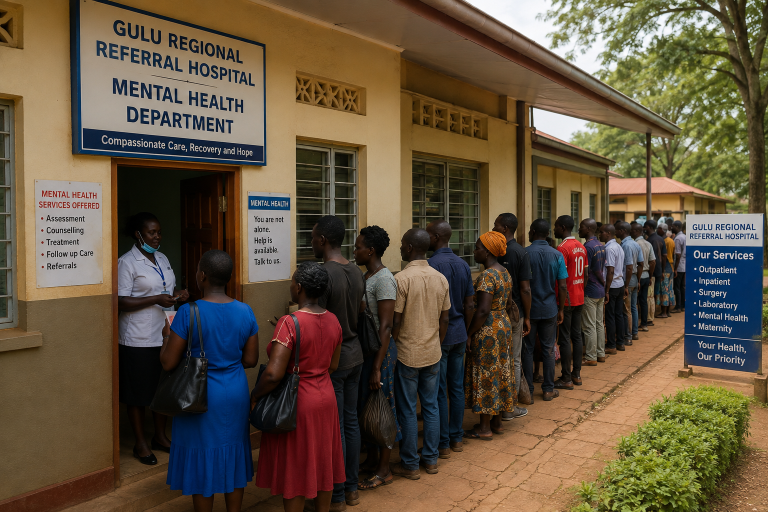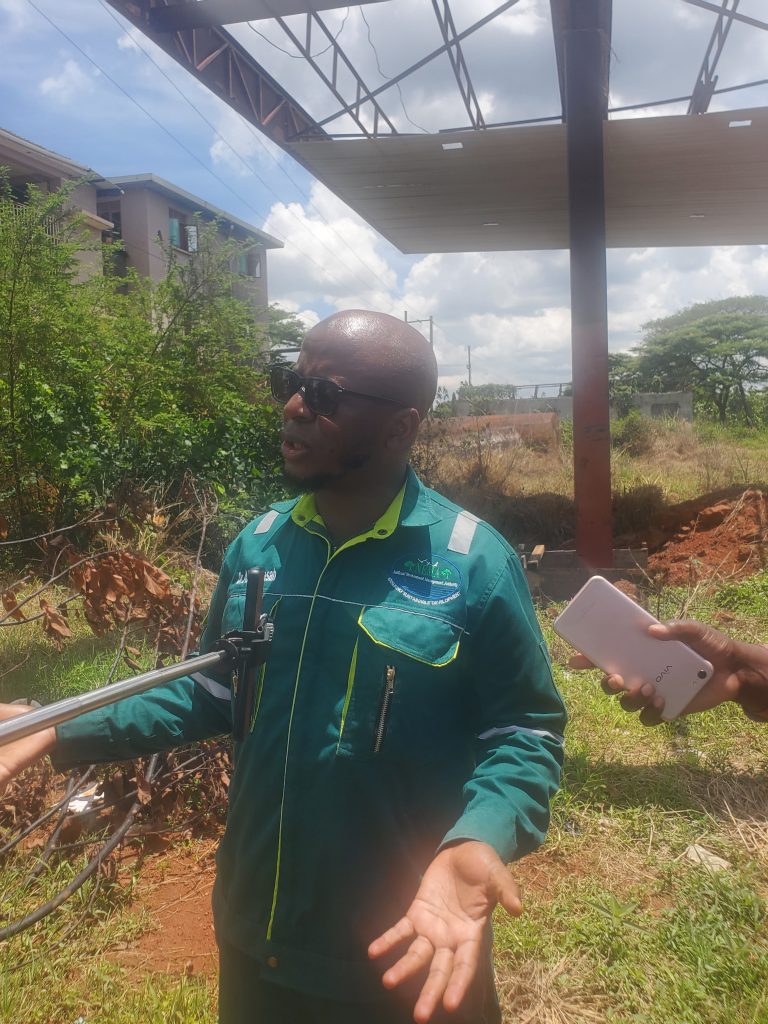
Acholi District Leaders addressing the press in Gulu City (Monday) over the food crisis in the subregion
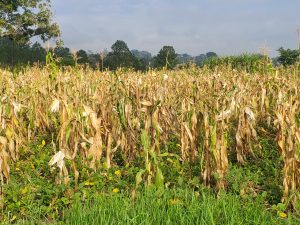
The sub-region is currently experiencing one of the longest dry spells in recent years, which began in May and has continued through July, severely affecting first-season harvests.
By Willy Chowoo | Gulu City.
Leaders from across the Acholi sub-region have declared a full-scale hunger emergency, warning that prolonged dry spells have wiped out crops, driven up food prices, and left communities facing death and displacement.
Speaking at a joint press briefing in Gulu City today (Monday), the district chairpersons called for urgent food relief while demanding long-term investment in affordable solar irrigation to shield the region from climate shocks.
“We want to echo the current prevailing situation of hunger and food insecurity that is looming,” said Akena Alfred, Chairperson of Pader District and head of the Acholi District Local Government Leaders Forum.
Akena stressed that Acholi, long known as an agricultural hub, is now crippled by overreliance on rainfall in the face of climate change.
The sub-region is currently experiencing one of the longest dry spells in recent years, which began in May and has continued through July, severely affecting first-season harvests.
Akena says the sub-region must urgently transition to commercial and climate-resilient agriculture, supported by government investment in irrigation, mechanisation, and expertise.
Most of the small-scale farmers are struggling to adapt climate-smart practices due to the cost and sustainability.
It is estimated that three-quarters of the 466,128 households in the sub-region are currently facing food insecurity due to the prolonged dry spells.
“This means we are in a very serious state of emergency. People have just started dying, and more will die. “These crops now will not mature, meaning more will die,” Oyet Sisto Ocen, the local chairperson of Lamwo district.
The Acholi sub-region comprises the Agago, Pader, Lamwo, and Kitgum districts to the east and the Omoro, Nwoya, Amuru, and Gulu districts and Gulu City to the west.
Deaths, hospitalisations and a region in distress
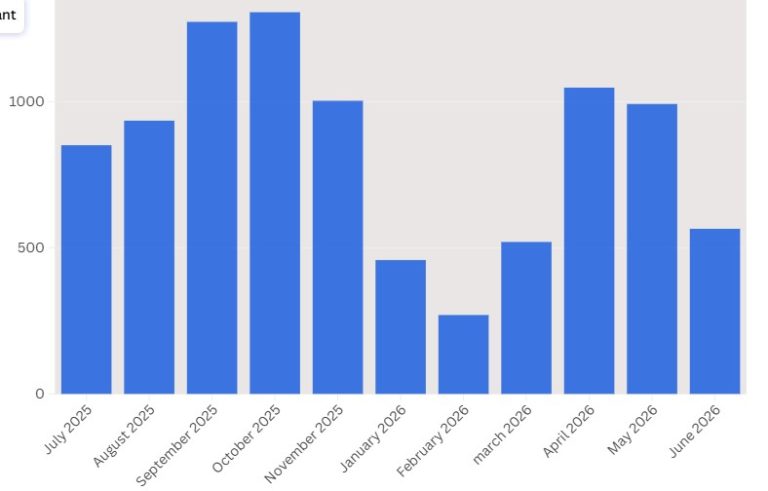
The dry spells have resulted in at least 23 people dying from malnutrition-related illnesses across the sub-region, with more than 400 admitted to health facilities, according to the leaders.
In Agago District, Chairperson Otto Wilson painted a stark picture of the crisis. “To date, we have lost 15 people. Between June and July alone, 351 people have been admitted due to malnutrition. These statistics speak for themselves,” he said.
He added that many families are surviving on porridge and wild fruits, underscoring the depth of food insecurity in rural communities.
“You may not know how people are dying of hunger. But I can tell you the truth: people are living on porridge; others are eating pawpaw,” Otto notes.
The food crises in Agago and Kitgum districts are worsened by constant invasions by the straying elephants, which have continued to destroy their food crops. The leaders say currently there are over 100 elephants from the park in the areas.
“When you check the corridors of our borders with the people of Karamojong, we still have raids, we still have people being killed, and we still have animals escaping out of the park to come and kill our own people,” Otto adds.
Lamwo District Chairperson Oyet described the situation as catastrophic, with entire harvests lost. “This season, there was no harvest. Crops dried before maturity, and people have started dying. We are in a very serious state of emergency,” he said.
He warned that even if rains return, they could come as destructive floods, further worsening conditions. In some areas, families have begun migrating in search of better conditions, only to find the crisis widespread.
“There are other sub-counties like Madiope; people are moving away because of the dry spell.” Oyet says, “People want to move and maybe go to the neighbouring sub-counties, thinking they could get a horrible land with rain. But the situation is the same across.”
The chairperson said currently 126 people in Lamwo District are suffering from malnutrition-related sickness and are admitted to different health facilities. 8 people have since died in the district as well.
“And in the various health centres, we have 126 patients who are sick just because of hunger. And even other children who are critically sick have been referred to a Gulu place called Love One,” Oyet explains.
Drought’s ripple effects hit markets and livelihoods
The crisis is affecting both rural and urban populations. Gulu District Chairperson Obol Justine said no district has been spared. “Production has gone low. People have not invested because the drought has greatly affected farmers,” she said.
Obol linked the crisis to environmental degradation, citing illegal charcoal burning, deforestation, and wetland destruction as contributors to climate vulnerability.
Gulu City Mayor Acire Julius Labeja echoed these concerns, highlighting the rising cost of food and its impact on urban residents.
“You go to the market, and a kilo of posho has risen, as have beans, soybeans, and others. Rising costs of goods and services also impact animal feeds.” Labeja notes.
He said this has affected Gulu City’s role as a regional market hub, making it highly sensitive to production shocks.
While leaders unanimously called for immediate food relief, they emphasised that emergency aid alone is not a sustainable solution.
“We need relief services now, but this is just a handout. We must look at other opportunities to address drought,” said Nwoya District Chairperson Okello Patrick Oryema.
Oryema called for expanded investment in water for production, particularly solar-powered irrigation systems, which he said remain too expensive for most farmers.
“The land we have can feed the entire country, but we are not making use of it. If government reduces the cost of irrigation, more people will adopt it and transform their livelihoods,” he added.
The leaders resolved to petition the Office of the Prime Minister, calling for emergency food assistance, seeds for the next planting season, and subsidies to make irrigation affordable.
“We need to be rescued with food relief; we need to be rescued with seeds so that maybe if the rain comes, we shall have something to grow,” Oyet adds.
They also urged the government to match support given to other vulnerable regions, arguing that Acholi’s crisis has reached similar proportions.
“If there is any time we need to unite for our people, it is now,” Otto Wilson said, stressing the need for collective action to save lives and restore livelihoods.
This comes at a time when the government has given SH45 billion as emergency food relief intervention to support hunger in Karamoja sub-region, where 16 people have so far died of hunger.
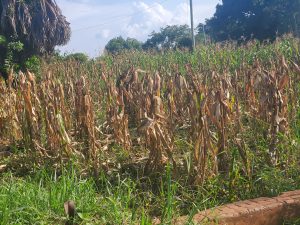
As hunger tightens its grip, Acholi leaders say the region stands at a crossroads—requiring urgent relief today and bold, climate-resilient solutions for tomorrow.
Climate action and environmental protection.
As the sub-region continues to suffer from the impacts of the prolonged dry spells, the leaders are also calling for stronger climate-smart interventions, including tree planting and wetland protection.
“Climate-smart programming is critical. We must plant more trees and protect wetlands because we cannot talk about hunger without addressing its root causes,” said both Obol Justine and Mayor Labeja, emphasising the need for long-term environmental stewardship.
Adding a moral voice to the crisis, Bishop Emeritus of Northern Uganda Diocese, Rt Rev Nelson Onono Onweng, urged communities and government alike to rethink their approach to agriculture.
“God wants people to live an abundant life, but climate change is failing us. We should stop relying on miracles from heaven; we need to use irrigation,” he said.
Rolling out irrigation systems across the sub-region would boost food production and restore its status as one of the country’s leading food baskets.
“We need to use irrigation. The government should, through its partners, help set up irrigation across the sub-region.” Bishop Onono notes.
With the wait for the second half of the year’s rains stretching on, small-scale farmers remain hopeful that they will soon be able to plant food crops as they await government intervention to address the impacts of the prolonged dry spells.