A single tractor has become more than a machine for cultivating farmland
By Simon Wokorach
Pader distric
Before the return of relative peace to Northern Uganda in 2009, the sound of heavy engines was associated with a brutal war: military trucks moving through communities scarred by conflict. Today, a different engine is changing lives in Pader district, the site of several civilian massacres.
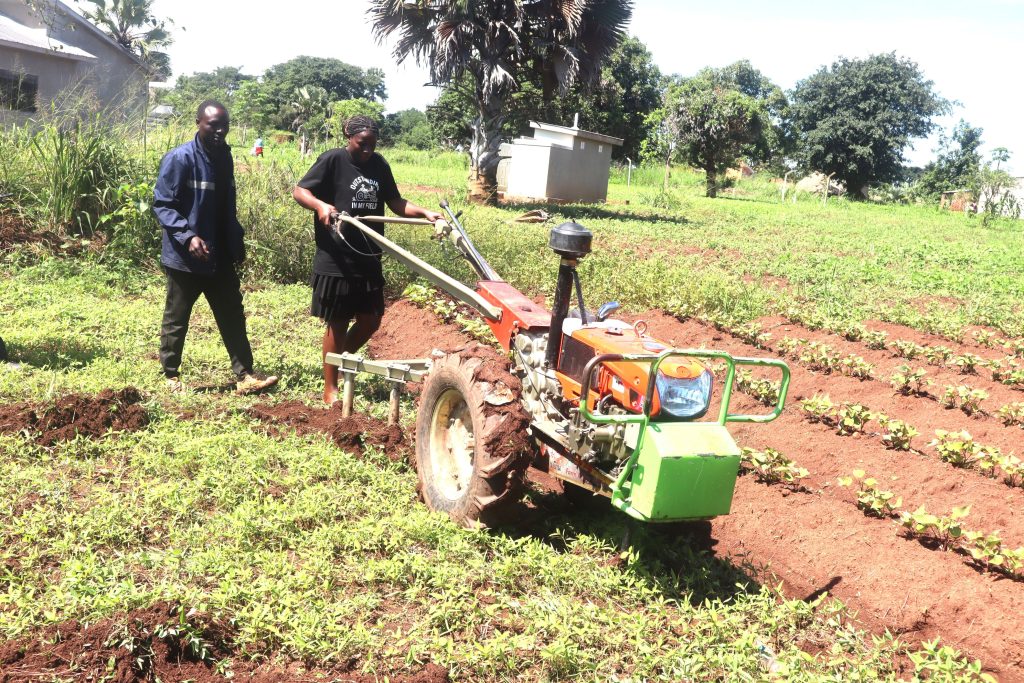
A single tractor has become more than a machine for cultivating farmland. It has helped farmers cultivate larger fields, reduce the burden of manual labour and, perhaps most importantly, work together again as one community.
The engine roars to life as the tractor moves slowly across a wide stretch of farmland, interspersed with trees. But this is not a military convoy; it is farming season in Bongtiko and Oywelo Villages in Pader district.
“Before the tractor came, we depended on the hoe and sometimes animal traction using oxen. It took us many days to prepare our land and plant. Now we can cultivate much more land in a short time,” Ben Okello, the chairperson of Tutu Community farmer group, said.
Okello says the group would spend 150,000 Ugandan shillings to repair several sets of ox ploughs or treat their oxen each week to open the 20 acres of land where they grew Maize and other staple crops.
Kelementina Lalee, an 80-year-old member of the group, offered her land free of charge to help the group rebuild after peace returned to the region.
The group started as a Village Savings and Credit Association with just 15 women who saved money earned from the sale of firewood back in the internally displaced persons’ camp.
For a while, progress remained slow after returning home from the displacement, in large part due to erratic changes in the area’s weather patterns.
The road to modernity
As group members waited for the few sets of oxen to reach their fields, they turned to hand hoes to prepare their land, often taking several weeks to complete an acre. A single tractor, they realised, could change the equation for their food security.
“We heard on the radio that a tractor opens land faster, allowing farmers to plant within the crucial agricultural season. And that its impact goes beyond the field,” Okello explained.
As they had when acquiring the oxen, the group members decided to share the cost of mechanised land preparation and plan together what to grow.
On the open market, they learned that they needed 120 million shillings to purchase a four-wheel power-horse tractor, according to Okello, money the group could not afford.
As fate would have it, the group was introduced to the Climate Smart Jobs, a project working towards sustainable agribusiness initiatives in Northern Uganda.
By March 2026, the group managed to acquire its first-ever tractor from Engineering Solutions Uganda to support their members’ land cultivation and expand production to other small-scale farmers.
March to a sustainable future
By March 2026, the tractor had already ploughed the first 47 acres of land for 27 different farmers within Bongtiko villages; an additional 83.7 was ploughed in April.
In the two months of operations, the group realised 12.7 million shillings from hiring the tractor out to other farmers, with each acre costing between 100,000 and 110,000 shillings.
Okello said that, for the first time in their lifetime, land opening, preparation, and planting could keep pace with the onset of the rains.
David Okello, a farmer in Oywelo village, Bongtiko sub-county, is one of the smallholder farmers who has benefited from the tractor.
“I used to plough just three acres of land which I would struggle to plant, but I have opened up to 10 acres with the tractor this season,” Okello explained.
David Okello plans to grow maize and soybeans for sale. He hopes to avoid acute rainfall, a situation which forced Lalee to lose 600,000 shillings in 2025 after a dry spell struck during the second season.
Unmet demands for agricultural mechanization
More than 137 households are queuing for the services of this lone tractor operated by Tutu Community Farmer Group Enterprise.
While the group had planned to plough the 147 acres of land inspected in March 2026, it managed only 47 acres because of tree stumps in the fields. Similarly, between 247 and 286 acres of land were surveyed in April 2026 for opening.
However, only 176 acres were free of tree stumps and ready for ploughing. The group ploughed only 83.7 acres, pointing to the high demand for agricultural mechanisation in the area.
The focus is to acquire a bulldozer for land clearance while practising agroforestry along the edges of the fields.
Solution: a small horsepower tractor
Tutu Community Farmer Group Enterprise is celebrating the tractor as a powerful peace dividend in Northern Uganda, putting its abandoned land back into production, increasing food supplies, and generating income for members.
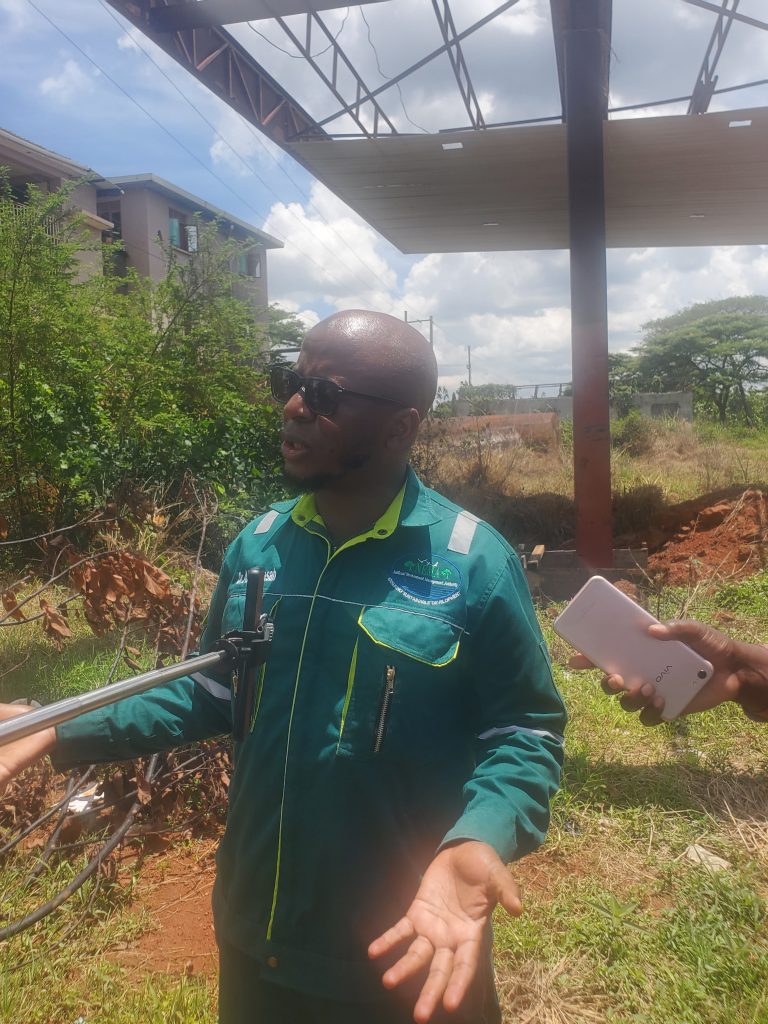
Charles Kaaya, the director of Shalom Ventures Uganda Limited, a major supplier of tractors in Uganda, says farmer groups like Tutu can solve the challenge of tree stumps with a relatively small walk-behind tractor rather than an expensive stump-removal bulldozer.
“A walking tractor of 50 horsepower and below brings several climate-smart benefits, including navigating agroforestry and rocky terrains while producing less environmentally polluting fumes,” Kaaya explained.
Shalom Ventures Uganda Limited has set up a tractor spare-parts centre in Nwoya District to assist farmers in Northern Uganda in navigating mechanisation challenges which could affect their production.
Kaaya says the company has trained mechanics who are able to attend to farmers’ needs on site, rather than farmer groups having to transport their machines to Kampala for costly repairs.
The walk-behind tractor is built on two wheels, with its gear and control panels fitted to the handles, similar to a wheelbarrow. Its brake systems are on the right handle, with turning levers sitting on both sides.
While the Tutu Community Farmer Group struggled to acquire a high-horsepower tractor at 120 million shillings, Kaaya noted that a walking tractor is sold cheaply enough for smallholder farmers to afford.
Nwoya district alone is home to more than 300 four-wheeled tractors, according to records from Shalom Ventures.
The report adds that, by 2019, Uganda had a total of 10,000 high-horsepower tractors, with 50% operating in Acholi land, Masindi, and Hoima districts.
However, 75% of the tractors which existed in the Acholi sub-region had been grounded by 2020 due to a lack of spare parts for repairs and maintenance, the report added.
To solve this challenge, Shalom Ventures has trained over 150 tractor operators, 50% of them women, mainly from Nwoya District, who are hired to provide services across the region.
According to Kaaya, “The majority of tractor operators were periodically coming from Kenya to service tractors in the region and would go back to their country. Tragically, no farming activity could take place.”
Agent model
The region also suffers from a lack of on-the-ground players supporting smallholder farmers in the agribusiness sector.
This is why Shalom Ventures teamed up with partners like Climate Smart Jobs to build capacity and bring services closer to farmers under the Commercial Agent Model.
Through such partnerships, Farmer Group Enterprises are able to access resources and training, as well as farm inputs such as quality seeds, fertilisers, and pesticides. The services are blended with market linkages, extension services, and business training.
Jacob Olweny, the regional manager for the Climate Smart Jobs project in Acholi Sub-region, highlights the need to support smallholder farmers to survive climate shocks and address food insecurity.
Working with farmer group enterprises, he said, smallholder farmers can now access farm inputs like seeds, fertilisers, and farming technologies closer to their areas.
Over its five-year span, the project targeted 130,000 households across the region. It is unclear how many have been reached so far.
“We want to turn farming into a profitable business, and because the project must live beyond our support, we give them a refundable grant. This is sustainability,” Olweny further explained.
As the country struggles to respond to the impacts of climate change on farming communities, the Ministry of Agriculture, Animal and Fisheries has begun to provide walking tractors in each district of Uganda to help smallholder farmers adapt to the changes in weather patterns.
Several districts in the Acholi Sub-region have recently received such walking tractors from the government, including Nwoya District itself, with 11 of them.
For the 2026-2027 financial year, the Ugandan government allocated Shs2.26 trillion to the Agro-Industrialisation Programme, which covers the broader agricultural sector and value chain development.
The fund is intended to support irrigation, water for production and processing, market access, extension services, research and innovation, post-harvest handling, and storage.
Agricultural credit facilities received 47.68 billion shillings, while 1.35 trillion shillings were disbursed to more than 14,000 farmers in previous years to scale up solar-powered irrigation.
For now, the Tutu community demonstrates how a Farmers Group Enterprise can become not just a pathway to survival but also an agent of change carrying forward the vision Lalee has held for Pader.
This story was produced with support from InfoNile and edited by Maddison Erdall, Carbon Science Team Lead at Centigrade