President Museveni’s order for an audit could mark a turning point. If the lists are published, if ghost names are exposed, and if genuine claimants finally receive their dues, the programme might redeem itself as a symbol of justice.
By Willy Chowoo, Gulu City
The long-running saga of cattle compensation for war victims in Northern Uganda has exploded into a full-blown scandal, with President Yoweri Kaguta Museveni ordering a forensic audit after shocking revelations of corruption, ghost beneficiaries, and bureaucratic rot.
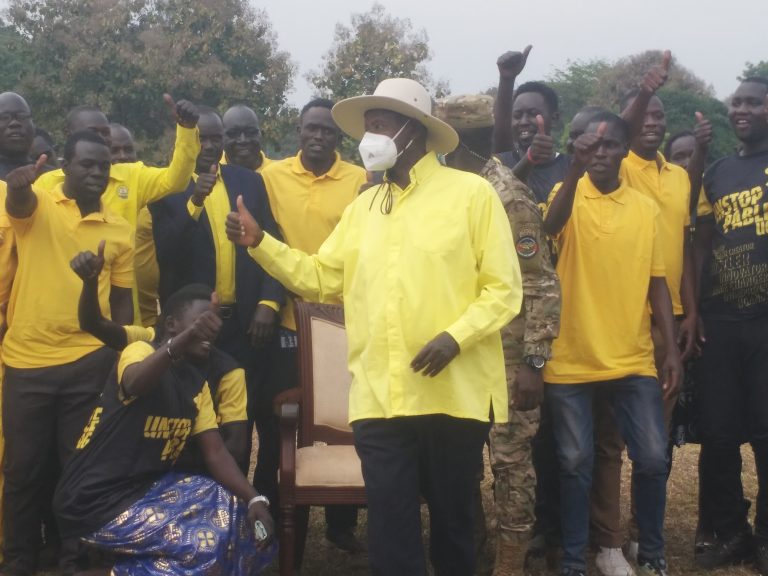
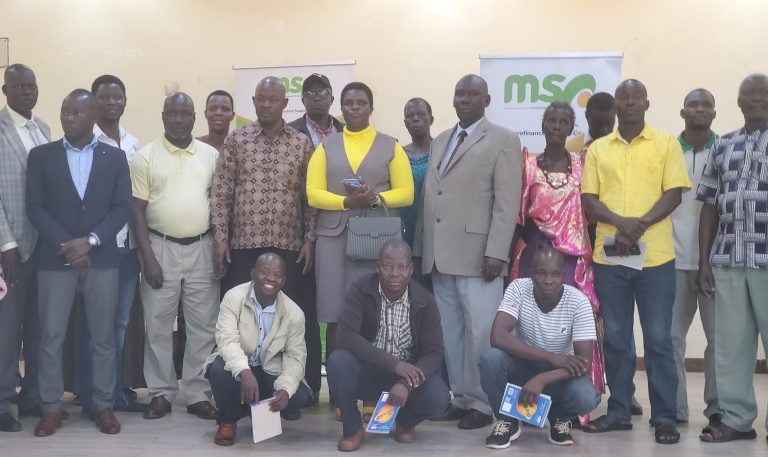
Meeting leaders of the Acholi sub-region at Gulu Core PTC on Monday, 18th Aug 2025, the President confronted evidence that billions of shillings meant to restore the livelihoods of families devastated by decades of war have either vanished or ended up in the wrong hands.
For communities that lost entire herds during the insurgencies and cattle raids of the 1980s through 1990s, the promise of justice now hangs on an audit that could either expose the truth or fade into another election-season ploy.
Presenting the Acholi position, MP Ojara Okin P.P. (Chua West, Kitgum) told the President that the entire exercise had been undermined by corruption and lack of transparency. He reminded Museveni that the collapse of Acholi’s livestock economy began in 1979, when cattle were looted
“This money was meant to restore our people. Instead, it is lost in corruption. We need transparency, accountability, and timely payments,” Okin concluded.
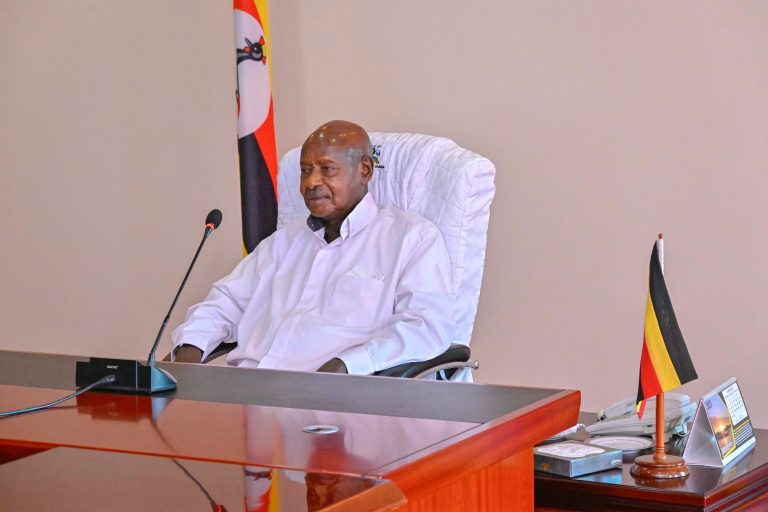
Responding to the heated presentations, President Museveni acknowledged the flaws.
Museveni directed that both the list of over 4,000 claimants who have been paid and the 12,000 approved but not yet paid in Acholi be published and subjected to mass verification. The actual figures who are paid are 4,836, and those yet to be paid are 12,110 claimants.
“Audit what has been done, and then discuss how to move forward in a better way”, Museveni ordered.
Voice2 : President Yoweri Museveni speaks about the audit of the payments.
He also proposed forming a committee of trusted leaders and cultural figures from Acholi, Lango, and Teso to oversee the audit.
Hon Okin PP further urged the government to separate restocking from compensation, arguing that while compensation restores individual losses, restocking could boost entire households with oxen and breeding cows.

Museveni emphasized the need to balance between individual compensation for verified claimants and flat restocking for all households, noting there are nearly 1.5 million households across Acholi, Lango, and Teso.
“There is a problem with these lists. So, I propose two things. First, publish the lists of those already paid, district by district, and pin them at every sub-county. Let the people see who was paid and how much. If it is fake, then it helps us act.”
He admitted that restocking all households, estimated at 1.5 million across the three sub-regions — would be financially impossible, but pledged to consider it alongside compensation.
The Promise of Justice Turns into Scandal
The cattle compensation programme was supposed to restore war-affected regions, Acholi, Lango, and Teso, whose livestock economies collapsed after mass looting by government soldiers, rebel groups, and Karamojong raiders. Notably, these include National Resistance Army soldiers, Uganda People’s Democratic Army rebels, the Holy Spirit Mobile Forces of Alice Lakwena, Joseph Kony’s LRA, and Karamojong warriors. But what is being compensated for are those lost during the NRA war.
The compensation issue from the start was not the government’s wish, but it was a court battle that brought it, and the President said it was not a correct idea to compensate for what had been lost during the war. “You can’t compensate actions of war, because there are so many things that are destroyed during war, with war, let the action bring peace and then rehabilitate,” he added.
Court battles over the matter date back to 2003, when livestock claimants under the Acholi War Debt Claimants filed lawsuits in Gulu. And later, Lira and Soroti. In 2009, Museveni directed that the matter be settled out of court, and in 2016, an inter-ministerial verification team compiled lists of genuine claimants.
President Yoweri Museveni said that after the out-of-court settlement was reached, the problem began almost immediately when lawyers representing the claimants diverted the money for their benefit. “The money was going through the lawyers. For them, they were making money for themselves. They took most of the money,” Museveni remarked.
This prompted the government to switch to direct payments into individual claimants’ accounts. However, even this system has been marred by irregularities and delays. According to the President, corruption had simply shifted form: “Even our method of going directly to the claimant’s account was part of the corruption. People were being mobilised to tell lies so that when they are paid, the mobilizers also get a share of the money.”
Museveni also faulted the Attorney General’s office for imposing costly and complicated requirements, such as obtaining letters of administration for heirs of deceased claimants. He argued that these bureaucratic demands placed an unfair burden on poor, rural communities. “Even if there were no corruption, the process itself is not for people in our villages. It is for people who are educated and a bit able,” the President said.
Highlighting the financial strain, he noted: “I am told that to get a letter of administration, you must pay Shs 500,000—more than the annual budget for most of our people who are in the villages.”
The list comprised 92,634 verified claimants who had been cleared for payments. There were 16,946 claimants from the Acholi sub-region, from the Lango sub-region, there were 42,024 and in the Teso sub-region there were 33,664
But almost two decades later, the programme has become synonymous with corruption. Billions are missing, payments are riddled with irregularities, and thousands of genuine claimants remain unpaid. Some people did not have cattle, but they were the first to be paid; some names are not from the sub-region
Uganda’s Minister of Justice and Constitutional Affairs, Norbert Mao, openly revealed that he was once approached to be included among the ghost beneficiaries of the cattle compensation scheme, but he refused to take part in the fraud
Voice 2: Minister Norbert Mao speaks about they tried to bribe him.
Okin PP lamented that years of delays have condemned many genuine claimants to die without justice, while others are bedridden or too weak to chase after the payments. What remains now, he said, are their children and grandchildren, carrying the burden of a fight their parents began decades ago.
Voice 3: MP Okin PP speaking about transparency in the payment process.
In a candid report to the President, Deputy Attorney General Jackson Kafuzi Karugaba painted a picture of a programme spiralling out of control.
Karugaba admitted that data management was chaotic: “Some claimants are minors without guardianship papers, others share NIN numbers, and some lists carry double claims or unsigned data cards. We have kind of opened Pandora’s box. The number of claimants keeps increasing.”
Okin PP noted that the improper verification of beneficiaries has fueled the re-emergence of new claimants year after year.
“And every financial year, this keeps on coming; no local leader has ever had access to the beneficiary list, making monitoring and verification very difficult”.
Who Got What? The Murky Breakdown of Cattle Compensation
As questions over “who gets what” from the cattle compensation money continue to linger, it is worth noting that in the financial year 2020/2021, Parliament allocated Shs 200 billion to kick-start the exercise. Yet, this amount was not even half of what the war victims required, leaving thousands of verified claimants still unpaid and many more waiting in uncertainty.
Records from the Ministry of Justice and Constitutional Affairs as of June 2025 show that Sh 159.5 billion has so far been released for compensation since 2021, of which Sh 158.3 billion was paid out to 28,281 claimants in the three sub-regions of Acholi, Lango, and Teso. This is just 30.5% of the claimants who have been cleared to receive their payments. According to the Deputy AG, this makes a total of 24,509 individual claimants who have not been paid, with a claim of 506.6 billion shillings. This represents only 52,790 verified claimants! But what about the balance of 39,844 claimants?
Despite the disbursements, however, hundreds of millions have repeatedly bounced back to the Consolidated Fund due to errors, fake accounts, or fraudulent entries. The total amount that bounced and returned to the consolidated account is about Sh 1.5 billion. These are for their three financial years.
From the 159.3 billion paid, there are outstanding verified liability of 506.7 billion. President Museveni said that before they can decide whether to proceed and pay this, there must be an audit to account for the money that has been paid since 2021
“If the liability is UGX 560 billion for all verified, we can plan for that. But government cannot collapse under the weight of false claims,” Museveni warned.
However, only 31% (8,754) of the 28,281 claimants who have so far been paid received full compensation for their animals, amounting to Shs 28.01 billion. The remaining 19,527 claimants were given only partial payments worth Shs 130.3 billion, sparking growing discontent over discrepancies in the process.
Acholi Sub-region, which bore the brunt of the war, has the lowest number of claimants compensated compared to the other regions. So far, 4,836 claimants in Acholi have received a total of Shs 43.6 billion, far less than the 12,389 claimants in Lango who got Shs 48.7 billion, and the 11,560 claimants in Teso who were paid Shs 65.9 billion. Acholi still has 5,517 unpaid claimants, with an outstanding liability of Shs 191.5 billion.
Deputy Attorney General Kafuzi Jackson Karugaba acknowledged the dissatisfaction, saying, “The voices are telling me that they are not comfortable because we appear to have paid fewer people in the region. But the system we use is the same. We inherited the verified lists, and that is what we are working with.”
In the Acholi sub-region, the epicentre of the war — the disparities are stark.
The figure shows that the Acholi sub-region has 4,836 claimants paid Sh43.6 billion, and 5,517 are still unpaid, with an outstanding liability of Sh191.5 billion. While Lango sub-region, which has 12,389 claimants, has received payment of Sh 48.7 billion, thousands are still unpaid, with Sh195.9 billion outstanding and Teso sub-region, with 11,056 claimants, paid Sh 65.9 billion; 8,284 are still unpaid, with Sh 119 billion outstanding.
The Deputy AG confirmed that even among those paid, few publicly admit to receiving funds, fueling perceptions that no one is benefiting while corruption thrives in the shadows.
The unpaid claimants are more in Agago and Kitgum districts
The Bigger Picture: Justice Delayed, Justice Denied
The scandal has erupted less than two years before the 2026 general elections. For many in Acholi, Lango, and Teso, the reappearance of cattle compensation every election cycle has become a symbol of broken promises
For nearly 40 years, families in Northern Uganda have awaited restitution for the herds that once formed the backbone of their livelihoods. Compensation was supposed to be about justice and healing, a recognition of the devastation wrought by war.
Instead, the programme has been hijacked by bureaucracy and corruption. Verified claims remain unpaid, genuine victims die without restitution, and billions vanish in bounced accounts and ghost names.
The government now faces a stark choice: deliver on compensation with full transparency, or watch the programme collapse under the weight of mistrust.
President Museveni’s order for an audit could mark a turning point. If the lists are published, if ghost names are exposed, and if genuine claimants finally receive their dues, the programme might redeem itself as a symbol of justice.
But if the audit stalls or is manipulated, cattle compensation will remain an enduring scar — a tale of how corruption robbed war victims twice: first of their cattle, and then of their compensation.