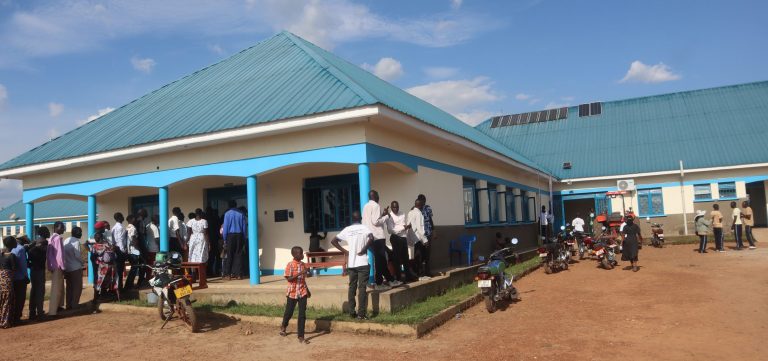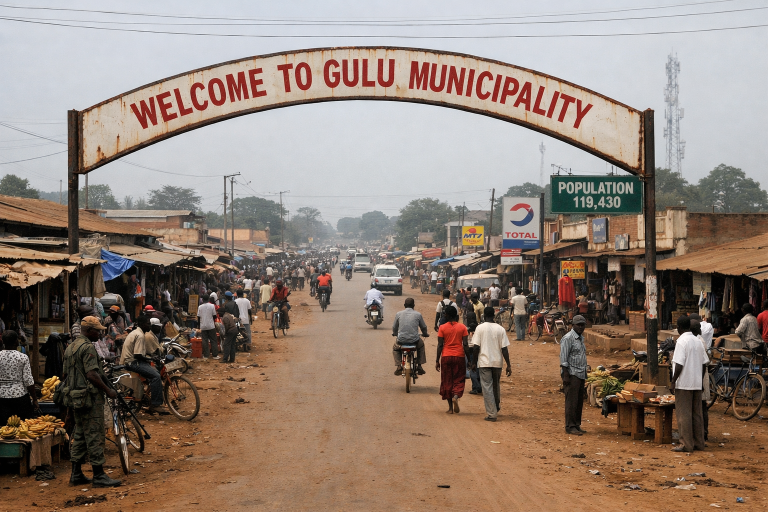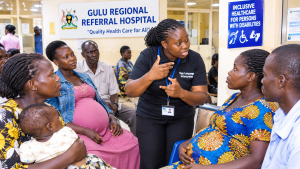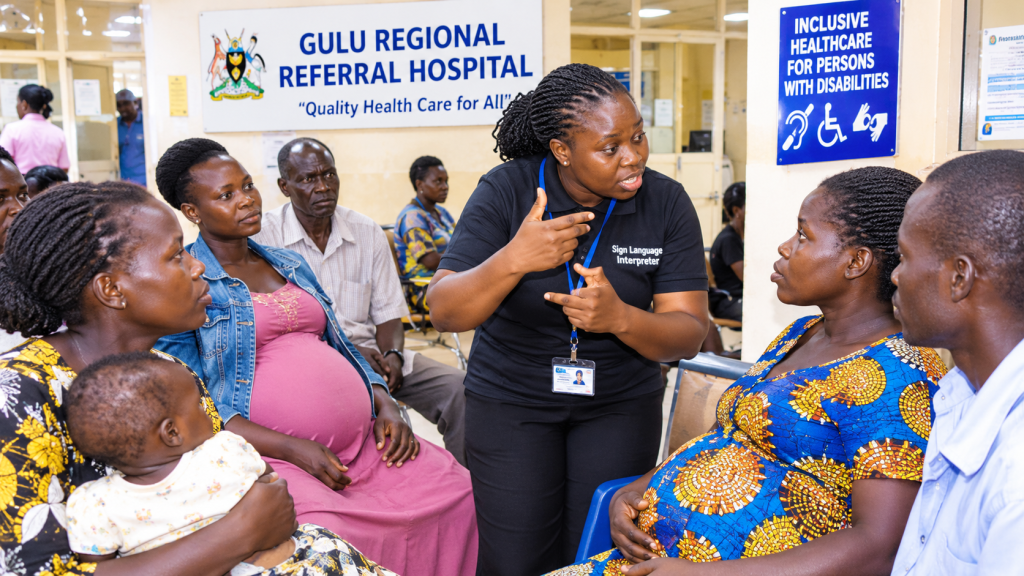
At Gulu Regional Referral Hospital, Acora Vicky, 32, struggles to access antenatal care without a sign language interpreter.
By Willy Chowoo
Gulu City
Acora Vicky, 32, is a mother of four living in Koro Lapiny Oloyo in the outskirt of Gulu City. For her, visiting a health facility is not simply about securing medical attention.
It is also a struggle to understand what health workers are saying, explain her concerns and obtain information about her pregnancy without relying on someone else to interpret.
As an expectant mother attending antenatal care (ANC) at Gulu Regional Referral Hospital (GRRH), Acora needs to understand her health status, the progress of her pregnancy and the precautions she should take to protect herself and her unborn baby.
But communication remains a major obstacle.
Acora is deaf and depends on sign language to communicate. At the hospital, however, she has not found a government-employed sign language interpreter who can help her communicate directly with medical personnel. Instead, she must arrange for an interpreter herself or attend appointments without one.
Both options come with difficulties.
Hiring a professional interpreter requires money for transport and professional fees, expenses she struggles to meet because she is unemployed.
“I need to transport the interpreter and pay professional fees. Sometimes I cannot afford it because I do not have the money,” Acora says.
Each visit to GRRH costs her about Shs6,000 in transport for the interpreter and another Shs20,000 in professional fees. The combined Shs26,000 is an additional expense on top of her own transport and other household needs.
She must pay sh234,000 if she is to move with an interpreter for the entire 9 antennal visits. This excludes her breakfast or lunch.
For someone without a regular income, paying for interpretation every time she needs medical attention is difficult.
Acora sometimes attends antenatal appointments alone, knowing that she may leave without understanding everything the health workers intended to communicate.
while pregnant women are encouraged to attend antenatal care to monitor their health and that of their unborn children, deaf women can face an additional financial barrier simply to understand the services being provided.
For Acora, the absence of sign language interpretation is not an isolated inconvenience. It affects her ability to participate in decisions about her own health.
During a subsequent antenatal visit, she encountered a nurse who could not understand her. She showed the nurse her antenatal card, and the nurse took her into a room to examine her baby. At the end of the examination, the nurse gave her a thumbs-up.
Acora interpreted the gesture to mean that her baby was well and left the hospital.
She could not explain whether the nurse had provided additional information because she had no way of understanding it.
The encounter exemplifies how gestures can become a substitute for meaningful medical communication, leaving patients to interpret the significance of examinations and clinical decisions for themselves.
Acora says she has since returned to the hospital without an interpreter and is expected to attend another antenatal appointment.
“I am supposed to go back tomorrow (8th Oct,2026). Right now, I do not have the money. I may go again tomorrow alone, and I will not get anything,” she says.
Her concern is not necessarily that health workers will refuse to examine her. It is that, without an interpreter, she may receive medical attention without fully understanding the advice, findings or next steps.
“When they give us medicine, they tell us to take it in the morning and evening. It is very difficult to understand if you do not have anybody who can interpret for you,” she says.
The hospital Principal Assistant Secretary Uryek-Wun Walter admits that the deaf struggle to get medical information but the basic communication with the medics has been helpful in one way or the other.
“We have seen that when we give them medicines, they are able to take it well.” Uryek-Wun adds.
During antenatal health education sessions, Acora often sits without understanding the information being shared unless she has brought an interpreter.
“If you have given birth, nobody can tell you whether the baby is healthy or not,” she says, describing the wider communication difficulties deaf mothers encounter.
Acora wants the government to deploy sign language interpreters in health facilities or allow organisations with the necessary expertise such as Uganda National Association for the Deaf to train health workers to communicate with deaf patients.
“We cannot do it without an interpreter, yet it is very expensive to hire one,” she says.
Health facilities without interpreters.
In Uganda, approximately 1,496,000 (1.5 million) adults are living with HIV, according to the preliminary findings of the 2025 Uganda Population-based HIV Impact Assessment (UPHIA 2025) released in October 2026.
The survey puts HIV prevalence among adults aged 15 years and above at 5.9 per cent, with women recording a higher prevalence of 7.3 per cent compared to 4.1 per cent among men. The prevalence rate remains largely unchanged from the 2020 assessment.
HIV prevalence also varies considerably across the country’s 11 geographical regions, ranging from a low of 1.3 per cent in the Northeast (Karamoja) region to a high of 8.0 per cent in the Southwestern region.
Although the preliminary findings indicate encouraging progress towards achieving the global and national 95-95-95 targets, significant gaps remain. The survey shows that 99.1 per cent of people who know their HIV status are receiving antiretroviral therapy (ART), while 96.5 per cent of those on treatment are virally suppressed.
However, 15 per cent of people living with HIV are still unaware of their status, highlighting a critical gap in HIV testing and diagnosis.
Despite these national statistics, there is no clear data showing how many people living with HIV are persons with disabilities, particularly members of the deaf and hard-of-hearing community.
This makes it difficult to establish the extent to which people with hearing impairments are accessing HIV testing, treatment and other related services.
At the health facilities visited by this writer, none had specific records indicating the number of patients with disabilities. The Ministry of Health’s patient recording forms also do not provide a dedicated option for capturing disability status during registration, making it difficult to generate disaggregated data on access to healthcare among persons with disabilities.
Similarly, the recently launched National Rehabilitation and Assistive Technology Strategic Plan (2025–2030) focuses largely on strengthening access to rehabilitation services and assistive technologies, particularly for persons with visual impairments and physical disabilities. However, the specific communication and healthcare needs of deaf and hard-of-hearing people require greater attention.
In 2022, during the Second Global Disability Summit, Uganda reaffirmed its commitment to building an inclusive healthcare system. Among its commitments was to strengthen support for persons with severe disabilities, provide sign language interpreters and introduce reasonable adjustments to improve access to healthcare by 2024.
However, years after making these commitments, implementation remains a challenge, raising questions about the government’s commitment to ensuring that persons with disabilities, particularly deaf and hard-of-hearing people, are not left behind in accessing essential HIV services.
The experience by the deaf at different health facilities exposes a broader problem affecting deaf and hard-of-hearing people seeking HIV testing, counselling, treatment and other essential health services in Gulu City.
Gulu City Council’s health facilities have 19 staff members at health centre IIIs, none of whom is a sign language interpreter.
Dr. Okello Daniel, the City Health Officer acknowledges the gap and the need for sign language interpretation in health facilities but says recruitment is constrained by staff ceilings and wage limitations.
“There is a provision for sign language in that structure. And we would have started implementing that, even in this current structure. But We have inadequate wage.” Dr Okello notes.
In the absence of the sign language interpreters, most health workers depend on caretakers accompanying deaf patients to explain their medical concerns, provide patient histories and communicate instructions.
“The caretakers bring their clients, and alongside the caretakers, we are able to extract collateral history, and there is a way the caretakers help us over 80% to elicit the history, and later we examine.” Says Dr Okello.
The government’s plan to establish an inclusive healthcare system faces implementation challenges, despite incorporating sign language interpreter positions into the newly approved staffing structures for lower-level health facilities
A circular dated 7 May 2024, issued by the Ministry of Public Service to all Chief Administrative Officers, indicates that government plans to recruit one sign language interpreter for Health Centre IVs and Health Centre IIIs across all 146 districts in Uganda.
But this has not taken off yet.
Dr. Diana Atwine, the permanent Secretary Ministry of Health recently re-affirmed government commitment to inclusive healthcare and universal health coverage
“The ministry of health in line with our aspiration and assertive technology services across the health system.”
Gulu Regional Referral Hospital, which serves more than two million people across the Acholi sub-region, acknowledges the communication barriers deaf patients face when seeking healthcare services at the facility.
Eryek-Wun says the institution has previously notified the Ministry of Health about the need for a sign language interpreter.
“Under human resource need, we have presented to the ministry of health and we are still waiting, we hope they will recruit one.” he recalls.
The hospital principal admits that only a few health workers can communicate basic greetings in sign language, while the need for more comprehensive communication support remains substantial.
The hospital is open to any organization willing to train health workers on basic sign Language interpretation.
“Let us not only rely on government, association (like UNAD) can help to support the system, we can mobilize as hospital and we have training.” Eryek-Wun adds.
The burden of interpreting HIV results.
In every health facility, HIV results are given once the receiver has been counselled especially when the results turned to be positive. This means when a client has been infected with the virus.
In such situation, most if not all, the sign interpreters or the caretakers are not counselors, but both the deaf and health workers rely on them to disclose such medical information.
Acora recalls that during her first antenatal visit at GRRH, she attended with her husband and underwent HIV testing. She says they needed an interpreter to understand the results and the advice given by the medical personnel.
“The interpreters told us our results. We were HIV negative, but we were told to be faithful. This is what our interpreter told us from what the doctor was communicating to us,” she recalls.
Despite this, most deaf would wish to talk directly to the medics must as they rely heavily on the interpreters because it builds trust.
“I would prefer to talk with the doctor directly due to confidentiality, and it saves time, but there was no option. The health workers do not know how to sign,” Acora notes.
Nume Allan Ogwang is a hard of hearing person who says lack of confidentiality has always denied him right to make decisions about his own health such as right about his privacy, dignity, which must be respected, regardless of his disability.
“Family members and friends can provide support when I choose, but they should not automatically be expected to interpret sensitive medical information, ” he maintains.
Abalo Sandra, a sign language trainer and interpreter, has witnessed the emotional challenges that arise when deaf patients receive HIV-positive results without adequate access to counselling in a language that they understand.
Abalo recalls interpreting results for two deaf people who tested HIV-positive. Both were distressed by the news, and the experience was difficult for her as the person conveying the information.
“When she was given the result, there was no counselor in the facility, she went rampage having received information from her friends that AIDs doesn’t heal,” Abalo recalls.
One of the individuals later recovered, while the other died due to depression, according to Sandra’s account. She links the tragedy to the absence of adequate counselling and support at the time.
There are a number of hearing-impaired individuals who experience this harsh environment at health facilities without interpreters
“Most of them are dying silently in the community,” is how Sandra describes the wider concern facing deaf people who struggle to access appropriate support.
Opiro Richard, 27, a deaf and a resident in Bungatira sub county in Gulu district says lack of inclusive communication has forced many people to abandoned seeking assistance from the health facilities and a number are dying silently.
Opira notes that there are many deaf individuals who are unaware of their HIV status, and those who are positive struggle to access ARVs because of the language barrier.

“We have our members dying silently,” Opiro reveals. “There are very few counselors who know sign language to communicate with them; so many deaf people die at home rather than in hospitals.”
He adds that deaf patients often spend the entire day in queues without food, only to miss out on treatment, which discourages more from coming to the health units.
Nume highlights that his service uptake ends at testing as he gets an HIV test and the result due to absence of a counselor who can sign.
“There is no option for counseling due to lack of an interpreter or a mode of communication acceptable to me.” He notes.
At The Aids Support Organisation (TASO) centre, Gulu City, Martin Opok, the Clinical and Linkage Officer explains that they used to rely on caretakers, sometimes exchange notes or use gesture while communicating to the deaf clients. This is while taking the history of the clients, examinations, and eventual prescriptions.
“This year, I have handled two clients, one we used notes to communicate because he is able to read and write.” Adding that, “there is one client where they used gesture to point at place where they are not feeling well.”
Much as a professional sign language interpreter can facilitate communication, but interpretation is not the same as counselling. At TASO, six of their counselors recently went a two-week course on basic Sign Language interpretation by Sign Language for ALL. This has offered hope to the centre.
Ochan Godfrey is one of them. He says the centre handles so many clients who are deaf. “Sometimes we serve them, sometimes they come with people who can understand them.”
Ochan notes that as counselors, they always do pre-counselling and post –counseling to prepare their clients for results and subsequent treatment. “As TASO, we encourage them to disclose their status to their caretakers, we also take the issue of confidentiality as key.” Ochan adds.
As of September 2026, there were 8,391 active clients at the centre, registering a drop by 129 from 2025. These are people who have missed their appointments and medications.
To reduce this, TASO has embarked on Community Drugs Distribution Points CDDP, mapping out pharmacies nearest to the clients and also home distributions so that the clients do not miss out of their medications.
“We are following those who have missed their appointments, anybody with disability, who cannot come to the facility, we offer them services from home.” Opok says, “we always try our level best to reach them from home.”
Misdiagnosis and mistreatment fears
For deaf women attending antenatal clinics, the implications extend to just more than the immediate examination. They may miss information about pregnancy complications, nutrition, delivery preparations, HIV prevention and the health of their babies.
Beyond HIV services, deaf and hard-of-hearing people say communication barriers affect their broader experiences in health facilities.
Opiro recounts how he was wrongly diagnosed due to this communication gap. Feeling cold, he visited Gulu Regional Referral Hospital but ended up being tested for HIV instead without his consent.
“I have never gone back to that hospital again after spending long time in the queues.” Opiro recalls.
Nume, another heard of hearing person explains that wrong diagnosis can also lead to wrong prescriptions due to wrong interpretation of medical information.
“I also experience a risk from the person interpreting, who may misunderstand medical information, this has happened often and the results is getting a wrong or different diagnosis, and wasteful of money on the medical procedure,” he notes
A clinical assessment depends on a health worker obtaining an accurate history, asking follow-up questions and explaining findings to the patient. Where communication is ineffective, important details can be missed or misunderstood.
However, determining whether a particular case constitutes medical misdiagnosis requires examining the patient’s medical records, the diagnosis made, the treatment prescribed and, where appropriate, an independent clinical assessment.
Opiro’s account nevertheless points to the need for communication arrangements that enable deaf and hard-of-hearing patients to describe their symptoms and understand the decisions made about their care.
However, the medics say the use of caretakers have helped them do 98% diagnosis correctly.
Dr. Okello notes they have not been able to get such case within the health facilities in the city under their docket.
“We are able to extract collateral history, and later we examine, we investigate, and then definitely get to it”.
Adding that, “As a professional doctor, that it is very difficult that I would misdiagnose somebody on account of them not being able to talk.”
HIV care behind a communication barrier.
Across Acholi sub region, home caretakers have become the primary sources for health workers to speak to the deaf individuals while visiting health facilities.
The communication challenges described by deaf patients are reflected in staffing arrangements at public health facilities in Gulu City.
For people seeking HIV services, communication is not an optional addition to treatment. Patients need to understand the purpose of testing, give informed consent, receive their results, discuss treatment options and learn how to take prescribed medicines.
When a patient cannot communicate directly with a health worker, each of these steps can become more difficult.
“These barriers have discouraged me from seeking HIV services because I fear misunderstanding health information or receiving inadequate care.” Says Nume.
For deaf and hard-of-hearing people like Allan who uses sign language, the absence of qualified interpreters can mean depending on relatives, friends, caretakers or caregivers or privately hired interpreters to understand sensitive medical information.
“These methods may not always provide enough information for me to understand everything clearly,” he explains.
This arrangement can leave patients struggling to ask questions, explain symptoms or clarify instructions. They resort to rely on caregivers.
It can also affect their privacy.
Aware that HIV testing and treatment involve highly personal information. Patients may want to discuss their sexual relationships, HIV status, reproductive health or treatment concerns without involving family members.
Yet when a caregiver becomes the main channel of communication, the patient may have little control over who hears that information or how it is conveyed.
“I am concerned about confidentiality, I may not feel comfortable discussing my sexual health, HIV status, relationships, or personal concerns in front of a relative or friend.” Nume adds.
For other deaf patients, the consequences can extend to the accuracy of information, confidentiality and the ability to make informed decisions about their health.
The concern is particularly serious when patients receive HIV test results or are expected to begin and continue antiretroviral therapy (ART).
“For example, I visited TASO for an HIV test. The counsellor did explain the testing process, the meaning of the results, and the next steps using spoken language.” Nume adds.
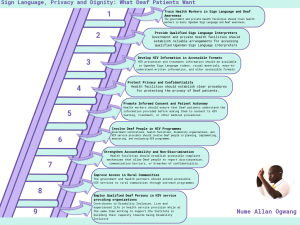
A patient who does not understand a diagnosis, dosage instructions, possible side effects or the importance of returning for follow-up care may struggle to make informed decisions about treatment.
Even at the regional referral hospital, medics rely heavily on the service of caretakers to talk to the deaf clients.
“In term of HIV care, they come with caretakers–as a way of integration, we use these caretakers to give them information.” Walter adds.
Uryek-Wun says as the wait for the government to deploy interpreters at different health facilities may take time, the urgent need now is to build the capacity of the caretakers.
“Building the capacity of the caretakers shall widen approach to HIV management and care, enable them to give informed medical information.”
Uryek-Wun says the hospital is open to working with stakeholders willing to train its medical personnel in sign language.
Training could help health workers communicate basic information, welcome patients and improve their understanding of deaf people’s needs. However, basic sign language skills alone may not be sufficient for complex consultations, informed consent, HIV-result disclosure or counselling.
Anna Mary Nisiima, a hard-of-hearing person and communications officer at the Uganda Federation of Hard of Hearing, says some patients encounter health workers who are unwilling or unable to assist them because they cannot communicate through sign language.
Her concern is that deaf patients can be left struggling to obtain services that hearing patients access through ordinary conversation.
“Most time communication barriers stand on their way of their access and service, there is a lady who went to the hospital for medical attention and the doctor refused to work on her because she could not hear him.” She explained.
The wider implications for Uganda’s HIV response
Uganda has adopted several HIV prevention measures, including Abstinence, Being faithful, and Condom use (ABC); Prevention of Mother-to-Child Transmission (PMTCT); and Post-Exposure Prophylaxis (PEP). Over time, however, these interventions have evolved, with new innovations and improvements introduced to strengthen HIV prevention efforts.
The introduction of oral Pre-Exposure Prophylaxis (PrEP) and injectable PrEP among the new measures currently being enrolled in most of the health facilities in the country to prevent new HIV infections.
These efforts to prevent new HIV infections and improve treatment outcomes depend on people being able to access testing, understand their results and obtain the information necessary to protect their health.
When deaf and hard-of-hearing people face communication barriers, they risk being excluded from services intended for the wider population and inclusive healthcare system.
Dr Victor Rwengabo, Uganda AIDS Commission Regional Coordinator Mid North (Acholi and Lango sub regions), says the exclusion of sections of society from HIV services is a significant concern for the country’s efforts to reduce new infections and strengthen treatment and care.
“If a person is hearing-impaired, then it becomes more difficult because they can’t talk, and it becomes very difficult in respect to already existing stigma.” Dr Rwengabo explains.
Dr. Rwengabo says the Commission is working on guidelines intended to promote an inclusive healthcare system that accommodates people with different forms of disabilities.
“Leaving anybody at this time is very bad, capacity building of health workers to integrate signs and symptoms is very key,” he adds.
Such guidelines could help establish clearer expectations for health service providers, including how facilities should communicate with deaf patients and ensure that they can participate in decisions about their care.
However, the development of guidelines will need to be accompanied by practical measures, including staff training, budgeting, appropriate interpretation services and monitoring of how health facilities implement inclusive practices.
For deaf people, the test of inclusion will be whether they can walk into a health facility, communicate their concerns, understand their HIV results and receive counselling without having to negotiate an additional financial burden.
It will also depend on whether they can access services confidentially, without being forced to disclose sensitive information to relatives or other people simply because a health worker cannot communicate with them directly.
Abalo, a sign language expert explains that rather than just failing to use none- text sign language, the medics always wear face masks making it more difficult to speak to the deaf every time they visit health facilities.
She says the deaf usually read the lip movements to understand what the health workers are saying, “Medical people put on masks while speaking to patients, lip reading becomes very difficult by the deaf to pick some of the words.”
Gulu City is among the cities in Uganda with the highest HIV prevalence. The prevalence rate is 9%, higher than the National Prevalence rate of 7%.
The record from the city indicates that there have been 480 new infections between January and March 2026 in the city representing 2.2 percent of the total infection. The figure is worrying the medics despite the present of PrEP in all the health facilities
The city has a population of 22,439 people living with HIV, with the greatest population in the age bracket of 30-49, at 51.5% (11,550).
Women contribute to the highest population of people living with HIV in the City, which is at 65.9 %, (14,802), twice that of men at 34.1% (7,637).
The City is currently on a campaign to promote PrEP as a preventive measure to reduce new infections in the city.
This helps people at risk of contracting HIV.
“Our interest is to increase utilisation; if we prevent new infections”, Dr Ayo Mary Stella, the in-charge of Bardege Health Centre III notes, “we should be able to reduce new infections to almost zero, because we must prevent rather than cure.”
The city health authority has carried out a number of outreach activities to create HIV awareness, but none of these was inclusive. The team didn’t involve any sign language interpreters while doing HIV awareness campaigns. This means the persons with hearing impairments are always left out from such campaigns.
The City HIV/AIDS Focal Person – Amito Florence admits it is still a big challenge for the medics as they champion prevention of new HIV infections by 2030
As the ministry moves to provide inclusive healthcare in the country, but the implementation of inclusive healthcare guidelines should be accompanied by adequate funding, clear responsibilities and mechanisms through which patients can report barriers or discrimination.
These measures would help move accessibility beyond policy commitments and into everyday practice.