“My vegetable farm has dried up,” she says. “I’ve had to resort to carrying water in buckets from the well just to save the little that remains.”
By Teddy Dokotho
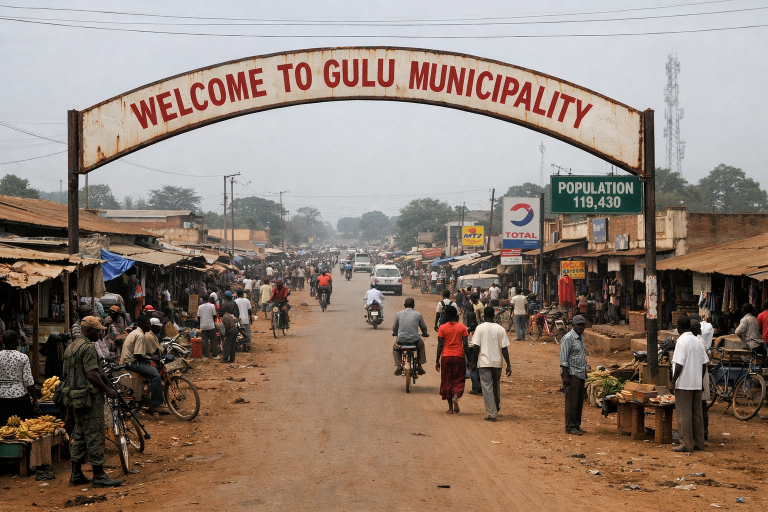
GULU : A scorching sun and an unrelenting dry spell have devastated vegetable dealers across the Acholi sub-region, especially women who depend on small-scale farming and trade for their livelihoods.
As rains expected between March and May failed to arrive, crops have withered, incomes have plummeted, and food security is under threat. From the rural farmlands of Omoro to the bustling markets of Gulu City, the ripple effects of climate disruption are being felt at every level of the vegetable supply chain.
Women Farmers at the Frontline
In northern Uganda, women have long been the backbone of smallholder agriculture — cultivating crops like nakati, boo, okra, and eggplants for sale in local markets. This season, however, has brought despair instead of harvests.
In Omoro District, Ms. Innocent Akello, a smallholder farmer, stares helplessly at her parched garden. She had planted with hope, believing the rains would return in mid-March as they usually did.
“My vegetable farm has dried up,” she says. “I’ve had to resort to carrying water in buckets from the well just to save the little that remains.”
Ms. Akello invested heavily in seeds at the start of the season, but now, she watches her efforts dry up under the unyielding heat.
“This has been one of the longest dry spells I’ve experienced. I believed the rains would come back in March like always. But this time, the weather changed, and we are counting losses.”
Soaring Costs, Shrinking Returns
The drought has pushed farmers to seek out swampy areas to cultivate vegetables—an option that comes with higher costs and greater labor demands. As a result, prices of fresh produce have doubled or even tripled.
At Gulu City’s Olaiglong Market, vegetable vendor Ms. Scovia Akech is struggling to stay afloat. She sources vegetables from surrounding villages but says the situation is dire.
“Farmers are charging more because growing vegetables now takes more effort and resources,” Ms. Akech explains. “A sack of boo that used to cost 20,000 shillings now goes for 40,000. And what used to sell at 80,000 has jumped to over 180,000 shillings.”
Traders, in turn, are forced to pass these costs onto consumers. A bunch of greens that once sold for 2,000 shillings now offers only one or two small pieces for as much as 500 shillings.
“This dry spell has caused real hunger,” Ms. Akech laments. “People can’t afford enough food. We’re not making money, and our customers are eating less.”
Transport Burdens and Vanishing Profits
With nearby farms depleted, traders now travel longer distances — to Koch Ongako in Omoro and beyond — to find fresh stock. The transport costs eat into already narrow margins.
Ms. Pamela Atim, another vendor at Olaiglong Market, says even when vegetables are found, the prices are exorbitant.
“During rainy seasons, a plot of greens could go for as low as 50,000 shillings. Now, we’re paying 150,000 for the same quantity,” she says. “We come to the market and sit, but most days, we sell at a loss.”
Hotels and Restaurants Struggle to Adapt
Hotels and restaurants in Gulu, especially those serving traditional Acholi dishes, are also feeling the pressure. At Romah Hotel, where dishes like boo and malakwang are a staple, prices have increased significantly.
“We used to buy malakwang for 1,000 shillings, and it served eight plates,” says hotel manager Ms. Alimocan. “Now, malakwang worth 3,000 barely serves five.”
At Motana Hotel, proprietor Mr. Patrick says they have chosen not to raise prices despite the strain.
“We’ve maintained our 5,000-shilling price per plate to keep our customers. But we are spending more and earning less.”
In response, the hotel is turning to long-term solutions.
“We’ve acquired land. Once we start cultivating our own supplies, we hope to cut costs and avoid future price hikes.”
Climate Change Disrupts Agricultural Rhythms
The failed rainy season is a stark reminder of how vulnerable Uganda’s rain-fed agriculture is to climate shocks. In the Acholi sub-region, where rural livelihoods are tied to seasonal rhythms, a single disrupted season can destabilize entire communities.
Ms. Akello is among many calling for urgent government and donor support — particularly for irrigation systems and climate-resilient seeds.
“This isn’t just about vegetables anymore,” she says. “It’s about survival.”
Without sustainable interventions, the region could slide into deeper poverty and more frequent food shortages.
A Call for Climate-Resilient Farming
Mr. Kilama Paul Timothy, the Senior Agricultural Officer for Gulu District, says the district is promoting smart farming practices to help farmers cope with the growing effects of climate change.
“Climate change has come and is with us,” Mr. Kilama says. “One of the ways we are talking to farmers is to promote smart farming, although the season may not play out as expected.”
To raise awareness, the district has partnered with local radio stations to air climate-focused agricultural programs.
“We work with our radio partners, and every week we run about three programs. In this programming, farmers gain more knowledge, and practices begin to shift. Appreciating the climate aspect is becoming key, even among farmer groups.”
He adds that the district is introducing diversified seed varieties, particularly perennial crops, to protect soils and improve microclimates after annual crops are harvested.
“We are diversifying into perennial crop production because under perennials, the microclimate can be more favorable,” he explains. “Practices like leaving bare grounds after harvesting annual crops are being discouraged.”
According to Mr. Kilama, failure to prepare for early rains is another major setback.
“Sometimes early rains arrive, but the ground is bare, crusted by overgrazing, and poorly managed. This must be addressed through crop diversity and conservation practices.”
Time to Act
Uganda’s overdependence on natural rainfall, coupled with widespread deforestation, land degradation, and water scarcity, has intensified the impact of climate change on agriculture. But experts and environmental advocates say the crisis can be reversed through sustainable farming techniques.
Practices such as conservation agriculture, agroforestry, and permaculture — which enhance soil fertility, water retention, and reduce erosion — have proven successful in countries like Malawi and Zambia.
These approaches could be integrated into Uganda’s agricultural policies to make farming more resilient to weather extremes. But this requires political will, community engagement, and funding.
The dry spell is more than just a seasonal setback — it is a wake-up call. For Uganda and the international community, now is the time to prioritize food security and climate-smart agriculture. Investing in irrigation, seed research, and farmer education is no longer optional — it is critical.
The future of Uganda’s food systems depends on how quickly we adapt and how effectively we support those already on the frontlines — especially the women farmers who continue to feed the nation against all odds.
This story was published with the generous support of Gender Tech Initiative Uganda (GTIU), in partnership with the African Human Rights Network (AHRN), under the ‘Bridging the Digital Divide for Gender-Responsive Climate Solutions’ project.