Over 90% of Ugandans cook with unsafe fuels. Can the media help change that?
By Wilfred Okot.
Gulu City 2nd June 2025: Every day across Uganda, meals are prepared in homes, institutions, and makeshift kitchens—whether it’s boiling beans in a rural village or frying kikomando in a Kampala suburb. Fire is at the heart of every Ugandan home. Yet, while cooking sustains life, the fuels used—mostly firewood and charcoal—pose silent but deadly threats to human health, the environment, and the economy.
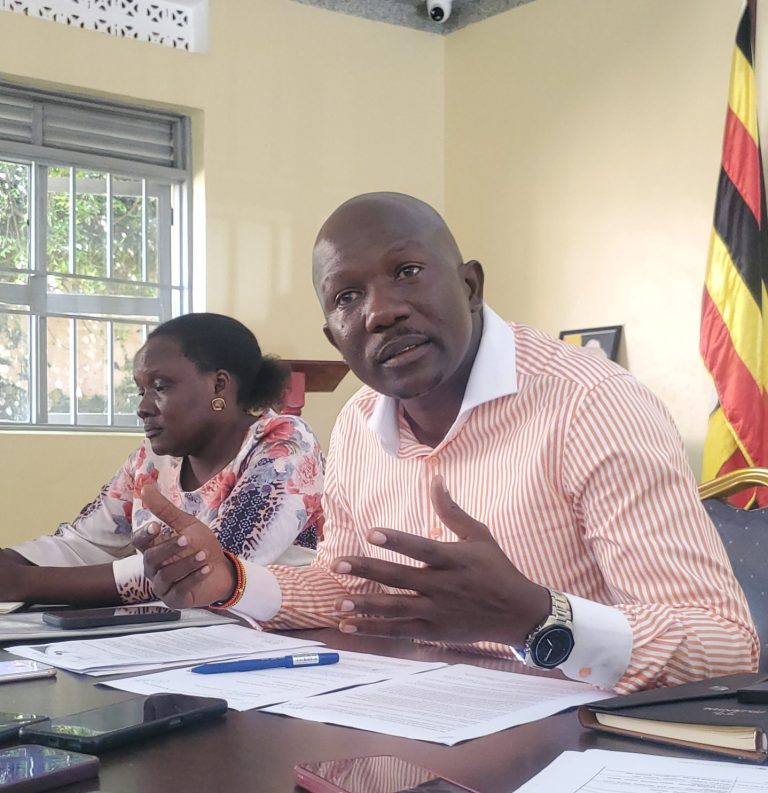
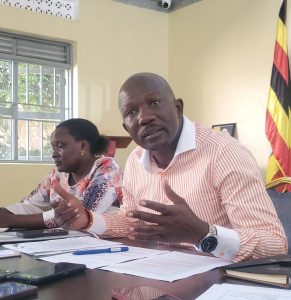
“Clean cooking is not just about technology—it’s about dignity, safety, and opportunity,” said Dr. Nicholas Mukisa, Deputy National Coordinator of the National Renewable Energy Platform (NREP), during the launch of the National Media Training Program on clean cooking technologies in a virtual meeting last Friday.
The initiative, spearheaded by NREP—a government-supported coalition of public, private, and development actors—seeks to reframe clean cooking as a national priority and rally the media to lead the charge.
Despite global attention on climate change and sustainable development, clean cooking remains underreported in Uganda. The statistics are staggering: over 90% of Ugandans still rely on biomass fuels such as charcoal and firewood. These sources are not only inefficient and unsustainable but also a major contributor to indoor air pollution—a health hazard that disproportionately affects women and children.
“Too often, the media only covers energy issues when there’s a fire outbreak, a fuel shortage, or a policy gap” said Dr. Mukisa. He implored the journalists to move from reactive coverage to proactive storytelling.
Dr. Mukisa emphasized that journalists are citizens first—many of whom return home to cook using the same traditional stoves they often overlook in their reporting.
“Before one is a journalist, they are a member of a family. They come from homes where food is prepared daily, Dr. Mukisa adds”. He urged the media to transition from being passive observers to active champions of clean energy.
The NREP campaign is not just about information but empowerment. The goal is to equip journalists with tools, data, and lived experiences to report effectively on clean cooking.
“What do you use to cook at home? What challenges have you faced? If you’ve switched to liquefied petroleum gas (LPG) or electricity, what changed for your family?” he asked.
A household baseline study conducted by the National Renewable Energy Platform (September 2024) across Jinja, Mbale, Mbarara, Masaka, Gulu, and GKMA confirmed that media remains a key channel for reaching diverse audiences.
However, for media practitioners to accurately and persuasively communicate renewable energy initiatives, they require a deeper understanding of the sector, messaging strategies, and audience engagement techniques.
Dr. Mukisa cited Kenya as a regional example where media involvement has helped fuel national conversations and uptake of clean cooking technologies. “We want to see our media leading in telling stories that debunk myths—like ‘food cooked on electricity does not taster right or that ‘gas is too expensive for ordinary people.'”
The clean cooking agenda intersects with key national priorities: public health, gender equality, climate action, forest conservation, and economic productivity.
“We are talking about the right to breathe clean air, cook safely, and to protect our forests. Clean cooking is not a luxury—it is a basic human need,” said Dr. Mukisa.
The campaign views the media as a key stakeholder that can mobilize national awareness and inspire community action. “We want to create a ripple effect where informed journalists spark public interest, understanding and motivate action”, he added.
Justine Akumu, a Senior Energy Officer at the Ministry of Energy and Mineral Development, confirmed that firewood and charcoal still dominate Uganda’s energy mix as of 2024. “It’s not just a rural issue. Institutions like schools, health centers, prisons, and police stations also depend on firewood.”

She noted that most households and institutions continue using inefficient methods like the three-stone fire or the traditional charcoal stove—commonly called the “sigiri.” These methods emit high levels of smoke and particulates that cause health problems.
“These stoves are inefficient, they emit a lot of smoke, and that smoke has negative health impact especially on women and children, who spend the most time near cooking areas,” Akumu said.

Scientific evidence supports these claims. According to research from the Makerere Lung Institute, conducted in collaboration with the World Health Organization, indoor air pollution from biomass fuels is a significant contributor to respiratory infections, heart disease, and cancer in Uganda.
The problem extends beyond health to time poverty and gender inequality. Due to deforestation, women and girls often walk long distances to collect firewood, losing time that could be spent on education or income-generating activities.
Charcoal, often perceived as more refined than firewood, is environmentally destructive. “Charcoal production is extremely wasteful, with a conversion efficiency of only 6% to 10%, according to Ministry of Energy. Nearly 90% of the wood used is lost in the process,” said Akumu. She added that this demand is a major driver of Uganda’s alarming deforestation rates.

“We are losing our forest cover at a disturbing rate. This deforestation is driven by the large demand for cooking fuel” she warned.
Social and economic setbacks accompany these ecological consequences: energy poverty, exclusion of women from development opportunities, and missed school days for children.
To address these challenges, Akumu stressed the importance of clean stove design. She said a clean stove must be safe, stable, easy to use, and burn efficiently with minimal emissions.
Yet, she acknowledged that awareness alone is insufficient. Financing remains the missing piece. “We are actively mobilizing climate financing, carbon credits, and forms of green finance “.
Akumu revealed that the Ministry is working with commercial banks and private investors to build an accessible financing ecosystem. “We are exploring concessional financing and partnerships with private sector and commercial to build an accessible financing ecosystem for clean cooking”
Mariah Kizza, Head of Project Finance and Corporate Affairs at NREP, emphasized that clean cooking is central to Uganda’s development goals. “Our campaign is inclusive and targeted. We aim to reach households, schools, and communities through storytelling, demonstration, and training.”
She added that the campaign is not about overnight change but gradual transition—from firewood to modern options like Liquefied Petroleum Gas, electric pressure cookers, and induction stoves.
“Uganda has the potential to lead East Africa in clean cooking adoption. But it starts with what’s cooking at home. Real progress will depend on people’s choices around the fire,” she said.
Real-life testimonies reveal the daily struggles many households face.
Susan Ajok, a mother of five, described her routine of rising early to fetch firewood.
“The smell of smoke is part of my life. I’ve been exposed to it since childhood. It’s tiring and harmful, but firewood is free, and the alternatives cost money we don’t have,” she said.
Marion Acen, who lives in Gulu City, shared a similar story. “Charcoal is the only fuel I can afford. Other energy sources are expensive, and I worry about refill costs or repairs.” She notes.
These personal accounts underscore the need for affordable solutions and targeted communication that resonates with everyday realities.
The media is a major stakeholder and has a role of informing the public about the clean cooking technologies using accuracy in reporting.
“We as media we are combating climate change shocks, it is important especially as journalists need to promote solution that help promote behavioral change among the people by availing them with news that is understandable and can be understanding on clean cooking rather than just reporting about the problems and events without giving proper contexts,” says John Okot, a Gulu-based Journalist.”
The transition to clean cooking is a complex challenge, but one with high stakes. With greater media involvement, financial support, and community engagement, Uganda can lead a national shift toward healthier, more sustainable kitchens.
As NREP lights the flame for change, the media is urged to help keep it burning—not just with headlines but with hope, action, and commitment