The upward trend in the impoundment of weapons and poaching gear exemplifies several critical developments in the fight against Illegal Wildlife Trade (IWT).
By Chowoo Willy
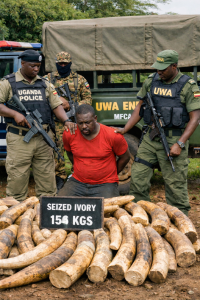
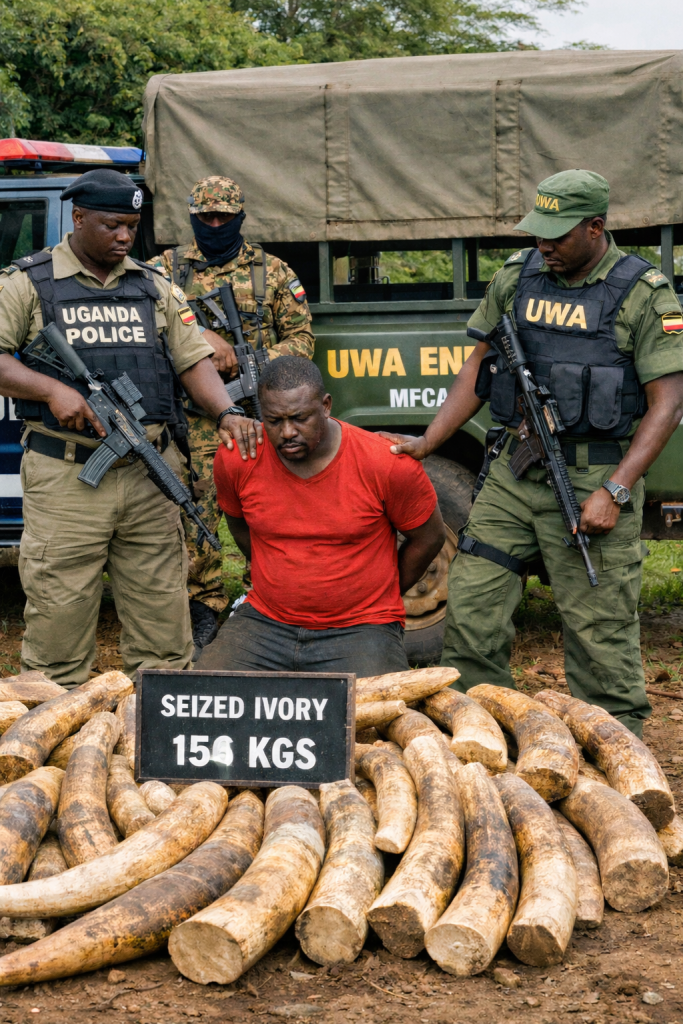
The Uganda Wildlife Authority (UWA) has arrested a suspected ivory trafficker in Nwoya District and recovered 154 kilograms of raw elephant ivory in a major intelligence-led operation targeting wildlife crime networks in Northern Uganda.
In a press statement released on February 23, 2026, UWA said the Special Wildlife Crime Unit conducted the operation in collaboration with the Uganda Police Force.
The suspect, identified as Opiro Francis, was arrested on February 22 while allegedly in possession of ten pieces of raw elephant tusks. He is expected to be produced before the Standards, Utilities, and Wildlife Court to face charges of unlawful possession of protected wildlife specimens, contrary to the Uganda Wildlife Act Cap 315.
UWA Executive Director Dr. James Musinguzi said the arrest sends a strong signal to traffickers that Uganda will not tolerate wildlife crime.
“This seizure sends a clear and firm message that Uganda will not tolerate wildlife crime. Ivory trafficking is a serious offense that threatens our elephant populations, undermines conservation gains, and fuels organized criminal networks operating across borders,” Dr. Musinguzi said.
Dr. Musinguzi emphasized that the success of the operation reflects strengthened intelligence-driven enforcement and close coordination between UWA and other security agencies. According to UWA, Northern Uganda has in recent years been exploited by traffickers as a transit corridor for illegal ivory, but the enforcement presence in the region has been intensified.
“Northern Uganda has been exploited by the traffickers as a transit route for illegal ivory, but our enforcement presence is stronger than ever,” he notes, adding that “anyone involved in wildlife trafficking should know that arrest, prosecution, and stiff penalties are inevitable.”
Data from the Uganda Wildlife Authority (UWA) indicates a steady rise in the impoundment of weapons and poaching gear from the Murchison Falls Conservation Area over the past three years.
In 2021, authorities impounded 6,678 weapons and assorted poaching tools. This figure increased sharply to 10,922 in 2023 and further rose to 12,466 in 2024.
According to UWA’s 2025 report, between 2022 and 2024, the authority recovered 84.42 kilograms of ivory from traffickers, arrested 2,469 suspects, and impounded a total of 30,066 weapons and poaching implements. These included rifles, wire snares, and metal traps, among others.
What the Numbers Exemplify
The upward trend in the impoundment of weapons and poaching gear exemplifies several critical developments in the fight against Illegal Wildlife Trade (IWT).
The increasing number of recovered weapons and tools suggests stronger patrol operations, improved intelligence gathering, and enhanced surveillance systems within conservation areas. It points to a more proactive enforcement strategy rather than a reactive one.
The rise may reflect improved technological integration, such as digital monitoring systems and intelligence-led operations, enabling rangers to detect and intercept poachers more effectively.
The recovery of rifles and large quantities of wire snares indicates that authorities are targeting not only subsistence poachers but also organized trafficking networks that rely on sophisticated equipment.
At the same time, the consistent increase also highlights the sustained pressure on wildlife resources. The scale of confiscated equipment suggests that poaching attempts remain significant, requiring continued vigilance.
With 2,469 suspects arrested within three years, UWA’s approach demonstrates a shift toward dismantling the supply chain of illegal wildlife trade through arrests, evidence documentation, and prosecution.
Overall, the data exemplifies a more aggressive and structured response by park authorities to combat illegal wildlife trade. While the figures indicate that poaching threats remain real, they also show measurable progress in enforcement effectiveness and operational reach within Uganda’s conservation areas.
According to the same report, between 2022 and 2024, the authority recovered 84.42 kg of ivory from the traffickers. They arrested 2,469 suspects and impounded 30,066 weapons and poaching gear from Murchison Falls Conservation Areas. These included rifles, wire snares, and metal traps, among others.
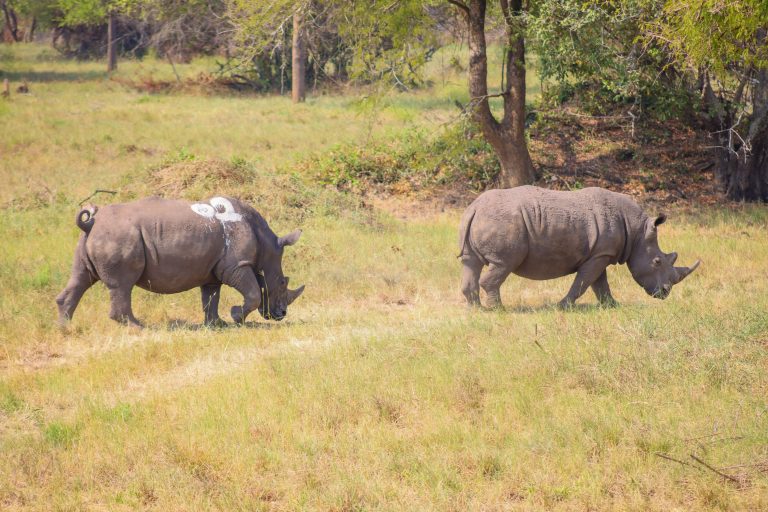
Uganda is home to significant elephant populations, particularly in conservation areas such as Murchison Falls National Park, which borders Nwoya District. Conservation authorities warn that poaching and trafficking remain persistent threats despite improvements in wildlife protection systems.
Assistant Commissioner Bashir Hangi, the UWA Communications Manager, recently revealed that major players in the illegal wildlife trade are increasingly exploiting local community members to carry out poaching activities inside protected areas.
Pattern of Wildlife Crime
This latest arrest adds to a series of wildlife crime incidents previously reported by Elephant Publications.
The use of Northern Uganda as a transit route for ivory and pangolin scales destined for international markets.
Weak community surveillance systems around protected areas.
Cross-border trafficking networks operating between Uganda, South Sudan, and the Democratic Republic of Congo.
The growing sophistication of traffickers who exploit porous borders and vulnerable communities.
Earlier reporting by Elephant Publications has also examined how wildlife crime undermines tourism revenues, fuels organized crime, and affects communities that depend on conservation-linked livelihoods. Experts have warned that illegal wildlife trade is increasingly intertwined with other transnational crimes, including arms smuggling and money laundering.
Conservation advocates argue that while enforcement operations have improved, more investment is needed in community sensitization, alternative livelihoods, and technological surveillance systems to sustainably curb poaching and trafficking.
Turyatemna Movadi, warden in charge of law enforcement at the Murchison Falls Conservation Area, says patrol teams have done so well to reduce poaching and increase the success rate.
He said out of the 2,469 suspects that have been arrested between 2022 and 2024, 1,228 have been produced in court.
In 2022, the Uganda Wildlife Authority introduced a modern digital surveillance platform known as EarthRanger to strengthen efforts against wildlife crime. EarthRanger is an online monitoring system designed to track illegal intrusions and monitor animal movements within protected areas.
According to a technical officer at Murchison Falls National Park, the system provides real-time data by tracking ranger patrols and activities across the park. “The platform gives instant information by monitoring rangers and everything happening within the park,” the officer explained.
The system also enhances accountability and prosecution processes. When rangers make arrests in the field, they can immediately upload the exact location, time, and incident details into the system. This digital record serves as verifiable evidence that can later be presented in court.
UWA has urged members of the public to report suspicious activities related to wildlife crime, noting that protecting Uganda’s biodiversity requires collective responsibility.
The chief warden of Murchison Falls Conservation Areas, MCA, Kizza Fredrick, said the fight against illegal wildlife trafficking can only be won once the community joins to fight it.
The arrest in Nwoya underscores the continued threat posed by ivory trafficking but also signals a renewed commitment by authorities to dismantle wildlife trafficking networks operating within and across Uganda’s borders.