

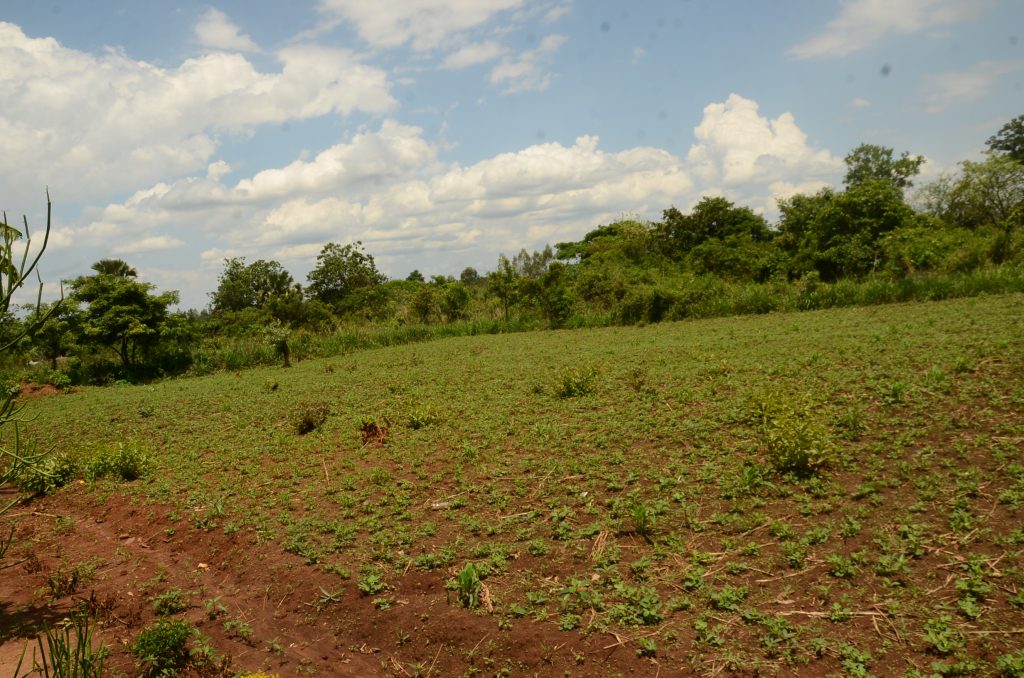
Farmers are struggling to predict rainfall and sunshine patterns due to increasing weather unpredictability
By Wilfred Okot
In the heart of rural Uganda, where the sun dips into the horizon and paints the sky with hues of orange and pink, a quiet revolution is unfolding.
Women are disproportionately affected by the impacts of climate change in the regions where gender inequality and their participation in agriculture converge.
Crop failures, pest outbreaks, or increased disasters induced by changing climates affecting the globe where many women are involved in agricultural activities though women farmers are spearheading a change in rural Uganda, where the sun dips into the horizon and tints the sky with shades of pink and orange.
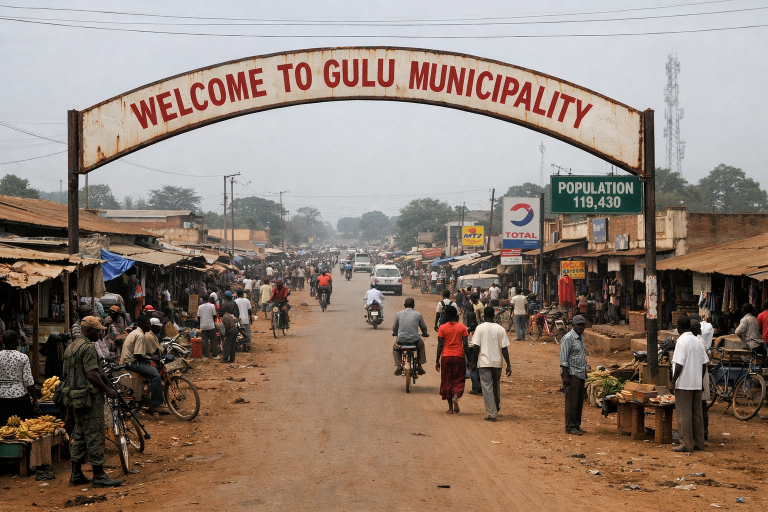
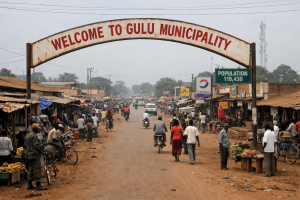
Margaret Akello, a resident of Gulu district, a mother of two and a farmer, says climate change has disrupted her farming activities, leading to a projected 20 per cent decline in yields for her major crops maize, beans and groundnuts.
“Unpredictable rainfall patterns and increased temperatures have changed the growing seasons. It has become difficult to plan and manage crops effectively,” she explains.
To adapt, Akello is turning to climate- smart agriculture. “I am using drought- resistant and early- maturing crop varieties to cope with changing weather,” she says.
She has adapted mulching, intercropping and planting food security crops as one of the techniques to enhance productivity and reduce the risks associated with extreme weather.
In addition to improving her farming methods, Akello and her two children are harvesting rainwater for both domestic use and irrigation during droughts and dry spells.
“Many farmers are also diversifying their livelihood and by engaging in non-farm activities so they don’t rely solely on rain-fed agriculture.” She notes.
According to Akello, access to credit and extension services plays a crucial role in helping farmers adapt. Those with financial support and guidance are more likely to embrace improved practices and technologies.

However, she points out that many smallholder women farmers face significant challenges.
“We are limited by financial constraints and lack of access to modern tools and technologies. These barriers make it difficult to fully adapt to the impacts of climate change.”
Jackline Atoo, a local leader in Gulu district says the rain has not been as reliable as it used to be long ago and sometime it comes unexpectedly.
She further says it is either too early or later than expected where by one has to stay alert and look for the signs all the time.
“Climate change has really affected everything compared to long ago; farmers would plant crops in the garden and be confident of the harvest. Right now am forced to look for crops and seeds that can adapt to the climate change,” she added.
According to Atoo, it is too risky to plant one seed alone but rather to have mix farming and in ecological farming that will ensure healthy farming and healthy food for today and tomorrow by protecting soil, water and climate which promotes biodiversity and does not contaminate the environment with chemical or genetic engineering.
She revealed that in the long run, she won’t lack harvest. “For example when she plant sorghum, even if it doesn’t rain much she is confident that she will harvest instead of planting other crops”, she narrated.
As a determined farmer, Adong grappled with the unpredictable nature of the weather pattern and as a woman farmer armed with ingenuity and a deep connection to their land leading the charge that is transforming her family lives in the community
Like many others, her farm was battleground against pests, diseases and the relentless whims of the rain. Frequent crop failures left her family vulnerable, and the weight of financial hardship pressed heavily.
When Adong joined a local group everything changed. This group a beacon of hope in the community wasn’t about grandiose promises or expensive solutions. But was about empowering local women to understand and implement sustainable practices rooted in traditional knowledge and modern scientific insights in combating climate change issues.
Oloya Simon, an extension worker in Gulu district says climate change disproportionately impacting women farmers that require a targeted solution that can address their unique needs and barriers.
“Agriculture through access to information, resources and decision making roles is crucial for building climate resilience and ensuring food security in order to empower women farmers as most farmers face greater vulnerabilities to climate change due to factors like limited access to land and unequal workloads and power within communities, He said.
Susan Nakacwa, Programme officer at GRAIN says 70 percent of foods are produced by small holder farmers and 30 percent by industries. This was made during the Agroecology School for Journalists and Communicators conference at Hotel Africana in Kampala in 2024
Despite significant technological advance in modern agriculture people are still going hungry and climate change is further threatening food security and taking a dramatic toll on our already dwindling natural resources and biodiversity.
“We must ensure our food systems continue to nourish us in the long run and in order to achieve that we need to make them more resilient and sustainable”, she said.
Resilience determines how robust food systems are to changing conditions and external shocks.
However the Land Act (1998) provides for the protection of women’s rights to land and natural resources ensuring their access and control as well as by integrating gender considerations into all aspects of climate change adaptation and mitigation efforts, ensuring that women’s needs and perspectives are addressed. By implementing all these policies and programs, it will empower women farmers to adapt to climate change and build more resilient livelihoods.
The publication of this story has been made possible through the generous financial support by Gender Tech Initiative Uganda (GTIU) in partnership with the African Human Rights Network (AHRN) on Bridging the Digital Divide for Gender-Responsive Climate Solutions project.









One Response
🌾🌍 A Message of Solidarity and Hope
From the Cape Flats to Gulu City, and every field in between
To the phenomenal women farmers whose hands till the soil with love, wisdom, and fierce determination, we see you.
We honour you.
We stand with you.
We understand what it means to grow in dry ground, to build in broken systems, and to rise without enough—but still rise.
Your resilience is the seed of our collective future.
You are the guardians of our food systems, the teachers of ancestral knowledge, the champions of biodiversity, and the healers of our lands.
Your fight is not invisible to us.
Your harvest is not small in spirit.
Your struggle is the soil from which a stronger, more equitable Africa will grow.
We read the story of The Invisible Harvest with deep emotion and deep recognition. We, too, know what it’s like to do more with less, to carry the burden of climate change, gender injustice, and economic exclusion—all while feeding others, nurturing children, and safeguarding our cultural heritage.
And yet, like Margaret Akello, Jackline Atoo, and Adong, you remain rooted, rising, regenerating.
We say this with unshakable belief:
🌱 Africa does not need to be saved. Africa needs to be supported—from within.
From woman to woman.
From community to community.
From grassroots to global.
From story to system.
Let us uplift each other through:
Knowledge-sharing rooted in Indigenous and scientific wisdom
Resource redistribution and real investment in women-led farming innovation
Digital access and extension support that reaches rural sisters
Climate-smart agriculture that honours both Earth and people
Let us not be divided by borders, but united by the soil beneath our feet and the fire in our hearts.
Together, we are sowing seeds of climate resilience, food sovereignty, and economic justice.
Let this message spread like sunlight—nourishing every woman farmer who thinks she is unseen.
We see you.
We believe in you.
With all our love and solidarity,💚
Natalie-Jane in Mitchell’s Plain, Cape Town, South Africa
info@bronathanimpact.co.za
Brother Nathan Foundation (Pty) Ltd
“Serving people, healing land, building futures”