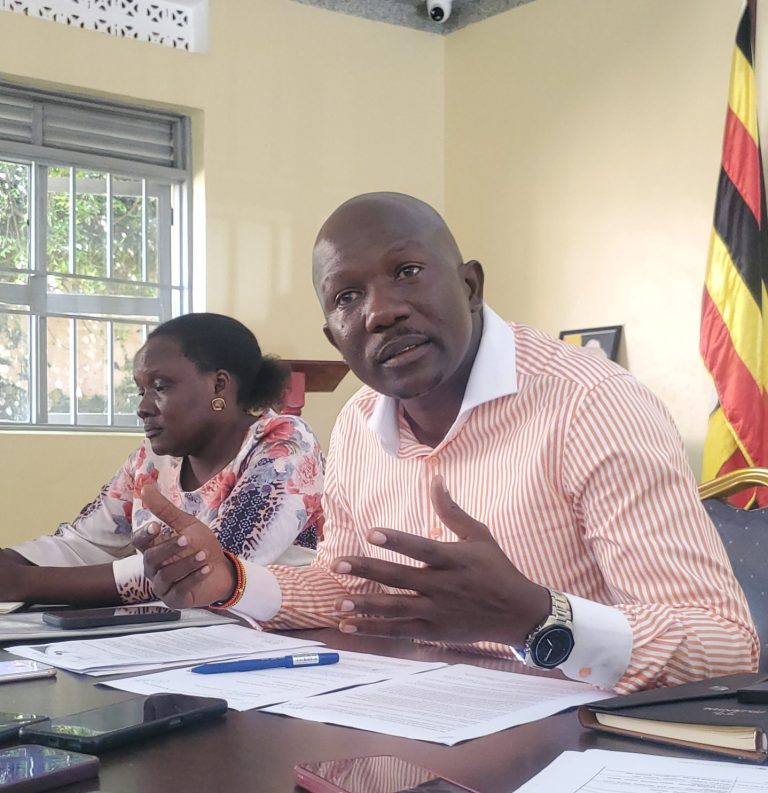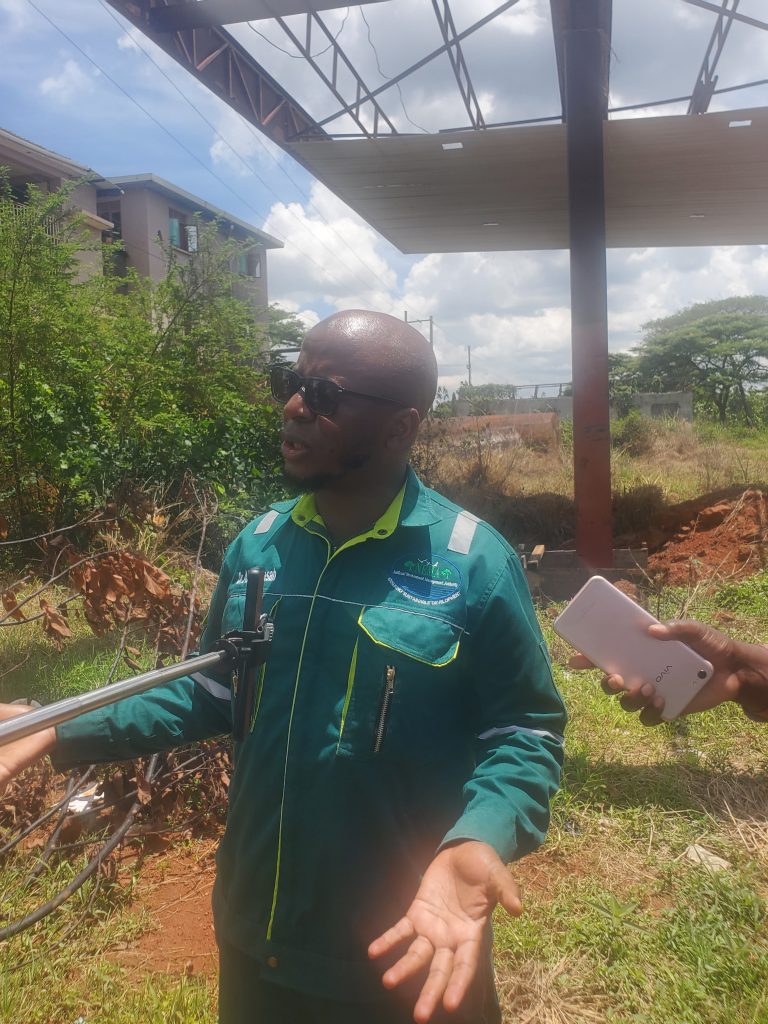
Ojok’s journey is a compelling story of resilience, innovation, and transformation.
By Willy Chowoo
Nwoya District- Born and raised in Northern Uganda, a region long scarred by conflict and economic hardship, Ojok Alfred, 34, grew up in a family he describes as extremely poor. Life was marked by uncertainty, limited opportunities, and a constant struggle to survive.
As a young boy, Ojok believed that education would be his escape from poverty. He worked tirelessly in school, eventually reaching the Advanced Level, where he studied Physics, Chemistry, and Mathematics. Like many ambitious youths, he dreamed of attending university and becoming a professional, possibly a computer engineer, given his strong interest in technology
Despite his academic effort, financial constraints blocked his path. After completing Senior Six, he was unable to proceed to university. He used to sell sugarcane to pay his secondary school fees.
“I had the dream of studying up to university, and through my education, I thought I could change our family’s circumstances,” Ojok notes. “But after reaching senior six, I could not make it to the university.”
This moment marked one of the lowest points in his life. He spent nearly a year in emotional distress, mourning the loss of his dream. He applied for international scholarships, including one from the Turkish government, but was unsuccessful.
The weight of disappointment became overwhelming, pushing him to the brink of hopelessness. At one point, he admits, he contemplated suicide—feeling that without education, life had lost its direction.
Yet even in despair, a realisation emerged: he still had land. And with that land came a possibility.
“I was crying about education, but I realised that we have the land, and the only thing I can do is to go into farming because I cannot continue at the university.” He recalls.
Ojok turned to farming, not out of passion at first, but out of necessity. His early ventures were marked by trial and error. He began with garlic farming after reading about its profitability online. However, Northern Uganda’s harsh dry conditions proved unsuitable, and the crop failed.
Undeterred, he tried growing hot peppers, inspired by another farmer’s success story. He invested heavily, planting three acres and following technical advice. But when it came time to sell, he faced exploitation, rejection, and ultimately loss. His produce was poorly handled, failed to meet export standards, and earned him nothing.
“These people came and found that I did not carry the hot pepper the way it should be. All that was a reject. I did not get even a coin out of that.” He recalls.
For many, such repeated failures would signal the end. But for Ojok, they became lessons.
Transition to Commercial Coffee Farming
His turning point came from a simple interaction with a local farmer who introduced him to coffee. Unlike his previous ventures, coffee offered long-term potential.
Ojok sold his sugarcane harvest to raise initial capital and began planting coffee seedlings. However, at first, he used 400,000 Ugandan shillings to buy pine seedlings for an acre.
His impressive skills in planting pines led another farmer to hire him to plant his pines. He was contracted for 900,000 Ugandan shillings. His skill in planting pines came from experience as a casual labourer at Unyama, Abera Forest, in the then-Gulu district.
He used that money to buy his first coffee seedlings. With no money to hire labour, he dug planting holes himself—one by one. This was 450 holes per acre.
This was gruelling work, but it marked the beginning of something transformative.
Ojok started small, with just one acre of coffee. Over time, he expanded through persistence, reinvestment, and continuous learning. With no experience or knowledge of coffee management, he used the internet to search for relevant information.
He landed at the former Uganda Coffee Development Authority (UCDA), which, after a visit to his farm, introduced him to the National Coffee Research Institute (NACORI) and gave him the necessary capacity building.
“NACORI trained me to start producing coffee seedlings. I started producing coffee seedlings. I started supplying, and that’s how the farm started,” Ojok adds.
His first harvest from an acre in 2018 brought him approximately 3.5 million Ugandan shillings—a life-changing amount. That moment confirmed what he had begun to suspect: coffee could be his path forward.
Ojok began small, planting seedlings and learning best practices in coffee agronomy.
Moving into coffee was not easy. The initial years demanded significant labour, capital, and resilience. Coffee takes time to mature, and during this period, farmers must sustain themselves without immediate returns. Ojok faced skepticism from peers who doubted his shift, but he remained focused.
Gradually, his efforts began to pay off. With improved farm management, proper spacing, pruning, and soil care, his yields improved.
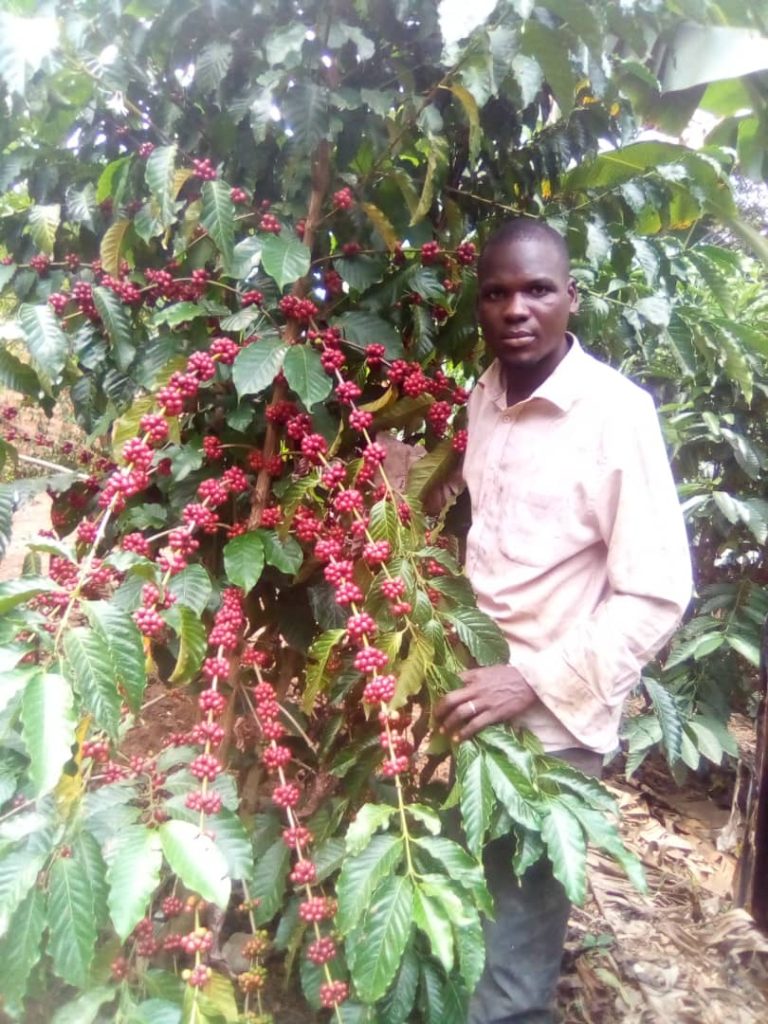
He expanded his farm gradually through money he got from the sales of his coffee, raised his own seedlings that he now sells to other farmers across the country. Ojok now has 25 acres of coffee plantation with bananas and intends to plant five additional acres in the second season.
From his initial sale of 3.5 million Uganda shillings from his first coffee harvest, he earns more than 100 million Uganda shillings annually from the sale of his farm products.
He also began exploring better market channels to ensure he could sell his coffee at competitive prices. Currently, he has been in Germany, the Netherlands, and South Africa as he seeks to expand the market for his coffee beyond the borders. This marked the beginning of his transition from subsistence to commercial farming.
Recognising the need for value-added services and collective strength, Ojok founded Hasting Coffee Centre. The initiative aimed to support farmers with processing, quality control, and market access. Instead of selling raw cherries at low prices, farmers could process and sell higher-value products
Hasting’s Coffee Centre became a hub for innovation and collaboration. He registered it as a legal entity. It connected farmers to buyers, provided training, and introduced modern techniques in coffee handling. For Ojok, it was not just a business—it was a platform to uplift others.
Hasting Coffee Centre was founded with a vision to be a leading and trusted coffee enterprise in Northern Uganda, supporting sustainable coffee production, regional trade, and inclusive economic growth across farming communities.
This was his ideal dream of fighting poverty among the disadvantaged youth. “My bigger dream was one to empower people like me; people have lost hope in life, people of my type, you know, I had lost hope.” He adds.
“I was almost committing suicide because I realised life cannot go on without education,” Ojok says. There are such people in society today, so now I know there are people like me, and my main intention is to show them the way.”
He implores the youth with the land to have hope in coffee as a saviour: “That if you have the land through coffee, you can still make it, so that’s one thing that I also want to do to empower our community then.”
Employment and Youth Empowerment
Driven by this realisation, Ojok formalised his efforts by establishing the Hashing Coffee Center in Nwoya District. His vision extended beyond personal success. Having experienced deep despair himself, he sought to empower others—especially youth who had lost hope due to poverty or lack of education.
Today, Ojok employs 48 young people, many of whom lacked formal skills or direction.
Through structured work programs, he not only provides employment but also helps them build assets and independence. His innovative approach includes saving portions of their earnings to support housing construction—ensuring that each youth eventually owns a home.
The plan is to move the boys away from the burden of living in thatched-roof grass houses to permanent structures as they fight the ‘poverty of the mind.’
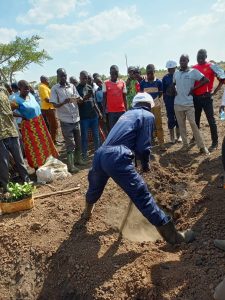
“We are planning during the dry season next year to lay bricks as a group because, you know, with 48 young youths here, we can lay a number of them,” he notes.
The brick circle will continue until all 48 have houses in the next three years. We plan on starting up a foundation for our house, and I hope that if all 48 boys did it, we shall showcase something in northern Uganda,” Ojok adds.
This model combines income generation with long-term stability, offering a pathway out of poverty.
In addition, Ojok encourages every youth under his program to establish at least one acre of coffee. This ensures they are not just labourers, but future farmers and entrepreneurs in their own right.
Ojok says that about 40 percent to 50 percent of these youth already have their own coffee plantations. “We believe by next year everyone will have their coffee, and they will plant it, so we are looking at poverty eradication.
Ocaka Kenneth, one of the youths who has now planted 3 acres of coffee, following Ojok’s philosophy. The garden is at Te-okuttu in Lakang sub-county in the neighbouring district of Amuru.
He mentions, “This farm has given me extensive experience in coffee cultivation; I see myself as a legend.”
His initiative embodies a wider philosophy: promoting empowerment via ownership and involvement.
However, Ojok says some of these young people are still willing to return to school, while others are seeking formal employment:
“We are requesting willing partners or individuals to support these young people who didn’t have the opportunity to study and to help them achieve their dreams. Some of them may also want to pursue a different career path.” He urges.
One of the youths who didn’t know anything about coffee seedlings is Okello John Paul. He has become an expert in making seedlings at Ojok’s Coffee Plantation.
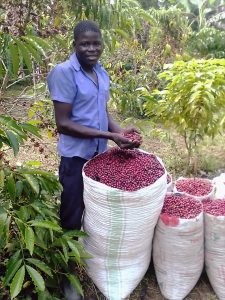
“We mainly make clonal cuttings; it takes a shorter period of time to be ready for harvest, just 18 months,” Paul notes.
Government is currently prioritising clonal coffee varieties for their resilience and high yields, aiming to produce 20 million bags by 2030.
The quality of his coffee seedlings has driven demand to a very high level, and now the government, through MAAIF, has contracted him to supply coffee seedlings and banana suckers across the sub-region and parts of the country.
The increased adoption of coffee farming among many Acholi people has yielded positive results, despite initial doubts about the land’s suitability.
Formation of Nwoya Lalar Cooperative Limited
Ojok’s influence also extends to cooperative development. Considering that individual farmers lacked bargaining power, he spearheaded the formation of the Nwoya Lalar Cooperative Society Limited.
Lalar is the name of the place, but for Ojok in their Cooperation, it is a saviour. Lalar is a Luo word, which literally means ‘saviour’
“We believe that Lalar is a saviour, and that through the cooperative movement, we have found a saviour in poverty eradication.” He explained.
The coffee entrepreneur, after discovering they had been deceived into believing they were individual coffee farmers, persuaded members to form a farmers’ group.
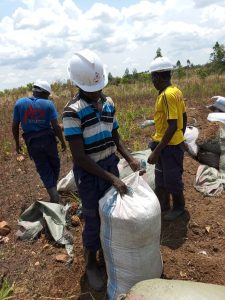
“We realise that when we sell our coffee, actually, we sell at quite a lower price.” Ojok highlights that “if we are to continue as single farmers, our voice will not be heard, we may not have the opportunity to bargain for our coffee, and we cannot even access the opportunity from the government.”
The members have entrusted him with leading the cooperative as chairperson. They also brought in technical experts to support the implementation of the vision, including the Managing Director (MD), an agronomist, and a professional accountant.
“We are happy this year after the formation of the Cooperative; we sold our coffee in bulk.” For the first time, we got some good money,” said Akello Alice, a member of the Cooperative.
Akello is one of the coffee farmers who has been harvesting her coffee here over the last 4 years on their 2 acres in Amolo village.
Starting with just 15 members, the cooperative has grown to over 400 farmers. It provides a platform for collective marketing, access to training, and opportunities for funding and partnerships.
“This cooperative has a vision to be a leading cooperative society limited dedicated to enhancing the quality of life for its members and the people in northern Uganda,” he adds.
Through the cooperative, farmers will gain access to inputs, credit, and training. It also strengthened their bargaining power in the market.
The membership includes both smallholder and commercial farmers.
For Ojok, the cooperative model was essential in ensuring sustainability and inclusivity. “The government has contracted us to supply agro-inputs to the farmers.”
Under Ojok’s leadership, the cooperative has taken steps toward modernisation and global market integration.
Farmers are being registered digitally, with geolocation data to meet international traceability standards. This is crucial for accessing European markets, where compliance with environmental and sourcing regulations is mandatory.
“What I want to appreciate so much is that GIZ has given us the gadgets; they have given us laptops and smartphones for registering our farmers, and they have paid for software for registering farmers,” he notes.
Adoption of Precision Technology.
Climate change remains one of the biggest challenges for farmers in Northern Uganda. Droughts have become more frequent, and rainfall patterns are increasingly unpredictable.
However, Ojok has taken proactive steps to adapt.
He uses drought-resistant coffee varieties, practices mulching to retain soil moisture, and invests in water conservation systems.
“We believe that the integration of agroforestry, mulching, trenches, and, if possible, the introduction of irrigation will help our coffee so much.” He highlights
The young entrepreneur also trains other farmers on climate-smart practices, ensuring that the wider community can withstand environmental shocks.
Technology plays a central role in Ojok’s approach to farming.
Drawing on his early interest in computers, he actively uses mobile applications and digital tools to monitor crop health, track weather patterns, and manage farm operations.
When faced with challenges such as yellowing coffee leaves, he turns to online platforms and AI tools for diagnosis and solutions.
This self-driven learning has enabled him to apply precision agriculture techniques, even in a rural setting.
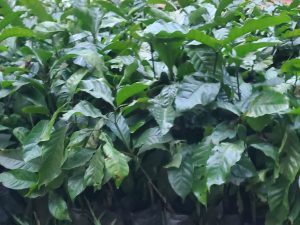
“It helps to show the moisture content in the soil. If there’s no need for you to do or not to do irrigation, what is the percentage of irrigation needed for those crops?” Ojok says, “You cannot even go for your agricultural extension officer, and you may know a lot of things.”
Satellite-based tools and weather applications help him anticipate rainfall and manage drought risk. Soil moisture monitoring apps guide irrigation decisions, ensuring efficient use of scarce water resources.
“They are very accurate. When they say it will rain at 4:00, if he’s late, by 4:30, you will see rain. So, I’ve been using this for quite a long time.” Ojok explains
These technologies are particularly important in Northern Uganda, where climate change has intensified droughts and disrupted traditional farming cycles.
Solomon Etany, an agronomist and climate-smart agriculture specialist, highlights that precision agriculture is inevitable in the era of adverse weather.
“This helps farmers to give instant results, helps farmers to know exactly which nutrients are lacking in the soil and by what quantity to apply.” He adds.
Despite advances in climate-smart technologies, affordability remains a major issue. Many small-scale coffee farmers cannot afford them.
In Nwoya District, farmers are being advised to use bottle irrigation and rain mulching as affordable options to mitigate the impact of harsh weather conditions.
Lapir James, the Regional Agricultural Officer under MAAIF responsible for coffee farming and attached to Nwoya district, encourages small-scale farmers to form groups.
“When they are in a group, it is always easier to access agricultural smart technologies,” he adds.
Despite these innovations, climate variability continues to affect yields, with prolonged dry seasons causing flower abortion and reduced productivity.
“But as I speak now, the biggest percentage of our coffee beans actually is aborted,” Ojok stressed.
He adds that, “when there is stress, the coffee tries to kill other beans so that others can grow.”
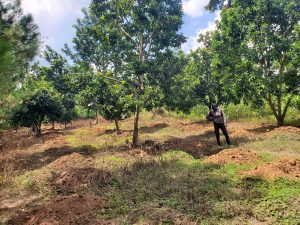
These have caused farmers to see many coffee beans die in June, when the sub-region usually experiences dry spells, thereby affecting expected yields.
The farmers face financial constraints that also limit expansion, particularly the implementation of large-scale irrigation systems. Ojok estimates that a comprehensive irrigation setup for his farm would require tens of millions of shillings—resources that are currently beyond his reach.
Ojok is the winner of the Uganda Best Farmers Award 2025. He intends to use the 7 million Ugandan shillings he won to set up a modern irrigation system to address the challenges posed by the area’s harsh weather.
“I am planning to invest the money in irrigation. But now, after meeting with the irrigation guys, I realised that the money to complete that place is much bigger.” He adds.
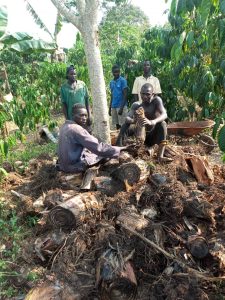
Ojok says the actual cost to set up modern irrigation for his coffee plantation is between 70 and 80 million Ugandan shillings.
However, the Ministry of Agriculture, Animal Industry and Fisheries (MAAIF) is enrolling farmers in a new irrigation programme for Northern Uganda to help them cope with harsh climatic conditions.
Dr. Gerald Kyalo, a commissioner for Coffee Development at MAAIF, says the program targets coffee farmers in the region.
“Government actually heard the cry of the farmers, and those government programs are intended to help farmers respond better to the challenges of climate change and the prolonged droughts.” Dr. Kyalo adds.
This occurs as the sub-region has started extensive commercial coffee farming, led by the Rocco Paco Foundation.
Nwoya District alone has more than 700 people who have started coffee farming in 2026, bringing the total number of farmers to more than 1,000.
According to data from Operation Wealth Creation (OWC), the Acholi sub-region has over 4,000 registered coffee farmers, while the Ministry of Agriculture, Animal Industry, and Fisheries plans to reach up to 50,000 farmers.
The sub-region is making an ambitious move to establish one million hectares of coffee plantations over the next three years, according to the OWC.
Future Plans and Vision
Looking ahead, Ojok has ambitious plans. He aims to expand his coffee production to 60 acres over the next 10 years, invest further in processing facilities, and explore export markets.
The coffee entrepreneur is also planning to invest in irrigation infrastructure and strengthen the cooperative’s capacity to process and export coffee.
Ojok is also working on forming partnerships with international buyers to position Northern Uganda as a recognised supplier of premium single-origin coffee.
Ojok’s journey is not just about agriculture—it is about transformation. From a young man on the brink of despair to a leader shaping an entire sector, his story illustrates the power of resilience, innovation, and community-driven development.
He often emphasises a simple message: start with what you have. For him, that meant a hoe, a small piece of land, and an unyielding determination to succeed. Today, it has grown into a movement—one that is redefining farming as a viable, dignified, and profitable path for the youth of Northern Uganda.
“I started with a hoe. I never thought I could build. I never thought I could buy land within Gulu City.” Ojok believes, “Farming is an occupation. Farming is one of the smart jobs we can make money out of.”
In many ways, Ojok Alfred embodies a new generation of African entrepreneurs—rooted in their communities yet globally aware and grounded in tradition yet embracing technology. His work continues to inspire, demonstrating that even in the face of adversity, transformation is possible.
Ojok’s story is a testament to the power of resilience, innovation, and community. From a struggling garlic farmer on the brink of despair to a successful coffee entrepreneur and employer, his journey inspires hope and a sense of possibility.
He has developed a sustainable rural development model by integrating traditional knowledge with modern technology and balancing individual ambition with collective action.
As he continues to grow his enterprise and empower others, Ojok is not just transforming his own life—he is shaping the future of agriculture in Northern Uganda.
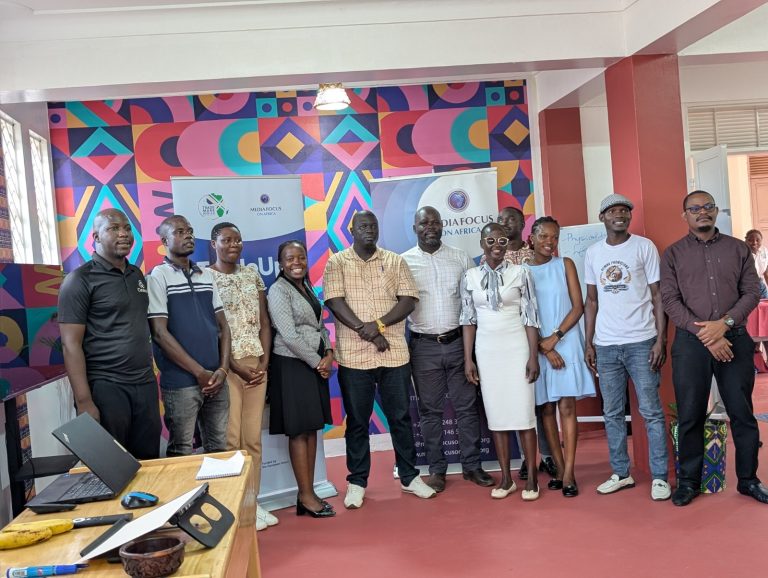
Part II: This is part two of the long article with support from Northern Uganda Media Club (NUMEC)