“I said no, but she forced me to delete everything,” Anena recalls. “That was the only evidence I had.”
By Chowoo Willy
When Anena Rosemary, a journalist with Radio Rupiny in Gulu City, arrived in Omoro District to cover the 2021 by-elections, she had no idea she would become the story. After capturing photos of delayed polling materials in Tochi County, she was cornered by a police officer and ordered to delete the images.
“Delete all those photos before I report you to my boss.” That was the command—issued even before the officer asked who Anena was
“I said no, but she forced me to delete everything,” Anena recalls. “That was the only evidence I had.”
That incident, like many others involving journalists during Uganda’s electoral cycles, underscores the rising threat to press freedom — not just in the streets but also in the digital space.
For over a decade, violence against journalists in Uganda has consistently spiked during election periods. The trend shows no signs of slowing. The most recent incident occurred during the Kawempe by-election, where more than 10 journalists were attacked and injured—allegedly by security forces.
The journalists, who were on duty covering the polls, were reportedly beaten, their equipment confiscated or destroyed, and some even detained without clear charges. Such attacks underscore a growing pattern of media repression that intensifies whenever the country approaches the ballot box.
Media rights advocates, including HRNJ-Uganda, have documented these abuses over the years and are raising red flags ahead of the 2026 general elections, warning that without proactive measures, history is likely to repeat itself—once again at the cost of press freedom and public accountability.
HRNJ-Uganda recorded 94 cases of press freedom violations in 2022, a decrease from 170 cases in 2021. This was a year proceeding the election time. The Uganda Police Force was identified as the leading perpetrator of press freedom violations, responsible for 53% of the cases. Other state security agencies, political party members, and unknown individuals were also implicated
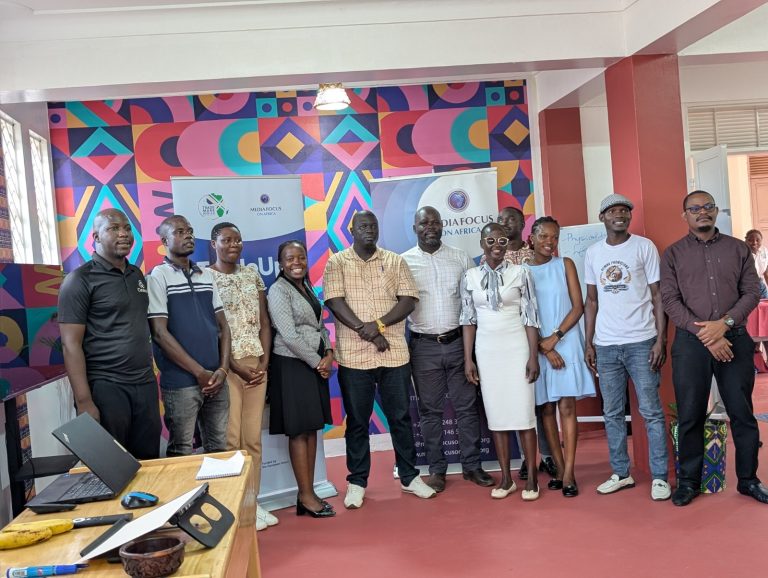
Now, with the 2026 general elections looming, Anena and 14 other journalists from Acholi and Lango sub-regions have received vital training in digital security and safety through a four-day workshop organized by the Human Rights Network for Journalists–Uganda (HRNJ-Uganda).
🔐 Training to Survive a Digital Battlefield
Held under HRNJ-Uganda’s mandate of institutional capacity building, the training addressed growing concerns over cyber threats, online harassment, surveillance, and digital insecurity that journalists face—especially during elections.
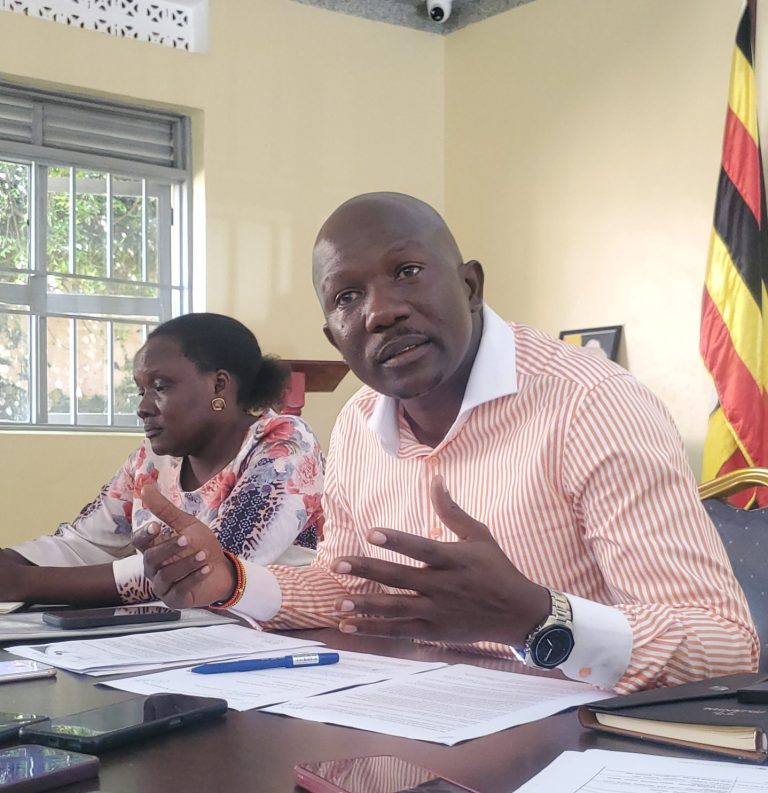
“The risks re-emerge during every electoral cycle,” said Moses Magoola, Deputy Executive Director and Program Manager at HRNJ-Uganda. “We are responding to patterns where journalists are often targeted. It’s only sensible to prepare early.”
Uganda has a troubling track record of election-related violations against journalists, with security agencies, especially the police, frequently cited as perpetrators.
“We want journalists to remain safe in a digital space filled with cyberbullying, harassment, fake news, and surveillance,” Magoola emphasized. “Our aim is to help journalists function with minimal risk.”
He further noted that while past efforts focused on physical safety, the 2026 elections may require a more robust digital defense strategy.
💻 Mastering the Tools of Digital Safety
The participants were trained in

Emmanuel Magambo, the lead digital security trainer at HRNJ-Uganda, warned that careless use of unsecured apps and unfamiliar links could lead to hacking or surveillance.
“Before downloading any app, research it. Check how many people are using it and whether it’s verified,” he advised. “We’re not just training journalists for their safety — we’re training them to become multipliers in their newsrooms.”
🎙️ “We Are Always Trailed” — Journalists Speak Out
Nancy Atim, an editor at QFM in Lira City, confessed that prior to the training, she had no knowledge of digital data protection. But now, she’s ready.
“We are journalists. We’re always being trailed — by government officials, private actors, even criminals. It’s time we protect our devices and accounts,” she said.
Journalists in Uganda have often faced threats beyond arrests. Equipment confiscation, forced deletion of footage, hacked accounts, and impersonation are common during election seasons.
“I didn’t know phishing and eavesdropping were serious digital threats. This training has opened my eyes,” added Anena.
📣 From the State: A Warning and a Plea
Peter Banya, Deputy RCC of Gulu City (Laroo-Pece Division), advised journalists to remain objective and avoid political compromise.
“I know the heat will be felt as the elections approach. Let us report what is happening—whether good or bad,” Banya urged.
He also cautioned journalists to guard their accounts and digital data against adversaries seeking to compromise or leak sensitive information.
🌐 Strengthening Uganda’s Media Ahead of 2026
With fake news and cyber-attacks on the rise globally, HRNJ-Uganda believes that empowering journalists digitally is not just a professional responsibility—it is a human rights obligation.
“Digital security is now a frontline of press freedom,” said Magoola. “We must adapt, adopt, and stay ahead.”
As the countdown to the 2026 general elections begins, journalists like Anena, Atim, and others will no longer just carry pens, notebooks, and microphones—they’ll also carry firewalls, encrypted apps, and a new sense of digital vigilance.