Todwong noted that Uganda’s population still looks up to the church and other faith institutions as trusted voices in society. He urged clerics to use their pulpits to speak against corruption, social decay, and destructive politics.
By Chowoo Willy
GULU – The Secretary General of the National Resistance Movement (NRM), Richard Todwong, has urged religious leaders across Uganda to play a more active role in guiding their communities to identify leaders with integrity and vision, warning that the country risks being held back by “ignorant politicians” rather than true leaders.
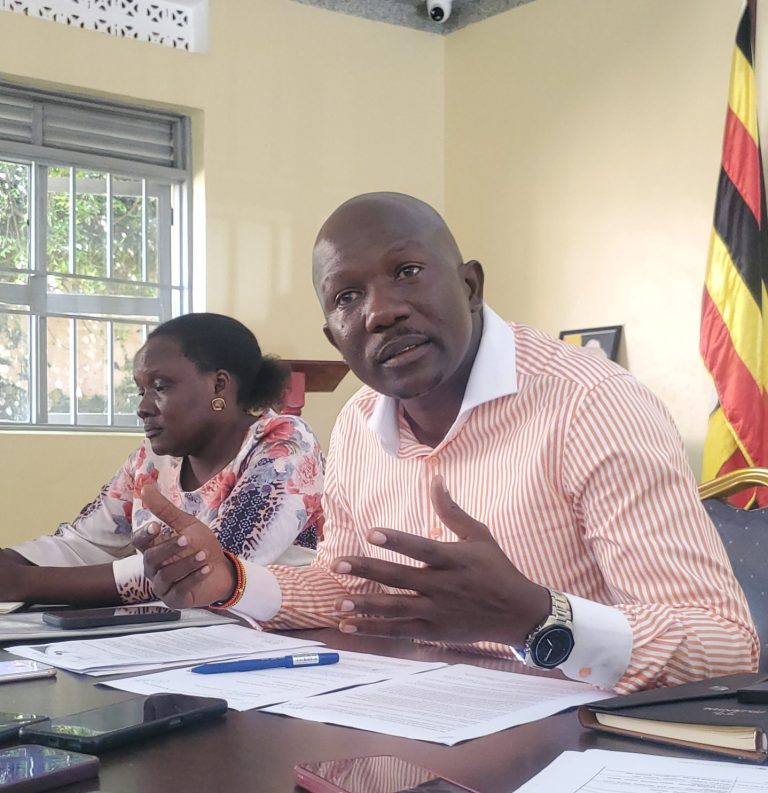
Speaking at a meeting of over 200 religious leaders at the Gulu Logistics Hub on Thursday, organised by the government through Operation Wealth Creation OWC, Todwong said Uganda’s history of conflict, dictatorship, and instability showed the dangers of bad politics, and stressed that faith leaders remain a vital voice in shaping the future.
“You need to help us identify leaders. Not politicians, but leaders,” Todwong said. “There is a difference between politicians and leaders. Very few are leaders, many are politicians, and unfortunately, ignorant politicians. A leader should start by loving the people, without expectations. Their problem must be your concern.”

The meeting with the religious leaders was organised to engage them on the government’s socio-economic transformation for wealth creation in the Acholi sub-region.
A Call for Moral Guidance
Todwong noted that Uganda’s population still looks up to the church and other faith institutions as trusted voices in society. He urged clerics to use their pulpits to speak against corruption, social decay, and destructive politics.
“I would like to request the church to start speaking about this issue called corruption openly. Speak about it. At least if we, the population, are no longer trusted, let the church be trusted,” he said, warning against religious institutions glorifying ill-got wealth.
The Kitgum Diocesan Secretary welcomed the call by the NRM Secretary General but stressed that fighting corruption requires more than just talk. He urged the government to take drastic measures to curb the vice, accusing it of normalising corruption under different labels. “They always brand corruption with different names; let them help us with the truth,” he said.
Voice 1: Rev Willy Olango speaking about the church fighting corruption Uganda
Todwong also warned religious institutions against accepting funds from politicians whose sources of income are unclear, urging the church to be a moral compass in society.
“The church should learn to say no to money that you don’t understand the source,” Todwong cautioned. “If you glorify me for donating money that is corruptly acquired, you are killing the government, you are killing society.”
Rev. Olango questioned how clergy could be expected to distinguish between clean and corrupt money, noting that only the government has the means to trace stolen funds. “We don’t know which money is clean and which is not. But in essence, we condemn corruption; we don’t know who has taken money from a particular project and how it is being used,” he said.
Voice 2: Rev Willy Olango speaking about which money is corrupt and not
Bishop Nelson Onono Onweng, the bishop Emeritus of Northern Uganda diocese, faulted the NRM party for being corrupt and full of thieves. He cited the recent open votes buying in the NRM primaries. “Mr. Todwong, the problem is that NRM is full of thieves; it was a stupid thing.”
On the recent cases of vote buying in the party’s internal elections, the Secretary General said the Central Executive Committee (CEC) will meet this Saturday to address the concerns. “It is being discussed at the highest level of the party. We have a meeting of the Central Executive Committee on Saturday, I am sure that will be presented and the party will officially communicate its position,” he noted.
Lessons from Uganda’s Past
The NRM Secretary General recalled the 1966 crisis, the Amin regime, and the political chaos of the 1970s and 80s, which he said divided Ugandans along religious and ethnic lines. He credited the NRM’s 1986 takeover with trying to unify the country under a philosophy of peace, security, education, and development for all.
“We knew the danger of bad politics,” Todwong said, recalling how his own family suffered under Idi Amin’s rule. “It became very easy for us to identify with the Movement philosophy that does not mind which religion you are in, which tribe you belong to, or which region you come from. The question is: do we love Uganda, and do we care for each other?”
He emphasised that peace and stability remain the foundation for prosperity. “During insurgency, you can’t have anybody thinking about God. Peace is the centre of everything,” he said, pointing to the role of religious leaders in mediating peace in Northern Uganda.
Minister of State for Northern Uganda, Dr. Kenneth Omona, thanked religious leaders for their efforts in restoring peace in the region. “Today, in a meeting like this, I am happy to see that we are not guarded by soldiers in the name of peace,” he said, highlighting the progress made in Northern Uganda since the end of the insurgency.
Leaders vs. Politicians
Todwong argued that Uganda’s communities are often led astray by politicians who chase positions for selfish gain rather than service. He contrasted this with true leaders, who he said must demonstrate love, accountability, and a genuine concern for their people.
“Leadership attracts people. If you are a good leader, your character and qualities attract. If you are a bad one, it repels,” he said.
He challenged local leaders to ask themselves tough questions: “You wear a yellow shirt we give you as a movement chairman, but for a month nobody comes to your home. When there is an issue, they run to others. Question yourself.”
Todwong also expressed concern over idleness and alcoholism among Uganda’s youth, which he said undermines efforts at transformation. He called on clergy and local leaders to guide young people toward discipline and hard work rather than ignoring destructive behaviour.
“At eight in the morning, you see young people drinking in bars and playing pool. And you, a priest or reverend, just pass without stopping to talk to them? It is our failure,” he said. “Our population needs tough love. You cannot praise poverty.”
Todwong urged religious leaders to remain bold, consistent, and truthful in guiding the nation.
“The message you will get from politicians should be the same message you hear from the church and cultural institutions: discipline, order, respect, and hard work,” he said. “Help us understand what good politics is and what bad politics is. Guide the people. That is the leadership Uganda needs.”
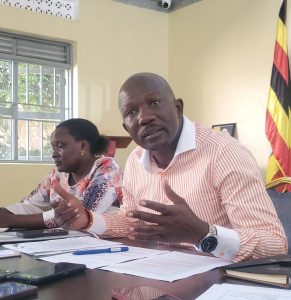
Voice3 : NRM Secretary General Richard Todwong requesting leaders to help identify leaders
Bishop Onono questioned leaders who have overstayed in leadership, especially those who have refused to make way for the young to take over.
Clergy, Government Push Transformation
NRM Secretary General Richard Todwong has called for stronger collaboration between religious leaders, cultural institutions, and the government to build a peaceful and prosperous country.
“We shall build a better, peaceful, and prosperous country if religious leaders, cultural leaders, and the government work together—not by compromising with each other, but by critically identifying the issues that matter,” Todwong said.
Video 1: NRM Secretary General Richard Todwong speaking about the need to work together with the religious leaders, cultural leaders and the government to cause Soccio-economic transformation
Minister of State for Northern Uganda, Dr. Kenneth Omona, echoed the call, emphasizing the role of clergy in promoting socio-economic growth. “We want to work together with them in realizing socio-economic transformation. We exposed them to the investment opportunities that are available in Northern Uganda. Support us in the mobilisation of food and income security,” he said.
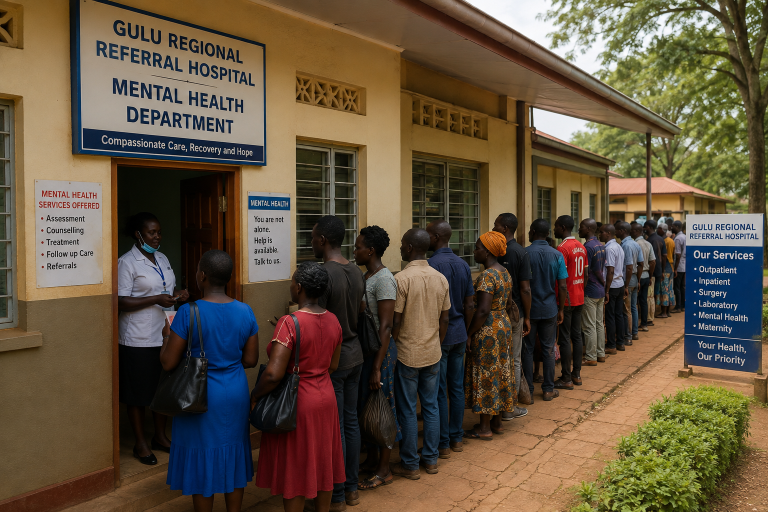
Meanwhile, the Chairman of the Acholi Religious Leaders and Peace Initiative (ARLPI), Bishop Emeritus Dr. John Baptist Odama, emphasised that true transformation in the Acholi sub-region cannot be achieved without addressing mental health challenges, which he described as the root cause of widespread poverty.
“Trauma plays a very big role, and it is still there—stress is still, rate of alcoholism, smoking of jai, domestic violence, suicide—if we don’t address them seriously. I would like the government to encourage counselling centers, either in schools or hospitals,” Bishop Odama said.
Voice 4: Bishop Emeritus, Dr JB Odama urges government to address the root cause of the poverty in Acholi sub region