By Chowoo Willy
Gulu:
The East African conservationists stand hopeful to counter the illicit wildlife trade in the region as canines shape new dimension for revival of the wildlife industry.
Traditionally, Africans have generally used dogs for hunting of the wildlife and providing security at home but the foreign dogs, referred to as the canines now saving the endangered wildlife species in East Africa.
The conservationists have deployed dogs in the major national parks, international airports and seaports across the region to help in tracking and detection of the illegal wildlife product.
Dr. Philip Muruthi, the Vice president, Species Conservation and Science-Africa Wildlife Foundation explains why the conservationists have integrated the dogs in the fight against illicit wildlife trade and tracking in the East African region.
The use of dogs in the conservation areas combating the wildlife crimes as continued to register success owing to the fact that they are considered accurate and fast to act.
In an interview, Dr. Muruthi noted that the dogs have a very strong sense of smell and referred to it as olfactory automated in their nerves system to regulate their functions.
“Dogs have a highly developed olfactory system up to 100,000 times as acute as a human nose. They are also fast and can differentiate up to 30 different scents.”
The canines are being used to help search areas which include among others vehicles in roadblocks and borders, shipping containers, air cargo, and people’s houses.
Whereas other interventions in fighting the wildlife crimes face multiple change including corruption, compromise, Dr. Muruthi, prefers dogs to humans in fighting the vice, “These dogs play an indispensable role in deterring wildlife crimes because they are incorruptible, efficient, and accurate, and they do not lie”.
Dr Muruthi says plan underway under the canines for conservation program, where they want to increase detection using dogs as one of the tools to combat the vice.
The three countries have track dogs for anti-poaching which have yielded a lot of success in combating wildlife trafficking and illegal wildlife trade. “It is working, it is reducing poaching and trafficking wildlife, wildlife populations are getting back to where they were.” Dr Muruthi further explains.
The introduction of dogs have progressively gained control against poaching to restore sanity in the conservation areas which have seen reduction of the illegal wildlife trade in the region over the last six years.
The recent reports from Africa Wildlife Foundation (AWF) indicates that, a total of 443 wildlife products were intercepted by the canines in the three East African Countries of Kenya, Uganda and Tanzania during these periods.
The statistics show that between 2016 and 2022, Uganda recorded the highest number finds (illegal wildlife products) of 248, followed by Kenya with 114 and Tanzania with 81 finds respectively.
Focusing on Africa wildlife protection, The African Wildlife Foundation has been pivotal in supporting the canine units in the region mainly, Uganda, Kenya and Tanzania which are battling with the highest crimes of wildlife trafficking and illicit sale.
The Organisation have been able to support Uganda Wildlife Authority (UWA), Tanzania Wildlife Management Authority (TAWA) and Kenya Wildlife Service (KWS) with the canine (detection and tracking dogs), capacity building and setting up facilities for the canine units in a move to reduce wildlife trafficking and illegal wildlife trade in region.
The intervention of canines in the conservation areas in East Africa is highlighted in the graph below, the cases of IWT (illegal wildlife trade) was still very high in 2016 when the Canine units came to force into force and was highest in Uganda, but from 2019, the cases started reducing in all the three East Africa Countries and by this year 2022, the cases of finds have reduced to below from 60 in 2017 as indicated the chart below.
 Meanwhile,as dogs continue to register success in reduction of wildlife tracking and illegal trade, Dr. Muruthi, noted that poaching in East Africa still rage on as they are still finding contraband, thus, in 2022, 78 people were arrested, “we have stopped trafficking of rhino that used to be notorious, wildlife population are getting back to where they were.”
His counterpart Mark Kinyua from Kenya Wildlife Service (KWS) , Head of Marine and Community Programs, revealed that between, 2014 and 2022, Kenya Wildlife Service documented a total of 102 incidences of arrests/recoveries and 114 traffickers arrested and prosecuted with support from the canines.
The canine deployment in Kenya conservations areas was informed by the new trend of crimes against wildlife targeting pangolins in 2016, “We had to train our dogs to detect the scent of pangolins. When we put our canine teams to task, we started recording a lot of trafficking cases which then started going down drastically.” Kinyua disclosed in a recent interview.
Amidst interventions, Pangolins still remained the most trafficked wildlife in Kenya at the moment, “we had to teach our team (the dogs’ team) and they found a quiet a number of substances of pangolin scales. For example, on the 18th March, 2018, the KWS intercepted 500kgs of pangolin scales declared as feathers”. Kinyua further revealed.
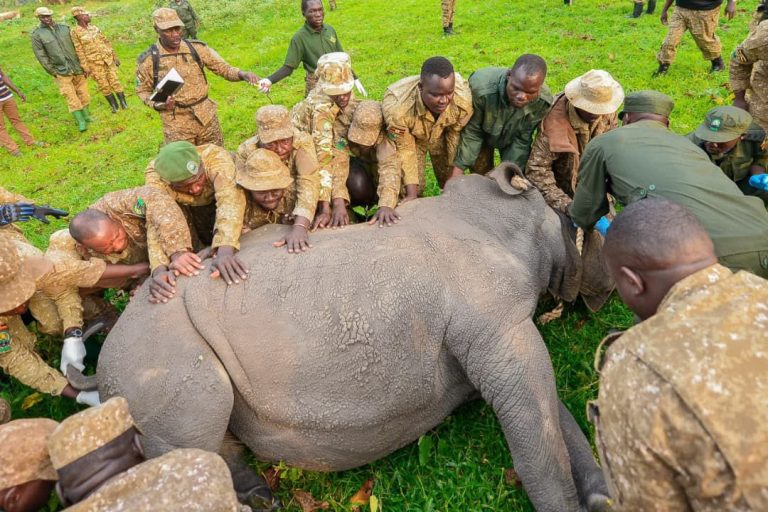
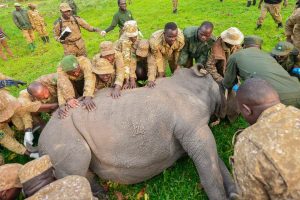
Well, the dogs had saved the Rhino population from trafficking and Kenyan Authority had zero record of poaching rhino in 2020 as Kinyua further explained, “our number has substantively reduced in rhino poaching, dogs can be very helpful and first multiplier in fighting illegal wildlife trafficking and poaching.” He added.
The chat below shows the decline in the incidences of arrests and prosecutions over the last eight years where few cases were recorded in 2022 compared to 2014 and 2016.

The most endangered wildlife species in East Africa are Rhino for their horns, elephants for their ivory, and pangolins for their scales and Lions for their bones.
The report by Uganda Wildlife Authority (UWA), a body tasked with the responsibility of managing wildlife in the country, says the country has been able to register success as well in combating wildlife trafficking and illegal wildlife Trade since the canine unit was introduced in November 2016.The unit has been able to complete more than 150 busts of poached items including ivory, rhino horns, pangolin scales, with 80 per cent successful operation in tracking and detecting wildlife products by 2020.
Hangi Bashir is the UWA Communications Manager like other conservationists sees hope of saving the wildlife species as the Country adapts to the new system to counter the vices. “The dogs have been able to track so many criminals. We are using these dogs so that we able to net these criminals, we want to protect and conserve biodiversity.”
Uganda Wildlife Authority has the canine units established at Entebbe International Airport and Karuma Wildlife Reserve to help in fighting the wildlife trafficking. The one at Karuma Wildlife Reserve at Murchison Falls National Park was set up with financial support from Africa Wildlife Foundation.

Point of Entrants
Wildlife poaching occurs in many countries in sub-Saharan Africa, and it is a component of wildlife trafficking (illegal wildlife trade) which has continued to thrive due to international demand particularly from Asia, Europe and America continents. The poaching and trafficking of certain high-profile products such Ivory, Pangolin scales, lion bone, rhino horns have threatened some species.
A range of iconic animals including African Elephants and rhinoceroses are affected by poaching and wildlife trafficking and the two species are considered threatened or endangered under ICUN (International Union for Conservation of Nature)
East African Countries are known for being conduit for contraband such as Ivory, lion bones, and pangoline scales (Nairobi, Dar es Salaam and Entebbe).They were among the top eight countries of concern dubbed ‘gang of eight’ according the Convention of International Trade in Endangered Species’ (in CITES) meaning, the countries were doing little or nothing to curb illegal trade in ivory in the report.
Uganda, Tanzania and Kenya are joined in the gang of eight countries with China and Thailand, and also-Vietnam, Philippines and Malaysia which are popular in the transit of Ivory.
Dar es Salaam, one of the busiest ports in East Africa acts as a key entry point for international trade and business. A lot of cargo is imported and exported through the port. As a result, it has become an important hub for regional and international trade, linking East African businesses and economies to the rest of the world. Unfortunately, organized crime syndicates have taken advantage of the busy nature of the sea and airports in East Africa to conduct illegal wildlife trade according to the conservationists.
African Wildlife Foundation (AWF) recently handed over a canine facility to the Tanzania Wildlife Management Authority (TAWA) at the TAWA base, Mbezi Beach. A move intended to strengthen the wildlife management agency’s capacity to combat illegal wildlife trafficking and trade, which endangers the survival of Africa’s wildlife and the ecosystems on which they rely on.
At the East African point of exits to overseas in the popular markets in Asia, Singapore, Hong Kong and Vietnam among others, the team has established facility to track the illegal wildlife products. Jomo Kenyatta International Airport (JKIA), Mombasa International Airport (MIA), Port of Mombasa and Kenya-Tanzania border are integrated with mobile team.
Uganda has a well-established unit of the canine at Entebbe International Airport at the transit or destination route to help in tracking wildlife trafficking and has been able to detect illegal wildlife products such Rhino horns, African Grey Parrots smuggled to Asia, Europe, and America respectively. Between 2010 and 2020, 41 illegal wildlife trafficking in Uganda, Kenya and Tanzania were done through the sea.
The common transport methods used for the contraband in the three East African Countries of Uganda, Tanzania and Kenya are by Road, Air, Port, Foot and Sea. For example, between 2010 and 2020, Air was used 241 times, three times more than the closet method road which was used 79 times and sea (41) according to the data from Environmental Investigation Agency on Wildlife Trafficking Seizures in these countries. This justifies why more contrabands are intercepted at the Airports while on its route to countries outside Africa continent.
The graph shows the distribution of methods used in trafficking wildlife in Uganda, Kenya and Tanzania over the last ten years where most of the trade is done through the Air, road and sea respectively.
Fear of extinction
African Wildlife Foundation (AWF) has described the current rate of poaching targeting, elephants, rhinos, and other iconic African wildlife is moving toward extinction within the next 10 years without serous interventions.
The wildlife census put the number of Elephants at 1.2 million in mid-1970 which has currently reduced to 415,000 according the IUCN African Elephant Status Report 2016. The African forest elephant (Loxodonta Cyclotis) is listed as critically endangered and the African Savanna elephant (Loxodonta Africana) as endangered. This is due to the continued poaching for ivory and loss of habitat- and the continued conversion of the habitants primarily to agricultural which threatened their survival.
African elephant populations range in up to 36 counties depending on herd movements especially in Southern and East Africa –home to an estimated 55% (228,250 elephants) and 28% (116,200 elephants) of the continent’s estimated 415,000 elephants respectively.
The Illegal trade in ivory increased in the mid-2000s and peaked during 2010-2012 when an estimated 100,000 African elephants were reportedly killed, but this has decreased as scientists attribute this to greater awareness and enforcement of anti-wildlife trafficking laws.
The International Union for Conservation of Nature reported that, as of 2020, black and white rhinoceros populations stood at 3,142 and 10,080 respectively. Rhinoceroses are poached for their horns, which are used in practices including traditional Chinese Medicine and as ornaments.
Several other rare and endangered species are poached in Africa, including lions, mountain gorillas, pangolins, and certain tortoises, and cheetahs.
The status report also shows the number of African Forest elephants fell by more than 86% over a period of 31 years, while the population of African savanna elephants decreased by atleast 60% over the last 50 years.
Pangolins are heavily targeted in East Africa and out of the eight species of pangolins in the world, four are found in Africa and the rest are found in Asia. The recent statistic from TRAFFIC shows that there were 1400 pangolins seized by the Uganda authorities between 2012 and 2016.
In their report ,over 1,000,000 pangolins are estimated to have been poached in the last decade with 23.5 tonnes of pangolins and their parts were trafficked in 2021 alone and all eight species are listed in Appendix I( the ranking as the endangered species) of CITES, prohibiting international trade.
Challenges facing Canine unit.
As the team struggles to protect the endangered wildlife species, the Kenya canine units are being hit by the infestation by Trypanosomiasis affecting dogs. The dogs have continued to die, this has slowed down the progress in fighting the illegal trade on wildlife products and trafficking.
Mr. Kinyua says tstseflies are many in the sanctuaries and they have continued to infect their dogs at Tsavo and Meru National Parks which have exposed the canines to the danger of Trypanosomiasis, “we have lost about 4 dogs both in Tsavo and Meru that is because we have many tstseflies in the Sanctuaries.”
Mr. Kinyua says, “the dogs are attacked while tracking in the parks during the day and at time these dogs when they are infected, the loss appetite and develop anemia.”
However, he says they are working with partners to ensure that they get repellents to keep off the dogs from infestations.
Kenya also has porous border points with at the coastline covering 530kms which has made it very difficult to fight IWT, but the Canine unit is planning to expand their infrastructure and transporting the Kennel 19 to targeted areas according Mr. Kinyua.
Unlike Kenya, Uganda canine unit is facing the challenge of human resource in managing and working with the dogs –the dog handlers. The country recently imported two dogs.
Mr. Hangi says, “We have few handlers- they get tired while tracking and there are need to train more dog handlers to enable us fight the wildlife crimes in Uganda.”
Steps being taken to deter wildlife crime
East African member states are currently discussing a modality to have a special Wildlife Court in the region to help fight illegal wildlife trafficking and trade.
In a meeting held in Entebbe in February 2023, the member states said the move is intended to deal with the illegal trafficking of wildlife, especially to Asian countries.
Under the proposals, countries are supposed to designate specialized judicial officers to specifically handle cases for quick investigation and prosecution.
In Uganda, a special court called the Standards, Utilities and Wildlife Court was established in 2017 to handle cases of wildlife crimes and it has registered success in expediting the trail of suspects. For example, between July 2020 and June 2021, the court handled 468 wildlife crime cases with 30 cases concluded with 207 convictions, 20 dismissals, one acquittal, and two suspects were released bail.
Uganda Wildlife Authority Communications Manager Hangi Bashir revealed that, in 2021 alone, they arrested 2,862 suspects with 437 prosecuted and 236 convicted. This means 2,425 were set free having been cleared of committing wildlife crimes which is being attributed to awareness creation.
In 2022 Uganda Wildlife Authority arrested 2,837 suspects and recovered of 26,578 assorted poaching implements and assorted wildlife and wildlife products. The Executive Director of Uganda Wildlife Authority Sam Mwonhda says, “We secured 133 convictions out of the 304 cases that we prosecuted in the courts of law while many are still ongoing.”
This means between 2021 and 2022, UWA has been able to arrest, 5699 people, prosecuted 741 with 369 convictions which represents 49.8% of the wildlife crimes before court in the last two years have been complete of the total 741 cases.

According to the revised Uganda Wildlife Act 2019, Section 71, the suspects face either a fine of UGX 20 billion shillings, life imprisonment or both, for being in possession of protected specimen from critically endangered species.
Meanwhile, The Africa Wildlife Foundation has moved forward to strengthen the canine units in East Africa to curtail the illegal wildlife trade in the region and other Africa countries.
The Foundation has continued to build the capacities of the Wildlife Conservation Authorities in those countries and have helped them installed a number of canine units to enforce fight against illicit trade. In Tanzania, Tanzania Wildlife Management Authority TAWA) set up the canine units at the Julius Nyerere International Airport in Dar es Salaam and the Kilimanjaro International Airport in Arusha.
TAWA's canine unit currently consists of eight detection dogs and 11 trained detection dog handlers stationed at the above locations.
These dog-and-handler teams have been instrumental in both preventing illegal wildlife product trafficking and deterring offenders at key transit points. The new facility comprises 10 dog kennels, two units of handler housing, an office, and a store.
In November 2016 , Uganda launched the first canine unit at Uganda Wildlife Education Centre, Entebbe to deal with trafficking in wildlife products especially to help in detecting illegal shipment of Wildlife products through Uganda with the aim of tracking ivory, pangoline scales and Rhino bones at Entebbe International Airport because the animals are endangered. Since then the canine or dogs have made finds of 150 poached items including ivory, rhino horns, pangolin scales with success rate of 80%.
With support from Africa Wildlife Foundation, Uganda Wildlife Authority has established a second canine unit at Karuma Wildlife Reserve at Murchison Falls National Park in Northern Uganda.
Kenya which has 17 kennels at KWS training institute , Naivasha –the unit headquarters started with 3 dogs in 2000 , but the unit has spread all over the country.
Kinyua says the have the canine tracking team at Meru NP-Rhino Sanctuary, Solio Ranch, Lakwe Nakuru NP, Tsavo West- Ngualia Sanctuary and Tsavo East which is heavily supported by AWF.
The Uganda Wildlife Authority (UWA) through its program on awareness creation on the importance of conservation of wildlife has been able to register tremendous success
To Hangi Bashir, through creation of awareness, people are changing their mindsets on wildlife conservation which have made them to open up and report such illegal trafficking to them, “when we arrest, we do screening and cases are coming up due to awareness, they are willing to report about the illegal wildlife trade .”
Besides, the Wildlife Authority has instituted their own investigative team according to Bashir and they do not solely rely on police detectives much as they work together to expedite trail of suspects at a special court established in 2017 to handle related cases of wildlife crimes.
In his end of year 2022 message, the executive Director Uganda Wildlife Authority Sam Mwandha said they have been aggressive in strengthening the relationships with the communities neighboring protected areas and continued to share benefits.
Africa Wildlife Foundation however regards people centered approach as effective to reduce wildlife trafficking and trade because people would recognize wildlife and it benefits to the economic growth in the region and so they would protect them from extinction.
Dr. Muruthi of Africa Wildlife Foundation among other conservationists is hopeful that the people centered approach in fighting against the wildlife crimes will enhance the values of wildlife and conservation in the region as one of the economic mainstays for socio-economic growth.
“We would like to have a case where people are not trafficking, people recognize that wildlife is good in the natural environment, and part of the development but not part of the syndicates.” Dr. Muruthi observed in a recent interview.
TRAFFIC International East Africa is currently running Behavioral Change Program to sensitize and create awareness in Community and also helps them change their mindsets. The conservation sector has increasingly been harnessing the powerful potential for behavioral science to help change wildlife product consumer choice. TRAFFIC is a global network that monitors both legal and illegal wildlife trade.
Jane Shuma Behavioral Change Program manager at TRAFFIC International East Africa based in Arusha (Tanzania) noted that, they are currently working with community groups to sensitize and create awareness on responsible consumption of the wildlife product, “we work with the law enforcement to understand the importance of conserving wildlife.”
At Queen Elizabeth National Park in Kanungu District, Fredrick Niwanzima is championing the mobilization for the community members neighboring the Park who derive their livelihoods from illegal wildlife trade to embrace other means of survival.
Atleast 30 households in Kazinga Upper and Kazinga lower villages, surrounding the park have abandoned illegal hunting in the conservation area and turned to beekeeping and piggery to improve their household income.
While they take on other means of livelihood support, others have been coopted into the community wildlife scouts to scale up mobilization of the locals to fight illegal poaching, trafficking and the illicit trade.
The establishment of the community scouts in the area has seen reduction of wildlife crimes with no single case being reported in the last two years from the area which was once infested with poachers.
“The presence of these community scouts have helped to reduce Human- Wildlife conflicts and we now have informants who are willing to report to us and we noted that no animal in the area have been killed in the last two years” Twinomugisha Deusdedit the Assistant Warden Community Cooperation South West Queen Elisabeth National Park disclosed in an interview.
This story was originally published in 2023